In the perennial quest for a dazzling yet authentic smile, countless individuals explore the transformative world of cosmetic dentistry. Among the myriad of advanced solutions, porcelain veneers stand out as a highly sought-after option, revered for their remarkable ability to rejuvenate and enhance dental aesthetics. These ultra-thin, custom-fabricated shells are meticulously designed to seamlessly bond to the front surface of teeth, effectively masking a wide array of imperfections such as discoloration, chips, gaps, and minor misalignments. They hold the power to subtly yet significantly alter the color, shape, size, or length of teeth, crafting a harmonious and aesthetically pleasing dental arch. While the allure of porcelain veneers is undeniable, promising a smile makeover that can instill profound confidence, a fundamental question often emerges for those considering this investment: do porcelain veneers truly look natural?
Unveiling the Art and Science of Porcelain Veneers
Before delving into the intricacies of their natural appearance, it’s imperative to first understand the sophisticated craftsmanship and clinical application that define porcelain veneers. These marvels of modern cosmetic dentistry are not merely superficial coverings; they are a testament to the blend of artistic vision and scientific precision.
What Exactly Are Porcelain Veneers?
Porcelain veneers are delicate, wafer-thin custom shells typically crafted from high-quality dental porcelain, a material renowned for its incredible durability and uncanny resemblance to natural tooth enamel. Each veneer is individually sculpted to fit perfectly over the front surface of a specific tooth. Their primary function is to serve as an aesthetic overlay, effectively correcting cosmetic issues that may range from stubborn stains and intrinsic discoloration unresponsive to whitening treatments, to minor chips, cracks, uneven spacing (diastemas), and even slight misalignments or irregularities in tooth shape and size. The beauty of veneers lies in their highly customized nature; they are not a one-size-fits-all solution but rather a bespoke enhancement tailored to each patient’s unique facial features and desired smile aesthetic.
The Meticulous Veneer Placement Process
Achieving a naturally beautiful smile with porcelain veneers involves a multi-step process, each stage executed with precision and an acute understanding of both dental health and aesthetics:
- Initial Consultation and Smile Design: This foundational step is crucial. The journey begins with a comprehensive consultation where the patient’s aesthetic goals, concerns, and expectations are thoroughly discussed. The dentist conducts a detailed examination of the patient’s oral health, takes photographs, X-rays, and often employs advanced digital smile design software. This technology allows both the patient and the dentist to visualize the potential outcome, sometimes even creating a diagnostic wax-up or a temporary “mock-up” directly on the teeth to demonstrate the proposed changes in shape and size before any irreversible steps are taken. This ensures a shared vision and mutual understanding of the desired final smile.
- Tooth Preparation: To accommodate the thin veneer and ensure a natural, non-bulky appearance, a minimal amount of enamel (typically less than half a millimeter) is carefully removed from the front surface of the teeth. This conservative preparation creates the necessary space for the veneer to bond seamlessly without adding noticeable volume to the tooth. In some cases, known as “no-prep” veneers, this step may be largely or entirely bypassed, depending on the patient’s existing tooth structure and specific needs.
- Impressions and Provisional Veneers: After preparation, highly precise impressions (molds) of the teeth are taken. These impressions are then sent to a skilled dental laboratory, where master ceramists meticulously craft the custom porcelain veneers. This fabrication process can take several weeks. During this interim period, provisional (temporary) veneers are often placed. These temporary veneers protect the prepared teeth, help the patient adapt to the new shape, and provide an initial preview of the future smile, allowing for minor adjustments or feedback.
- Bonding and Final Adjustments: Once the permanent veneers arrive from the lab, the patient returns for the bonding appointment. The temporary veneers are removed, and the new porcelain veneers are carefully placed on the teeth to check their fit, color, and overall appearance. After any final minor adjustments are made to ensure perfect harmony with the bite and surrounding teeth, the veneers are permanently bonded to the tooth surface using a strong, light-sensitive dental adhesive. A special light is used to cure the cement, creating an incredibly strong and durable bond. The final step involves polishing and a thorough check of the bite to ensure comfort and functionality.
The Secret to Naturally Stunning Smiles: Crafting Aesthetic Perfection
The overarching goal of any cosmetic dental procedure, particularly the application of porcelain veneers, is to enhance the smile in a way that looks utterly natural and harmonious with the patient’s unique facial characteristics. Several critical factors converge to achieve the highly coveted natural aesthetics of porcelain veneers, transforming a good smile into a truly breathtaking one.
Harmonious Color Matching
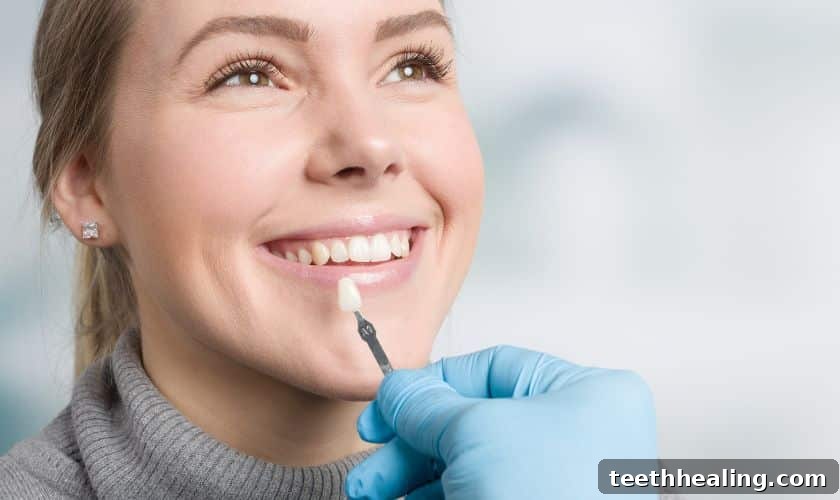
One of the most paramount elements in ensuring a natural look is the meticulous color matching of the veneers to the patient’s existing dentition, or to a desired lighter shade that still complements their overall complexion. Advanced shading techniques are employed by experienced cosmetic dentists and master ceramists to replicate the subtle, multi-dimensional variations present in natural teeth. This isn’t merely about selecting a single white shade; it involves understanding and mimicking the slight translucency at the incisal (biting) edge, the warmer tones near the gum line, and the inherent depth of color found within natural enamel. The goal is a seamless blend, avoiding the monochromatic, opaque appearance often associated with less sophisticated dental work, ensuring the veneers never appear artificial or like “chicklet” teeth.
Precise Shape and Size Customization
Each porcelain veneer is a bespoke work of art, custom-crafted to complement the individual’s facial features, lip line, gum line, and overall dental anatomy. Dentists take precise measurements and consider a multitude of factors, including the patient’s age, gender, facial symmetry, and the “golden proportions” (mathematical ratios observed in naturally beautiful smiles). Veneers can subtly lengthen teeth that have shortened due to wear, widen narrow teeth to eliminate gaps, or correct slight rotations, all while ensuring perfect symmetry and proportionality. The careful consideration of tooth contours, incisal embrasures (the small triangular spaces between teeth), and subtle line angles is crucial in achieving a lifelike appearance that integrates flawlessly with the surrounding natural teeth.
Lifelike Translucency and Opalescence
Perhaps the most compelling characteristic that allows porcelain veneers to mimic natural teeth is their inherent translucent and opalescent properties. Natural tooth enamel is not completely opaque; it allows a certain amount of light to pass through and reflect off the underlying dentin, creating a sense of depth and vitality. High-quality dental porcelain is engineered to replicate this phenomenon. When light strikes a well-crafted porcelain veneer, it interacts in a similar way, preventing a flat, dull, or monochromatic look. This sophisticated interplay of light provides a natural luminosity and vibrancy to the smile, making it virtually indistinguishable from natural teeth, especially under varying light conditions.
Subtle Surface Texture and Anatomy
The natural surface of teeth is not perfectly smooth; it possesses subtle anatomical features such as perikymata (tiny horizontal ridges), minor undulations, and microscopic texture variations. These minute details, often invisible to the naked eye but palpable to the touch, play a significant role in how light reflects off the tooth surface and contribute profoundly to a natural appearance. Skilled dental ceramists meticulously replicate these subtle imperfections and natural surface textures on porcelain veneers. This attention to intricate detail ensures that the veneers not only look natural but also feel natural to the touch, preventing an overly polished or artificial aesthetic that screams “dental work.”
Seamless Integration with Surrounding Teeth and Gums
Beyond the individual veneer, its natural appeal heavily relies on its seamless integration with the surrounding natural teeth and healthy gum tissue. The margins of the veneers, where they meet the tooth structure and the gum line, must be perfectly fitted and polished to prevent any visible lines or ledges that could trap plaque or irritate the gums. A skilled cosmetic dentist ensures that the veneers blend harmoniously, creating a continuous, uninterrupted arch that flows naturally. The health and contour of the gums around the veneers are equally important, contributing significantly to the overall aesthetic and natural perception of the smile.
Beyond Aesthetics: The Comprehensive Benefits of Porcelain Veneers
While the focus remains on the natural appearance, it’s worth noting that porcelain veneers offer a robust suite of advantages that extend beyond mere aesthetics, making them a comprehensive solution for smile enhancement:
- Exceptional Durability and Longevity: Crafted from robust, high-quality dental porcelain, veneers are incredibly strong and resistant to daily wear and tear. With proper oral hygiene and regular dental check-ups, porcelain veneers can last anywhere from 10 to 15 years, and often much longer, providing a long-term investment in your smile.
- Superior Stain Resistance: Unlike natural tooth enamel, which is porous and susceptible to staining from coffee, tea, red wine, and certain foods, porcelain is a non-porous material. This inherent characteristic makes porcelain veneers highly resistant to discoloration, ensuring your revitalized smile remains bright and vibrant for years to come.
- Minimally Invasive Procedure: Compared to more extensive restorative treatments like full crowns, the preparation for porcelain veneers is remarkably conservative, involving only a minimal removal of tooth enamel. This preserves a significant portion of the natural tooth structure, making it a less invasive option for aesthetic improvements.
- Boost in Confidence and Self-Esteem: A beautiful, natural-looking smile has a profound psychological impact. For individuals who have long felt self-conscious about their teeth, porcelain veneers can provide a significant boost in confidence, empowering them to smile, speak, and interact socially without hesitation.
- Simultaneous Correction of Multiple Flaws: Porcelain veneers offer an efficient solution for addressing a variety of cosmetic concerns concurrently. Instead of undergoing separate treatments for whitening, chipping, and minor alignment issues, veneers can effectively resolve multiple aesthetic problems in a single, streamlined process.
Ensuring a Natural Outcome: The Role of Expertise and Collaboration
In conclusion, the resounding answer to the question “do porcelain veneers look natural?” is a definitive yes, particularly when the procedure is executed with meticulous craftsmanship and an unwavering commitment to aesthetic excellence. Modern porcelain veneers have justly earned their reputation for delivering remarkably natural-looking smiles, seamlessly blending with and often enhancing the individual’s unique dental characteristics.
Choosing the Right Cosmetic Dentist
Achieving truly natural aesthetics with porcelain veneers hinges critically on the expertise and artistic eye of the cosmetic dentist. It is paramount to select a dental professional with extensive experience in veneer placement, a keen understanding of facial aesthetics, and a portfolio showcasing consistently natural and beautiful results. A skilled dentist will consider not just your teeth, but your entire facial structure, lip dynamics, and even your personality to design a smile that feels inherently “you.” Look for dentists who prioritize patient education, utilize advanced technology, and work with highly reputable dental ceramists.
Open Communication and Shared Vision
The journey to a perfect, natural smile is a collaborative effort between the patient and the dental team. Open, honest communication is essential. Patients should clearly articulate their desires, concerns, and expectations, while the dentist must provide clear explanations, educate on possibilities and limitations, and manage expectations realistically. Tools like digital smile design, diagnostic mock-ups, and extensive discussions ensure a shared vision, minimizing surprises and ensuring the final result not only meets but often exceeds the patient’s aesthetic aspirations.
Advanced Dental Technology
The integration of cutting-edge dental technology plays a pivotal role in ensuring the precision and predictability of natural-looking veneers. Digital impressions offer unparalleled accuracy compared to traditional methods. CAD/CAM (Computer-Aided Design/Computer-Aided Manufacturing) technologies assist in the precise fabrication of veneers, while advanced shade-matching devices ensure the perfect color harmony. These technological advancements, combined with the dentist’s skill, contribute significantly to the consistently high quality and natural appearance of modern porcelain veneers.
So, when skillfully designed, meticulously fabricated, and expertly placed by a seasoned cosmetic dentist, porcelain veneers can indeed achieve stunningly natural results. They don’t just conceal imperfections; they sculpt a harmonious, vibrant smile that radiates health and confidence, empowering individuals to truly embrace their inner beauty. Investing in porcelain veneers is an investment in a smile that feels inherently yours, enhancing your natural charm without ever appearing artificial or overdone.