The Crucial Connection: How Your Oral Health Impacts Your Heart Health
Imagine a scenario where the simple act of brushing your teeth does more than just brighten your smile; it actively contributes to safeguarding your heart. While many of us diligently brush and floss, how often do we truly pause to examine the health of our gums and consider their profound connection to our overall well-being? The truth is, the state of your mouth offers a window into your systemic health, with an increasingly undeniable link between oral hygiene and cardiovascular wellness.
This article delves into the intricate relationship between healthy gums and a healthy heart, exploring the scientific evidence, the underlying mechanisms, and the practical steps you can take to protect both.
Beyond a Bright Smile: Understanding Gum Health
Healthy gums are typically a pale pink, firm to the touch, and fit snugly around your teeth. They effectively fill the spaces between teeth and, crucially, do not bleed when you brush or floss. These characteristics indicate a robust barrier against harmful bacteria that naturally reside in your mouth. However, when this barrier is compromised, the implications can extend far beyond just your oral cavity.
Ignoring the subtle signs of gum problems can initiate a cascade of issues. Research continues to reveal a powerful connection between gum inflammation, tooth loss, and a significantly increased risk of serious systemic conditions, particularly heart disease.
The Silent Threat: From Gingivitis to Periodontitis
The journey from healthy gums to serious gum disease often begins subtly. The first stage, known as gingivitis, manifests as inflammation of the gums. If you notice your gums are red, swollen, tender, or bleed easily when you brush or floss, these are classic signs of gingivitis. This condition is primarily caused by plaque build-up – a sticky film of bacteria that constantly forms on your teeth.
Fortunately, gingivitis is reversible with diligent oral hygiene and professional dental cleaning. However, if left untreated, it can progress to a more severe and irreversible form of gum disease called periodontitis.
Periodontitis occurs when the inflammation spreads below the gum line. The gums begin to pull away from the teeth, forming pockets where bacteria, plaque, and tartar accumulate and flourish. These pockets deepen over time, leading to the destruction of the supporting bone and tissue that hold your teeth in place. Eventually, this can result in tooth loosening, shifting, and even tooth loss. The continuous presence of these harmful bacteria and the body’s chronic inflammatory response are at the core of the systemic health risks.
The Heart of the Matter: Oral Health and Cardiovascular Disease
The notion that taking care of your teeth is also taking care of your heart is gaining strong scientific backing. A growing body of research confirms the profound link between poor gum health, tooth loss, and an elevated risk of cardiovascular disease. Studies have shown that individuals suffering from periodontal disease face a significantly higher risk of experiencing a heart attack – potentially up to 30 percent greater than those with healthy gums. This risk is even more pronounced for individuals who have already suffered a cardiovascular event and also have active periodontal disease, highlighting the critical need for comprehensive care.
Unraveling the Mechanism: How Gum Disease Affects Your Heart
The connection between gum disease and heart disease is not merely coincidental; it’s rooted in biological mechanisms that link oral inflammation to systemic health. Periodontitis begins with an accumulation of bacterial plaque along and under the gum line, triggering an intense inflammatory reaction in the gum tissues. As the disease progresses, the gums swell, become tender, and may even detach from the teeth and supporting bone, creating ideal environments for more bacteria to thrive.
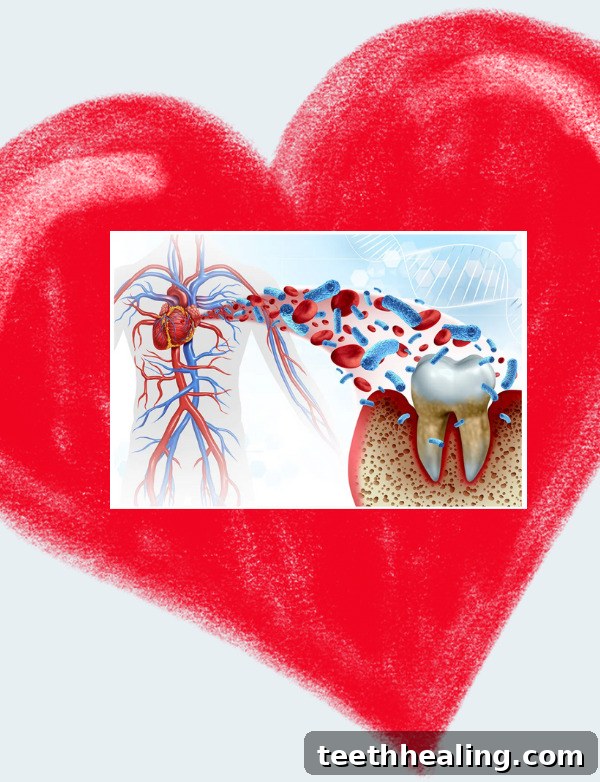
During episodes of inflammation, the small wounds and ulcerations within these gum pockets serve as direct entry points for bacteria and their toxins to leak into the bloodstream. Once in the bloodstream, these oral bacteria and inflammatory mediators can travel throughout the body, including to the heart and blood vessels. This systemic spread of inflammatory substances is believed to contribute significantly to the atherosclerosis process – the hardening and narrowing of arteries due caused by the build-up of plaque. It’s a striking parallel: the very plaque that builds up on your teeth and under your gums shares similarities with the plaque that can accumulate in your arteries, leading to serious cardiovascular issues like heart attacks and strokes.
The chronic inflammatory response triggered by periodontitis also places a persistent burden on the body’s immune system. This sustained inflammation is a key factor in the development and progression of various chronic diseases, including cardiovascular conditions. The body’s constant battle against oral infection can inadvertently fuel inflammatory processes elsewhere, leading to widespread cellular and tissue damage over time.
A Widespread Impact: Oral Health and Other Systemic Conditions
Beyond heart disease, the implications of chronic oral inflammation extend to a spectrum of other systemic health problems. More and more studies are solidifying the connection between periodontal disease and various chronic inflammatory conditions, underscoring that the mouth is not an isolated system but an integral part of the whole body.
For instance, there is a strong bidirectional relationship between periodontal disease and diabetes. Individuals with diabetes are more susceptible to developing gum disease, and conversely, severe gum disease can make it more challenging for diabetics to control their blood sugar levels. Encouragingly, treating oral inflammation in diabetic patients has been shown to contribute to lower blood glucose levels, highlighting the importance of integrated care.
Similarly, links have been established with conditions like rheumatoid arthritis, another chronic inflammatory disease, and certain intestinal diseases. The presence of chronic inflammation in the mouth doesn’t solely cause these other diseases, but it significantly interacts with and can exacerbate other ongoing chronic inflammatory processes in the body. Emerging research also points towards potential links with respiratory infections, adverse pregnancy outcomes, and even certain neurodegenerative conditions, further emphasizing that oral health is a critical component of overall health and wellness.
Protecting Your Smile and Your Health: Preventative Strategies
The good news is that preventing gum disease, and by extension, reducing your risk of related systemic health issues, is largely within your control. The cornerstone of prevention lies in consistent, effective oral hygiene practices and regular professional dental care.
Mastering Your Daily Oral Hygiene Routine
- Thorough Brushing: Brush your teeth at least twice a day for two minutes each time, using a soft-bristled toothbrush and fluoride toothpaste. Pay close attention to all surfaces of your teeth and gently brush along the gum line. Electric toothbrushes can be particularly effective in removing plaque.
- The Non-Negotiable Role of Flossing: Brushing alone cannot reach the plaque and food particles trapped between your teeth and under the gum line. Flossing or using interdental brushes daily is crucial for removing these deposits and preventing gum inflammation.
- Consider Therapeutic Mouthwash: An antimicrobial mouthwash, recommended by your dentist, can help reduce bacteria in your mouth and fight gingivitis. However, mouthwash should complement, not replace, brushing and flossing.
- Healthy Diet and Lifestyle: A balanced diet low in sugar and refined carbohydrates can help reduce plaque formation. Avoiding smoking is paramount, as it is one of the most significant risk factors for developing severe gum disease and hinders its treatment.
The Critical Role of Regular Dental Care
Even with impeccable home care, plaque can harden into tartar (calculus), which cannot be removed by brushing or flossing alone. This is where regular dental check-ups and professional hygiene care become indispensable. During these appointments, dental hygienists or dentists expertly remove plaque and tartar from above and below the gum line, preventing, treating, and reducing the impact of gum infections and inflammation.
These visits also allow for early detection of any emerging issues, whether it’s the early signs of gingivitis or the progression of periodontitis. Timely intervention can halt the disease’s progression, protect your teeth, and mitigate the broader risks to your systemic health. Consider these appointments not just for your smile, but as vital preventative maintenance for your entire body.
Who is at Risk? Identifying and Managing Factors
While gum disease can affect anyone, certain factors can increase your susceptibility. Understanding these risk factors is the first step toward proactive prevention and management:
- Poor or Inadequate Oral Hygiene: This remains the single biggest risk factor. Inconsistent brushing and flossing allow plaque to accumulate, leading to inflammation and infection.
- Smoking and Tobacco Use: Smoking is profoundly detrimental to gum health. It weakens the immune system, making it harder for gums to fight off infection, and impairs blood flow, which hinders healing. Smokers are far more likely to develop severe periodontitis and respond less effectively to treatment.
- Genetics: While genetics can make some individuals more prone to developing gum disease, genes alone do not drive its development or progression. Even with a genetic predisposition, thorough cleaning with a toothbrush and flossing is often enough to keep gums healthy.
- Age: Periodontal disease is relatively uncommon before the age of 40, but the risk increases significantly with age. As people retain more of their natural teeth into old age, this also means an increased load and potential for issues on the gums.
- Systemic Diseases: Conditions such as diabetes, autoimmune disorders, and other diseases that compromise the immune system can increase the risk and severity of gum disease.
- Medications: Some medications can reduce saliva flow, which acts as a natural cleanser, or cause gum overgrowth, making proper cleaning more challenging.
Investing in Your Future: A Holistic Approach to Wellness
The message is simple yet profound: take care of your gums, and you will not only preserve your smile but also significantly contribute to the health of your heart and entire cardiovascular system. This holistic perspective on health recognizes that every part of your body is interconnected, and problems in one area can have ripple effects throughout. Prioritizing your oral health is not just about aesthetics or preventing cavities; it’s a fundamental aspect of comprehensive well-being and a proactive investment in a healthier, longer life.
By adopting a diligent daily oral hygiene routine, making healthy lifestyle choices, and maintaining regular professional dental care, you empower yourself to safeguard both your oral health and your vital organs. It’s an opportunity to embrace a truly integrated approach to your health, where the health of your mouth reflects and influences the health of your whole body.
Your Partner in Health: Evolve Dental Brisbane
At Evolve Dental Brisbane, we understand the critical connection between your oral health and your overall well-being. Our dedicated team is committed to providing comprehensive dental care that not only addresses your immediate needs but also supports your long-term health goals. To take care of your teeth and gums, and in turn, your overall health, we invite you to book an appointment today. Let us be your partner in maintaining a healthy smile and a healthy heart.
Contact us now to schedule your consultation:
07 3720 1811