Choosing the Best Toothbrush: A Comprehensive Guide from Kenmore Dentist Dr. Rachel Hall
In the quest for optimal oral health, the humble toothbrush stands as your primary defense. But with an overwhelming array of options available today, how do you know which one is truly the best for you? Dr. Rachel Hall, a trusted dentist in Kenmore, delves into the nuances of manual versus electric toothbrushes, offering expert insights to help you make an informed decision and achieve a superior clean.
The Undeniable Importance of Proper Brushing
Before exploring the different types of toothbrushes, it’s crucial to understand why proper brushing technique is non-negotiable. Brushing effectively removes plaque, a sticky film of bacteria that constantly forms on your teeth. If not removed, plaque can lead to cavities, gum disease (gingivitis, and eventually periodontitis), and bad breath. The right toothbrush, combined with the correct technique, is your most powerful tool in preventing these common dental issues and maintaining a vibrant, healthy smile.
Manual Toothbrushes: The Traditional Choice
Manual toothbrushes have been the cornerstone of oral hygiene for centuries, and they remain a highly effective tool when used correctly. Dr. Hall emphasizes that manual brushes provide an excellent clean, provided you adhere to the fundamental toothbrushing techniques and maintain a gentle approach. The key here is “gentle” – aggressive scrubbing can damage gums and wear away precious enamel.
Key Features to Look For in a Manual Toothbrush
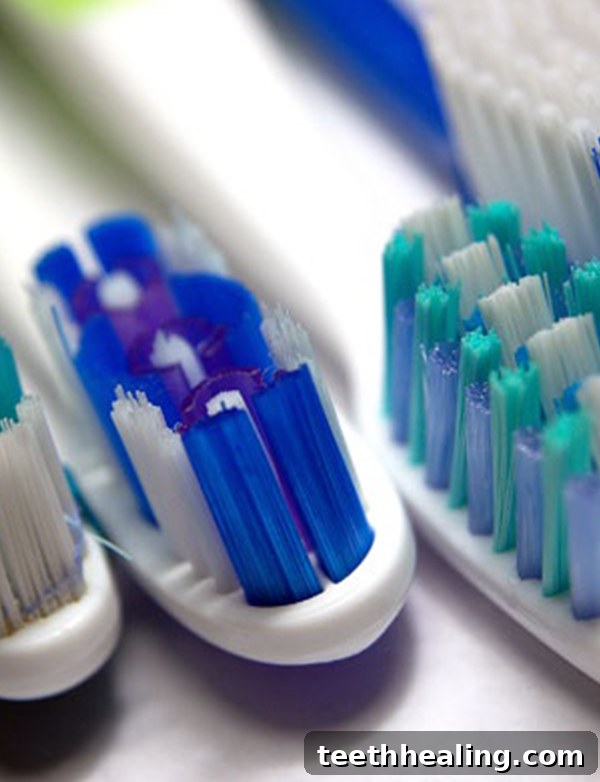
- Soft Bristles: This is paramount. Hard or medium bristles can be abrasive to both your tooth enamel and delicate gum tissues, potentially leading to gum recession and tooth sensitivity. Always opt for soft bristles to ensure a gentle yet effective cleaning experience.
- Small Head: A small toothbrush head is essential for navigating the contours of your mouth, allowing you to reach all surfaces of your teeth, including those tight spots at the back and around individual teeth. Larger heads can miss crucial areas.
- Comfortable Handle: While often overlooked, a comfortable handle ensures a good grip and better control during brushing, which is vital for effective plaque removal.
- Design Variety: When you visit the supermarket, the sheer number of manual brushes can be overwhelming. Don’t be swayed by fancy designs or “firm” bristles. Stick to the principles of soft bristles and a small head. If you discover a specific style or brand that you particularly like and that meets these criteria, it’s often wise to stock up. Styles can be discontinued, leading to frustration when you can no longer find your preferred brush.
The Environmental Edge: Biodegradable and Compostable Options
Dr. Hall is particularly fond of manual toothbrushes crafted from sustainable materials. Consider the staggering environmental impact: if everyone on the planet discards a plastic toothbrush every three months (the recommended replacement frequency), that’s billions of plastic brushes ending up in landfills each year, taking hundreds of years to decompose. Biodegradable materials like bamboo or compostable options offer an eco-conscious alternative, significantly reducing plastic waste without compromising on cleaning efficacy. Many dental professionals are advocating for these choices as a simple yet impactful way to contribute to environmental health alongside personal oral health.
Electric Toothbrushes: Harnessing Technology for a Superior Clean
Electric toothbrushes have revolutionized oral hygiene, offering a range of benefits that often surpass those of manual brushing, especially for certain individuals. Their prices vary considerably, from basic battery-powered models costing around $30 to high-tech, feature-rich versions that can run into several hundred dollars.
Who Benefits Most from an Electric Toothbrush?
- Individuals with Poor Manual Dexterity: This is where electric toothbrushes truly shine. People suffering from conditions such as arthritis, carpal tunnel syndrome, or those with limited arm or hand mobility often find it challenging to perform the precise movements required for effective manual brushing. Electric toothbrushes do the vast majority of the work for you, ensuring a consistent and thorough clean.
- Those with Irregularly Spaced or Crowded Teeth: The oscillating, pulsating, or vibrating motions of electric toothbrushes can more effectively navigate around and between teeth that are not perfectly aligned, reaching areas that a manual brush might miss.
- Individuals with Braces or Dental Appliances: The intricate hardware of braces can make manual brushing a nightmare. Electric toothbrushes, particularly those with smaller heads designed for orthodontics, can simplify the cleaning process around brackets and wires, significantly improving plaque removal.
- Everyday Users Seeking an Enhanced Clean: Beyond specific needs, electric toothbrushes are perfect for everyday use by just about anyone. Many studies have shown them to be more effective at removing plaque and reducing gingivitis than manual toothbrushes.
The “Don’t Press, Don’t Scrub” Rule
A common mistake users make with electric toothbrushes is treating them like manual ones – pressing hard and scrubbing. Dr. Hall strongly advises against this. The sophisticated action and movement of the electric brush are designed to do the work for you. Applying excessive pressure can damage your gums, abrade tooth enamel, and even reduce the lifespan of the brush head and motor. Many modern electric toothbrushes come with built-in pressure sensors that alert you when you’re brushing too hard, an invaluable feature for protecting your oral tissues.
Sonic Toothbrushes: The Pinnacle of Cleaning Technology
Within the electric toothbrush category, sonic toothbrushes represent a significant advancement. These brushes utilize high-frequency vibrations to achieve a powerful yet incredibly gentle clean. They receive a resounding “thumbs up” from Dr. Hall and consistently earn five-star ratings from dentists and hygienists worldwide for delivering the ultimate clean.
How Sonic Toothbrushes Work and Their Benefits
Unlike traditional rotary-oscillating electric brushes that primarily rely on mechanical scrubbing, sonic toothbrushes operate at extremely high speeds, typically between 30,000 to 60,000 brush strokes per minute. This rapid vibration creates two key cleaning actions:
- Mechanical Cleaning: The bristles physically sweep away plaque and food debris from the tooth surfaces and gum line.
- Dynamic Fluid Action: The high-speed vibrations generate powerful fluid dynamics, creating micro-bubbles that penetrate areas beyond the reach of the bristles, such as between teeth and below the gum line. This “non-contact” cleaning effect is what truly sets sonic brushes apart, effectively disrupting and washing away plaque and bacteria in hard-to-reach areas. This unique sonic action significantly enhances overall oral hygiene.
Advantages of Sonic Toothbrushes:
- Superior Plaque Removal: Studies consistently show sonic toothbrushes are highly effective at removing plaque, often outperforming other types of toothbrushes.
- Gentle on Gums: Despite their power, the fluid action makes them exceptionally gentle, reducing the risk of gum irritation and recession when used correctly.
- Improved Gum Health: The gentle stimulation can also improve blood circulation in the gums, contributing to overall gum health.
- Fresh Breath: By more thoroughly removing plaque and bacteria, sonic toothbrushes contribute to significantly fresher breath.
- Easier to Use: With minimal effort required, simply guide the brush head along each tooth surface, letting the sonic vibrations do the hard work.
Factors to Consider When Choosing Your Toothbrush
With a clearer understanding of the options, here are some points to consider when making your final decision:
- Your Oral Health Needs: Do you have sensitive gums, braces, dental implants, or a history of gum disease? These factors can influence whether a manual, electric, or sonic brush would be most beneficial.
- Budget: Manual brushes are the most economical. Electric brushes range from affordable to premium, consider the long-term cost of replacement heads.
- Personal Preference: Some people simply prefer the feel and control of a manual brush, while others love the technological ease of an electric one.
- Dexterity: If you struggle with fine motor skills, an electric or sonic toothbrush is almost certainly the better choice.
- Environmental Concerns: If sustainability is a priority, explore biodegradable manual options or consider the lifecycle of electric brush heads.
Not Sure Which is the Best Toothbrush for You? Ask a Professional!
Choosing the right toothbrush is a personalized decision that can significantly impact your oral health. If you remain unsure about which toothbrush is best for you, don’t hesitate to seek expert advice. Your dental hygienist or dentist is the best resource for tailored recommendations based on your individual oral health profile, technique, and lifestyle. They can assess your specific needs, demonstrate proper brushing techniques, and help you navigate the vast array of choices.
For personalized guidance and to discuss your oral hygiene routine, we invite you to contact Evolve Dental Kenmore. Dr. Rachel Hall and her team are dedicated to helping you achieve and maintain your healthiest smile. Give us a call today: 07 3720 1811.