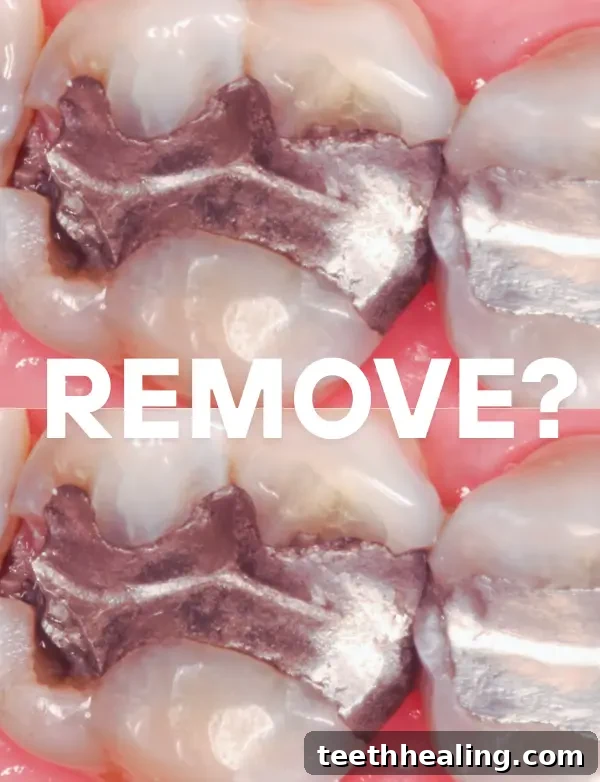
For over a century, amalgam fillings, often recognized by their distinctive silver appearance, have been a cornerstone of restorative dentistry. Composed primarily of a blend of silver, mercury, tin, and copper, these fillings gained widespread popularity due to their exceptional durability and cost-effectiveness. However, in recent decades, a growing dialogue has emerged surrounding the potential health implications linked to mercury exposure from these fillings. This increasing awareness has led many individuals to critically evaluate their existing amalgam restorations and explore the option of safe removal and replacement.
At Evolve Dental Healing, we champion a comprehensive, holistic philosophy towards dental care. This means every procedure, every material, and every recommendation is meticulously considered not just for its immediate impact on your oral health, but for its profound connection to your entire body’s well-being. In this in-depth guide, we aim to demystify the complex decision of whether to remove amalgam fillings. We will provide a balanced exploration of the compelling arguments for and against their removal, shed light on the crucial aspects of mercury-safe dentistry, and introduce empowering holistic alternatives designed to support your journey towards optimal health.
The Compelling Case for Amalgam Filling Removal
For many individuals, the decision to remove amalgam fillings stems from a deep commitment to proactive health management and a desire to align their dental care with broader wellness principles. Several key factors drive this choice:
1. Addressing Mercury Concerns and Potential Toxicity
At the forefront of the debate is mercury, a heavy metal renowned for its toxicity. While dental amalgam is a stable compound, it is widely acknowledged that mercury vapor can be released, albeit in minute quantities, through daily activities such as chewing, grinding teeth, and consuming hot liquids. Proponents of amalgam removal argue that even these low levels of mercury exposure, when accumulated over many years, can pose health risks, particularly for individuals with heightened sensitivities or compromised immune systems. Mercury is a neurotoxin, and its systemic absorption has been linked to a spectrum of non-specific symptoms, which can include chronic fatigue, persistent headaches, unexplained joint pain, cognitive difficulties such such as memory impairment and brain fog, and a general weakening of the immune response. For those already navigating complex health challenges, or for individuals simply seeking to minimize their body’s toxic burden, removing amalgam fillings is often viewed as a vital preventive measure to support long-term health and well-being.
2. Embracing Holistic Health and the Mouth-Body Connection
The philosophy of holistic dental care is rooted in the understanding that the mouth is an integral part of the body, and its health profoundly influences systemic wellness. From this perspective, the presence of mercury in the oral cavity is seen as a potential stressor on the entire biological system. Many individuals who choose amalgam removal do so out of a belief that reducing this “toxic load” will unlock their body’s inherent capacity for healing and optimal function. Mercury’s impact can be far-reaching, potentially affecting not only dental tissues but also neurological pathways, endocrine balance, digestive health, and the intricate workings of the immune system. By eliminating amalgam fillings, patients often report a profound sense of taking proactive control over their health, believing they are removing an impediment to their overall vitality and promoting a more balanced internal environment.
3. Enhancing Dental Aesthetics and Confidence
Beyond health considerations, the visual aspect of amalgam fillings is a significant factor for many. The distinct silver-grey color of amalgam stands in stark contrast to the natural white of teeth, often becoming noticeable, especially in the front teeth or when smiling widely. Modern dentistry offers a wealth of cosmetic solutions that provide superior aesthetics. Patients frequently opt to replace amalgam fillings with tooth-colored alternatives such as composite resins, porcelain, or ceramic. These advanced materials can be meticulously matched to the shade of existing teeth, creating a seamless and virtually invisible restoration. The result is a more uniform, naturally beautiful smile that can significantly boost an individual’s self-confidence and overall comfort with their appearance.
4. Preventing Future Dental Complications: Cracks and Wear
While amalgam fillings are known for their strength, they are not impervious to the relentless forces of chewing and temperature fluctuations over many years. A significant concern is the potential for amalgam to expand and contract at a different rate than the natural tooth structure. This thermal cycling, combined with the continuous pressure of biting, can lead to microscopic fractures or even significant cracks in the surrounding tooth enamel. These cracks can weaken the tooth, making it vulnerable to further decay, sensitivity, or even catastrophic fracture. Additionally, over time, the margins of amalgam fillings can degrade, creating tiny gaps where bacteria can infiltrate, leading to secondary decay underneath the existing filling. For many, preemptive amalgam removal and replacement with bonded, modern materials serve as a crucial preventive measure to safeguard the long-term integrity and health of their teeth, potentially averting more extensive and costly treatments down the line.
The Counter-Argument: Why Some Retain Amalgam Fillings
While the arguments for amalgam removal are compelling, it is equally important to acknowledge the perspectives that advocate for their retention. The decision is highly personal and often involves weighing perceived risks against established dental safety guidelines and practical considerations.
1. Lack of Definitive Evidence for Significant Health Risks
A primary counter-argument revolves around the scientific consensus of many mainstream dental and health organizations. Organizations such as the Australian Dental Association (ADA), the American Dental Association (ADA), and the U.S. Food and Drug Administration (FDA) have consistently maintained that amalgam fillings are safe for the vast majority of the population. Their stance is supported by extensive research indicating that the amount of mercury vapor released from amalgam fillings is minimal, significantly below levels considered harmful by environmental and health agencies. These bodies argue that there is insufficient robust scientific evidence to definitively link amalgam fillings to systemic diseases in the general population. For many patients and dentists, the long track record of amalgam’s safety and efficacy, coupled with the lack of conclusive evidence for widespread health risks, makes removal unnecessary, especially when the fillings are stable and symptom-free.
2. Risk of Damaging Healthy Tooth Structure During Removal
The process of removing existing amalgam fillings is not without its own set of potential risks. It requires careful drilling and manipulation, which, if not executed with extreme precision and the right protocols, can inadvertently damage healthy surrounding tooth structure. Furthermore, the act of drilling out an amalgam filling can temporarily increase the release of mercury vapor, potentially exposing both the patient and the dental team to higher concentrations of mercury than would typically occur with intact fillings. While a mercury-safe dentist employs specific protocols to mitigate this, for those concerned about any additional exposure, or for individuals whose fillings are old but perfectly intact, the argument is made that disturbing a stable restoration could weaken the tooth unnecessarily. In cases where the filling is sound and the tooth shows no signs of decay or fracture, many conventional dentists advocate for a “leave well enough alone” approach, prioritizing the preservation of existing tooth structure.
3. Practical Considerations: Cost and Time Investment
The decision to remove and replace amalgam fillings also involves significant practical considerations, notably cost and time. Replacing multiple amalgam fillings, particularly with high-quality, biocompatible materials like composite resin, porcelain, or ceramic, can be a considerable financial investment. These advanced materials and the sophisticated techniques required for their placement are often more expensive than amalgam. Moreover, the procedure itself typically demands more chair time, and extensive cases may require multiple appointments. For individuals who are not experiencing any health concerns directly attributed to their amalgam fillings, and for whom the aesthetic aspect is not a primary concern, the substantial cost and time commitment involved in replacement may not feel justified. Insurance coverage for amalgam replacement can also vary, adding another layer of financial complexity.
A Balanced Approach: Holistic Alternatives and Safe Removal Protocols
At Evolve Dental Healing, we believe in empowering our patients with knowledge and choices that honor their body’s natural ability to heal and restore balance. Whether you ultimately choose to remove amalgam fillings or manage them, our holistic approach integrates a range of strategies to support your oral and overall health. If removal is chosen, it’s paramount that it’s done safely.
1. The Importance of Safe Amalgam Removal (SMART Protocol)
For those who decide to remove their amalgam fillings, the method of removal is as crucial as the decision itself. A holistic dentist specializing in mercury-safe dentistry adheres to strict protocols, such as those recommended by the International Academy of Oral Medicine and Toxicology (IAOMT) known as the SMART (Safe Mercury Amalgam Removal Technique) protocol. This protocol is designed to minimize patient and staff exposure to mercury vapor during the removal process. Key elements include the use of high-volume suction, an external air supply for the patient, a dental dam to isolate the tooth, cold water spray, and charcoal rinses. By employing these meticulous safeguards, we prioritize your safety and minimize potential risks associated with the procedure.
2. Biocompatible Filling Materials: The Healthier Choice
When replacing amalgam fillings, or for any new restoration, choosing biocompatible materials is a cornerstone of holistic dentistry. We offer advanced alternatives such as composite resins, porcelain, and ceramic. These materials are meticulously selected for their safety, non-toxicity, and inertness within the biological system, meaning they do not leach harmful substances or provoke adverse reactions. Beyond their health benefits, they offer exceptional aesthetic results, blending seamlessly with your natural tooth structure and providing durable, long-lasting restorations that support both your oral health and overall well-being.
3. Ozone Therapy: A Natural Path to Healing
Ozone therapy represents a cutting-edge, natural treatment modality utilized in holistic dentistry. By harnessing the potent antimicrobial and regenerative properties of ozone gas, this therapy effectively targets and eliminates harmful bacteria, viruses, and fungi in the oral cavity. It is a safe and highly effective option for addressing tooth decay, managing gum disease, and treating infections. Ozone can be integrated as a complementary treatment alongside amalgam filling removal, enhancing tissue healing, reducing sensitivity, and creating a healthier environment for new restorations. Its ability to sterilize and promote oxygenation makes it invaluable for comprehensive oral health support.
4. Nutrient-Dense Diet and Natural Remineralisation
A fundamental principle of holistic dental care is the profound impact of nutrition on oral health. We emphasize supporting your teeth’s innate ability to remineralize and self-repair. A diet rich in essential vitamins and minerals, particularly calcium, magnesium, phosphorus, and fat-soluble vitamins like K2 and D3, is crucial for strengthening tooth enamel and fostering the natural healing of early cavities. Beyond dietary adjustments, incorporating mineral-rich tooth powders (free from harsh chemicals), practicing meticulous oral hygiene with natural products, and considering supplements when necessary, all contribute to maintaining robust, healthy teeth without reliance on potentially toxic materials. This proactive approach aims to reduce the need for future fillings altogether.
5. Regular Detoxification Support
For those concerned about the potential accumulation of mercury or other environmental toxins in the body, supporting the body’s natural detoxification pathways is key. Holistic practices such as dry brushing, which stimulates lymphatic flow, incorporating herbal teas known for their detoxifying properties, and utilizing saunas to promote sweating and toxin release, can all aid the body’s elimination processes. Hydration is paramount, as drinking plenty of purified water helps flush toxins. Furthermore, consuming a diet rich in antioxidant-dense foods like colorful fruits and vegetables provides crucial nutrients that support the liver and kidneys, enabling them to efficiently process and excrete unwanted substances, thereby reducing the overall toxic burden.
Conclusion: Amalgam Removal – Your Informed Choice for Optimal Health
At Evolve Dental Healing, our core philosophy centers on delivering personalized care that respects your unique health profile, comfort levels, and preferences. The decision to remove amalgam fillings is a deeply personal one, requiring careful consideration of both the potential benefits and the recognized risks. While some individuals are motivated by significant health concerns, aesthetic desires, or the pursuit of a fully biocompatible oral environment, others may feel confident in the safety and stability of their existing fillings, especially when they are asymptomatic and show no signs of compromise.
Regardless of your stance, a holistic approach to dental care prioritizes the interconnectedness of your oral and systemic health. If you are contemplating amalgam removal, or simply wish to explore a more natural approach to your dental well-being, consulting with a knowledgeable holistic dentist is crucial. A qualified practitioner can provide a thorough assessment, discuss your individual risk factors, outline safe removal protocols if chosen, and guide you through a treatment plan that aligns seamlessly with your overarching health goals. Whether you opt for removal or choose to maintain your current fillings with a focus on holistic support, embracing a comprehensive approach to dental care is the surest path to maintaining a vibrant, healthy smile for many years to come.
Ready to explore how holistic dental care can transform your smile and overall health? Contact Evolve Dental Healing today at 07 3720 1811 to schedule a comprehensive consultation and discover your options for a healthier, more natural future!