Tooth extraction, while often seen as a last resort, is a common and sometimes necessary dental procedure. The decision to remove a tooth is never taken lightly and depends on a myriad of factors, including the type of tooth, its condition, and its impact on overall oral health. Understanding when and why an extraction might be recommended can help patients in Palm Desert make informed decisions about their dental care. This comprehensive guide will delve into the specific scenarios for primary teeth, permanent teeth, and wisdom teeth, along with crucial information on the procedure, recovery, and the importance of professional dental consultation.
Primary Teeth (Baby Teeth): When Extraction is Necessary for Young Smiles
Children naturally shed their primary, or “baby,” teeth to make way for permanent teeth, typically between the ages of 6 and 12. This natural process is essential for proper dental development. However, there are instances where a dentist in Palm Desert might recommend the early extraction of a primary tooth to prevent further complications or facilitate the healthy eruption of permanent teeth. These situations include:
- Severe Decay Beyond Repair: If a cavity in a primary tooth is too extensive, reaching deep into the pulp and causing irreversible damage, a simple filling or even a pulpotomy (nerve treatment for baby teeth) may not be sufficient. In such cases, extraction becomes necessary to eliminate infection, prevent it from spreading to other teeth, and protect the developing permanent tooth underneath. Leaving a severely decayed baby tooth untreated can lead to persistent pain, abscess formation, and even systemic health issues.
- Significant Overcrowding or Impaction: Sometimes, baby teeth do not fall out naturally at the appropriate time due to genetic factors, insufficient space in the jaw, or impaction. If a primary tooth is stubbornly holding its position, it can block the eruption path of the permanent tooth that is ready to emerge. Early extraction in such scenarios creates the necessary space, allowing the permanent tooth to erupt correctly and preventing future orthodontic problems. A dentist in Palm Desert can assess the child’s dental development with X-rays to determine if such an intervention is needed.
- Unsalvageable Fracture or Trauma: Accidents happen, especially with active children. A severe fracture or traumatic injury to a primary tooth that cannot be repaired with restorative procedures might necessitate extraction. This prevents ongoing pain, infection, and potential damage to the underlying permanent tooth bud. Immediate evaluation by a dental professional is crucial in such emergencies.
- Infection Risk to Permanent Teeth: In some instances, an infection from a primary tooth can pose a direct threat to the developing permanent tooth. Removing the infected primary tooth can protect the permanent successor from damage or developmental issues.
While the goal is always to preserve primary teeth until their natural exfoliation, ensuring proper spacing and healthy development of the permanent dentition is paramount. Your pediatric dentist in Palm Desert will carefully weigh these factors to determine the best course of action for your child’s oral health.
Permanent Teeth (Excluding Wisdom Teeth): Saving Your Lifelong Smile or Making a Tough Choice
Permanent teeth are designed to last a lifetime, forming the foundation of your smile and crucial for chewing and speaking. The extraction of a permanent tooth is a significant decision and is typically considered only when all other restorative or corrective treatments have been exhausted or are deemed impractical. A dentist in Palm Desert might recommend the removal of a permanent tooth for the following critical reasons:
- Advanced Gum Disease (Periodontitis): Severe gum disease, also known as periodontitis, is a progressive bacterial infection that damages the soft tissues and bone supporting your teeth. As the disease advances, it leads to bone loss, deep periodontal pockets, and increasingly loose teeth. When the supportive bone structure is severely compromised, the tooth becomes excessively mobile and unsalvageable, making extraction the only option to prevent further spread of infection and bone loss that could affect adjacent teeth.
- Severe Fracture or Trauma Beyond Repair: A permanent tooth can suffer a severe fracture or crack due to injury, biting on hard objects, or extensive decay. If the fracture extends deep into the root, involves multiple cusps, or compromises the tooth’s structural integrity beyond what a root canal, crown, or other restorative procedure can fix, extraction may be necessary. This prevents pain, infection, and potential damage to the jawbone.
- Deep-Seated Infection or Abscess: When a dental cavity is left untreated, bacteria can penetrate the tooth’s innermost pulp chamber, leading to a severe infection or abscess. While root canal therapy is typically the first line of defense to save an infected tooth, there are cases where the infection is too widespread, the tooth is too compromised, or previous root canal treatments have failed. In such instances, extraction might be the only way to eliminate the infection and prevent its spread to surrounding bone and tissues, or even to other parts of the body.
- Orthodontic Considerations: In some orthodontic cases, particularly those involving severe crowding or malocclusion (bad bite), removing one or more permanent teeth may be necessary to create adequate space for the remaining teeth to align properly. This is often a strategic decision made in conjunction with an orthodontist to achieve a stable and aesthetically pleasing result for patients undergoing braces or other alignment treatments.
- Impact on Adjacent Teeth or Jaw Health: A severely compromised permanent tooth, if left untreated, can negatively impact adjacent healthy teeth by contributing to gum disease, shifting, or creating infection pathways. Removing such a tooth can protect the overall health and stability of the surrounding dentition and jaw.
The primary goal is always to preserve natural teeth whenever possible. Your dentist in Palm Desert will conduct a thorough examination, including X-rays and possibly 3D imaging, to evaluate the tooth’s condition and discuss all available options before recommending extraction.
Wisdom Teeth: Navigating the Third Molar Dilemma
Wisdom teeth, or third molars, are the last set of teeth to erupt, typically making their appearance between the ages of 17 and 25. For many individuals, wisdom teeth pose unique challenges due to their late arrival and limited space in the jaw. While not everyone needs their wisdom teeth removed, dentists often recommend extraction, especially between the ages of 18 and 24, for several compelling reasons:
- Optimal Root Development: During the late teens and early twenties, the roots of wisdom teeth are usually only two-thirds developed. At this stage, the roots are shorter, less firmly anchored in the jawbone, and typically not yet intertwined with critical nerves or sinus cavities. This makes the extraction procedure considerably easier, less invasive, and significantly reduces the risk of complications such as nerve damage, excessive bleeding, or damage to the jawbone during removal.
- Faster and Smoother Recovery: Younger patients generally have better healing capabilities and greater bone elasticity compared to older individuals. This means that recovery from wisdom teeth extraction tends to be quicker, with less post-operative pain, swelling, and a lower incidence of complications like dry socket or infection. Delaying extraction until later in life, when roots are fully formed and bone density increases, can lead to a more complex surgery and a longer, more uncomfortable recovery period.
- Prevention of Impaction and Associated Problems: This is arguably the most common and crucial reason for early wisdom tooth removal. Due to insufficient space in the jaw, wisdom teeth often erupt improperly, becoming “impacted.” Impaction can manifest in various forms – they might be trapped beneath the gum line, emerge at an awkward angle (horizontally, vertically, or angled towards or away from adjacent teeth), or only partially erupt. Impacted wisdom teeth can lead to a host of painful and serious issues:
- Pain and Swelling: Pressure on adjacent teeth and gums can cause significant discomfort.
- Infection (Pericoronitis): Partially erupted wisdom teeth create a flap of gum tissue (operculum) that can trap food particles and bacteria, leading to painful infections.
- Damage to Adjacent Teeth: Impacted wisdom teeth can push against the second molars, causing cavities, bone loss, or root resorption in these healthy teeth.
- Cysts and Tumors: In rare but serious cases, a fluid-filled sac (cyst) or a benign tumor can develop around an impacted wisdom tooth, potentially causing extensive damage to the jawbone and surrounding structures.
- Jaw Stiffness and Headaches: Chronic pressure and inflammation can contribute to temporomandibular joint (TMJ) issues and headaches.
- Preventive Measures: Even if asymptomatic, a dentist or oral surgeon in Palm Desert might recommend removing impacted wisdom teeth as a proactive measure to prevent these potential problems from arising in the future, especially if X-rays indicate a high risk of future complications.
Not all wisdom teeth require extraction. If they erupt fully, are properly aligned, functional, and easily cleaned, they may not need to be removed. However, regular dental check-ups, including X-rays, are essential for monitoring their development and making an informed decision.
The Tooth Extraction Procedure and What to Expect
Understanding the extraction process can alleviate anxiety. While specifics vary, a general outline includes:
Before the Procedure: Your dentist will review your medical history, current medications, and conduct a thorough examination with X-rays to assess the tooth’s position, root structure, and proximity to vital structures like nerves or sinuses. Antibiotics might be prescribed before the procedure, especially if there’s an active infection or if you have certain medical conditions.
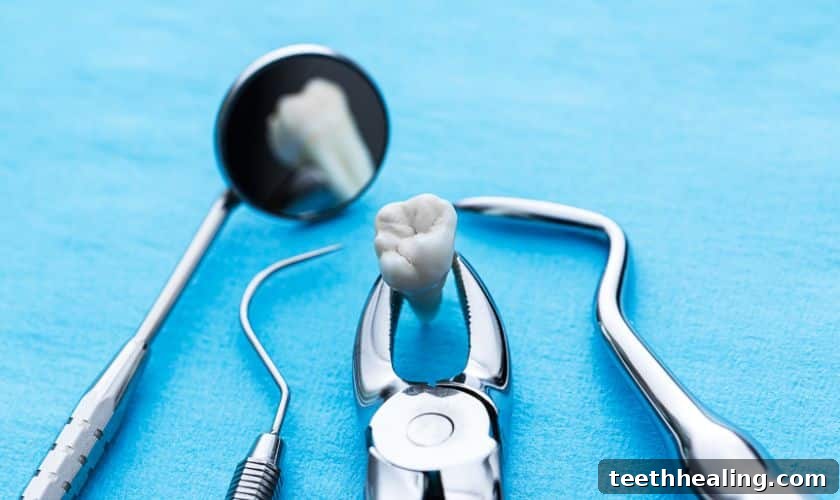
During the Procedure: The area around the tooth will be numbed using a local anesthetic to ensure you feel no pain, only pressure. Depending on the complexity, your dentist may also offer sedation options (like nitrous oxide or oral sedatives) to help you relax. The dentist will then gently loosen the tooth from its socket using specialized instruments and carefully remove it. For impacted or more complex extractions, a small incision in the gum tissue or removal of a tiny bit of bone may be necessary. The site is then cleaned, and stitches (often dissolvable) may be placed to aid healing.
Post-Operative Care: This phase is crucial for a smooth recovery and to prevent complications like dry socket. You’ll receive detailed instructions, which typically include:
- Bleeding Control: Biting gently on gauze for 30-60 minutes after the procedure.
- Pain Management: Over-the-counter pain relievers or prescribed medication.
- Swelling Reduction: Applying an ice pack to the outside of your cheek.
- Diet: Sticking to soft foods for the first few days and avoiding hot liquids.
- Oral Hygiene: Gentle rinsing with salt water (after the first 24 hours) and carefully brushing, avoiding the extraction site.
- Avoiding Dry Socket: Not smoking, avoiding straws, spitting forcefully, or rinsing vigorously for at least 48-72 hours.
- Rest: Avoiding strenuous activity for a few days.
Following these instructions diligently from your Palm Desert dentist will significantly contribute to a comfortable and efficient recovery.
Potential Risks and Alternatives to Extraction
While tooth extractions are generally safe, like any surgical procedure, they carry potential risks, though rare. These can include infection, dry socket (a painful condition where the blood clot dislodges prematurely), nerve damage (usually temporary), excessive bleeding, or damage to adjacent teeth or fillings. Your dentist will discuss these with you prior to the procedure.
It’s important to remember that extraction is often a last resort. Dentists prioritize saving natural teeth whenever possible. Alternatives to extraction, depending on the issue, can include:
- Fillings and Crowns: For minor to moderate decay or fractures.
- Root Canal Therapy: To save a tooth with an infected pulp.
- Periodontal Treatment: To manage gum disease and save teeth that are only mildly affected.
- Orthodontics: To correct alignment issues and potentially avoid extractions for crowding.
A comprehensive discussion with your dental professional in Palm Desert will explore all viable options before a decision is made to extract a tooth.
Consulting a Dentist in Palm Desert: Your Partner in Oral Health
If you suspect you may need a tooth extraction or are experiencing any dental pain or discomfort, it is absolutely crucial to consult a qualified dentist in Palm Desert for a thorough and personalized evaluation. Self-diagnosis or delaying treatment can lead to more severe problems down the line.
During your consultation, your dentist will:
- Perform a Comprehensive Examination: This includes a visual inspection of your teeth, gums, and mouth, as well as a review of your medical and dental history.
- Utilize Diagnostic Imaging: X-rays (and sometimes 3D cone beam CT scans) will be taken to provide a detailed view of the tooth’s roots, surrounding bone, and proximity to nerves or sinus cavities. This imaging is vital for planning the safest and most effective extraction strategy.
- Discuss Your Options: Based on the findings, your dentist will clearly explain why extraction might be recommended, discuss any possible alternative treatments, and outline the benefits and risks associated with each option.
- Address Your Concerns: This is your opportunity to ask questions about the procedure, anesthesia, recovery, costs, and any anxieties you may have. A good dentist will ensure you feel fully informed and comfortable with the treatment plan.
Remember: Early diagnosis and intervention are key to maintaining optimal oral health. Regular dental check-ups and professional cleanings are your best defense against tooth decay, gum disease, and other problems that could ultimately necessitate an extraction. Proactive care helps preserve your natural teeth for as long as possible.
Finding a Reputable Dentist in Palm Desert
Choosing the right dental professional is paramount for any procedure, especially an extraction. When searching for a dentist or oral surgeon in Palm Desert, consider the following:
- Experience and Qualifications: Look for dentists with extensive experience in performing extractions, particularly for complex cases like impacted wisdom teeth. For wisdom teeth or severely impacted permanent teeth, an oral surgeon may be recommended.
- Patient Reviews and Testimonials: Online reviews can offer valuable insights into other patients’ experiences regarding the dentist’s professionalism, chairside manner, and post-operative care.
- Technology and Facilities: A modern dental practice utilizing advanced diagnostic tools (digital X-rays, intraoral cameras) and comfortable facilities can enhance your experience and the precision of the procedure.
- Communication and Comfort: Choose a dentist who listens to your concerns, explains procedures clearly, and makes you feel at ease.
- Location and Accessibility: A conveniently located clinic in Palm Desert can make follow-up appointments easier.
A quick online search for “dentist Palm Desert” or “oral surgeon Palm Desert” combined with checking professional directories and asking for referrals from your primary care physician or trusted friends can help you find a qualified and compassionate dental team that meets your specific needs. Ensuring you have a trusted dental partner is the first step towards a healthy, pain-free smile, even when an extraction becomes necessary.