The ability to communicate clearly and confidently is fundamental to daily life. Yet, for many, misaligned teeth present a surprising, often overlooked obstacle to effective speech. From subtle lisps to difficulties with specific pronunciations or an overall lack of clarity, the intricate relationship between your dental alignment, jaw position, and the mechanics of speech is profound. Fortunately, modern orthodontics offers sophisticated solutions. Among these, Invisalign stands out as a revolutionary treatment, not only transforming smiles but also significantly improving speech patterns. This comprehensive guide explores how correcting dental misalignment with Invisalign can unlock clearer, more confident verbal communication.
The Intricate Link Between Dental Misalignment and Speech
Our mouths are complex anatomical systems where teeth, tongue, lips, and jaw work in harmony to produce sound. When any part of this system is out of balance, the impact on speech can be significant. Various forms of malocclusion, or misaligned bites, directly interfere with the precise movements required for clear articulation. Understanding these connections is the first step toward finding a solution.
Common Misalignments and Their Phonetic Impact:
- Overbite: When the upper front teeth significantly overlap the lower front teeth, it can restrict the tongue’s movement and hinder the production of sibilant sounds like ‘s’ and ‘z’, often leading to a lisp. It can also affect labiodental sounds like ‘f’ and ‘v’ if the lower lip cannot make proper contact with the upper teeth.
- Underbite: Characterized by the lower jaw protruding beyond the upper jaw, an underbite can make it challenging to form sounds that require the upper teeth to meet or slightly overlap the lower lip or teeth, such as ‘f’, ‘v’, ‘s’, and ‘z’. This can result in slurred speech or difficulty with specific phonemes.
- Crossbite: This occurs when some upper teeth sit inside the lower teeth. A crossbite can affect how the tongue interacts with the palate and teeth, leading to distorted sounds or an overall unclear speaking voice. It can also cause the jaw to shift during speech, creating discomfort and hindering fluidity.
- Open Bite: An open bite leaves a gap between the upper and lower teeth when the mouth is closed, preventing them from meeting. This significant gap allows air to escape unnecessarily during speech, particularly affecting ‘s’ and ‘z’ sounds, as well as ‘sh’ and ‘ch’, often resulting in a pronounced lisp.
- Crowded Teeth: When teeth are too close together, they can obstruct the tongue’s ability to find the precise positions needed to form certain sounds. This can lead to muffled speech, indistinct pronunciation, or difficulty articulating specific consonant blends.
- Gaps Between Teeth (Diastema): Large spaces between teeth, especially the front teeth, can allow air to escape during speech, similar to an open bite. This often results in whistling sounds or difficulties with ‘s’ and ‘z’ as the tongue cannot create the necessary seal against the teeth to direct airflow properly.
Beyond specific sound production, misaligned teeth and an improper bite can also cause significant discomfort. The jaw muscles may have to work harder to compensate for an uneven bite, leading to muscle fatigue, jaw pain (TMJ issues), and even strain on the vocal cords. This added effort can make speaking tiresome, impacting the natural rhythm and fluency of communication and potentially leading to less confident or more hesitant speech. The psychological impact of speech impediments, regardless of their severity, can also be considerable, affecting self-esteem and social interactions.
Invisalign: A Modern, Discreet Path to Improved Speech
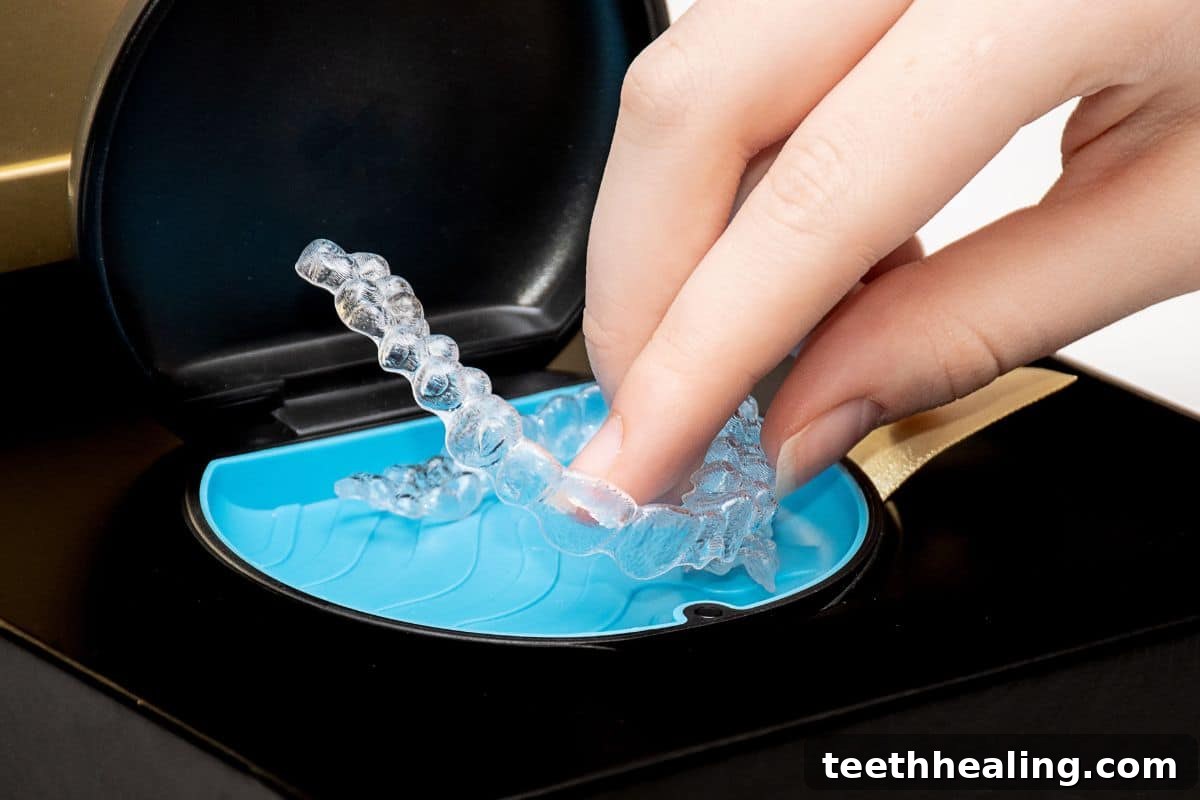
For individuals struggling with speech challenges stemming from dental misalignment, Invisalign offers a highly effective and aesthetically pleasing solution. Unlike traditional metal braces with their bulky wires and brackets, Invisalign uses a series of custom-made, clear plastic aligners that fit snugly over your teeth. This innovative approach gently and gradually shifts your teeth into their correct positions, addressing the root cause of many speech difficulties.
The treatment process begins with advanced 3D imaging technology, which creates a precise digital map of your mouth. From this map, a personalized treatment plan is developed, outlining the exact movements your teeth will make. A series of aligners is then fabricated, each designed to move your teeth a small increment closer to their ideal alignment. Patients wear each set of aligners for about one to two weeks before progressing to the next, slowly but surely transforming their smile and, importantly, the foundational mechanics of their speech.
How Invisalign Specifically Enhances Speech Clarity and Confidence
The benefits of Invisalign extend far beyond aesthetics, directly impacting the mechanics of sound production and overall speech quality. Here’s a closer look at how this revolutionary treatment can help you speak more clearly and confidently:
Optimal Teeth Alignment for Superior Pronunciation
The primary way Invisalign improves speech is by correctly aligning your teeth. When teeth are properly positioned, they provide the ideal framework for your tongue, lips, and jaw. This allows your tongue to move freely and find the precise points of contact required to form specific sounds. For instance, a straightened arch eliminates the gaps or overcrowding that might previously have caused air leakage or hindered tongue placement, leading to crisp ‘s’ and ‘z’ sounds and clear articulation of ‘t’, ‘d’, ‘n’, and ‘l’. The proper alignment ensures that the tongue can correctly interact with the palate and inner surfaces of the teeth, allowing for perfect phonetic production. This transformation is crucial for eliminating lisps, reducing slurring, and ensuring every word is enunciated with clarity.
Corrected Bite for Natural and Effortless Speech Patterns
Beyond individual tooth alignment, Invisalign meticulously works to correct your overall bite, whether you’re dealing with an overbite, underbite, crossbite, or open bite. A harmonious bite ensures that your upper and lower teeth meet correctly, which is vital for reducing tension in the jaw muscles. When your jaw is relaxed and aligned, it can move more fluidly and naturally during speech. This reduction in muscular strain means you no longer have to exert extra effort to compensate for an uneven bite, leading to a more relaxed and effortless speech pattern. The improved jaw mechanics contribute to a natural rhythm and flow, preventing the tendency for words to sound slurred or muffled, and promoting greater fluency in conversation.
Unparalleled Comfort for Unrestricted Speech Freedom
One of the significant advantages of Invisalign over traditional braces, especially concerning speech, is its superior comfort. The smooth, custom-fit plastic aligners contrast sharply with the sharp edges and protruding wires of metal braces, which can irritate the soft tissues of the mouth, including the tongue and cheeks. This irritation can cause discomfort, swelling, and even minor sores, making speaking difficult and sometimes painful. Invisalign aligners, being smooth and form-fitting, minimize these issues, allowing you to speak freely without the distraction or discomfort associated with traditional orthodontics. Furthermore, the removability of Invisalign aligners provides unparalleled flexibility. While it’s recommended to wear them for 20-22 hours a day, you can remove them for significant presentations, public speaking engagements, or during meals, giving you complete control and confidence in critical situations.
Gradual and Progressive Improvement Over Time
The Invisalign treatment is a journey of gradual transformation. As each set of aligners gently guides your teeth into their optimal positions, you’ll observe subtle yet significant improvements in your speech. With every step, your oral structure adapts to the enhanced alignment, making it progressively easier to articulate sounds and form words correctly. This incremental improvement allows your tongue and jaw to adapt naturally, reinforcing new, clearer speech habits. Unlike the sudden, sometimes disruptive changes of traditional braces, Invisalign provides a steady evolution, fostering smoother and more confident speech as your smile transforms. Many patients report noticeable enhancements in their speech clarity within just a few months, contributing significantly to their overall self-assurance in communication.
Beyond Speech: Holistic Benefits of Invisalign
While the focus here is on speech improvement, it’s worth noting that Invisalign offers a multitude of additional benefits that contribute to overall oral health and well-being. These include easier cleaning of properly aligned teeth, which reduces the risk of cavities and gum disease, and a reduced likelihood of abnormal wear on tooth surfaces. The aesthetic appeal of a straight, beautiful smile is also a significant confidence booster, impacting personal and professional interactions positively. By addressing the fundamental structure of your bite and alignment, Invisalign provides a comprehensive solution that improves not just how you speak, but also how you eat, how you maintain oral hygiene, and how you feel about your smile.
Is Invisalign Right for Your Speech Concerns?
If you’ve identified speech issues that you suspect are linked to misaligned teeth, exploring Invisalign could be a life-changing decision. A qualified Invisalign provider can assess your specific bite and alignment, discuss your speech concerns, and determine if clear aligners are the appropriate treatment path for you. They can also explain the potential for combining orthodontic treatment with speech therapy for optimal results in more complex cases. Investing in your oral health with Invisalign means investing in clearer communication, enhanced self-confidence, and a healthier, more vibrant smile.
Don’t let dental misalignment hold back your voice. Speak with an Invisalign provider in Palm Desert today to discover how clear aligners can help you achieve not only a beautiful smile but also the gift of clearer, more comfortable, and confident speech.