Uncovering the Silent Threat: The Deep Connection Between Sleep Apnoea and Acid Reflux, and Its Impact on Your Oral Health
Beyond Snoring: How Sleep Apnoea Silently Erodes Your Teeth and Health
Many individuals primarily associate sleep apnoea with disruptive snoring, chronic fatigue, and perhaps even an increased risk of serious cardiovascular issues. While these are critical concerns, there’s a much more subtle, yet equally damaging, consequence often overlooked: the profound impact of poor sleep on your dental health. What many patients, and even some healthcare professionals, don’t fully grasp is the intricate and often silent relationship between sleep apnoea and a form of acid reflux known as laryngopharyngeal reflux (LPR), or more commonly, silent reflux.
This hidden alliance can quietly wreak havoc on your oral cavity, leading to significant tooth wear, pervasive enamel erosion, persistent dry mouth, and a cascade of ongoing dental challenges that can compromise not just your smile, but your overall well-being. At Evolve Dental, our experienced team frequently observes the tell-tale signs of these interconnected problems, often long before patients themselves are aware of the underlying issues at play.
The Surprising and Significant Link Between Obstructive Sleep Apnoea and Reflux
Extensive medical research has consistently illuminated a powerful and often underestimated connection between obstructive sleep apnoea (OSA) and various reflux conditions. The statistics are compelling: studies indicate that a remarkable nearly 60% of individuals diagnosed with sleep apnoea also concurrently experience some manifestation of acid reflux. This is not mere coincidence; it points to a complex physiological interplay.
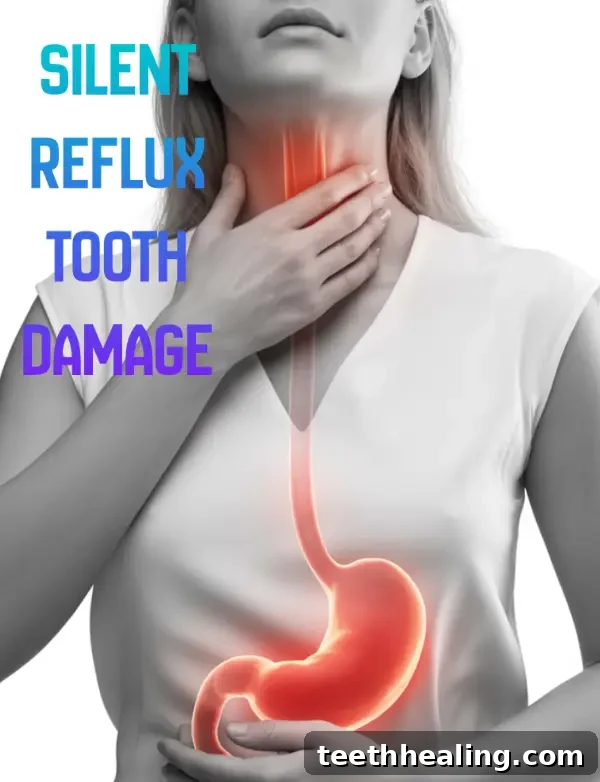
Silent reflux, or LPR, is particularly insidious because, unlike its more famous counterpart, gastroesophageal reflux disease (GERD), it frequently manifests without the classic, burning sensation of heartburn or visible regurgitation. Instead, stomach acid and highly potent digestive enzymes, such as pepsin, silently ascend the oesophagus and reach the throat and airway, especially during the vulnerable hours of sleep. This covert invasion allows corrosive acidic content to come into direct, prolonged contact with delicate tissues in the throat, larynx, and crucially, the oral cavity.
Over extended periods, this chronic and often undetected acid exposure can systematically wear away the protective outer layer of tooth enamel and intensely irritate the sensitive oral and pharyngeal tissues, setting the stage for a host of dental and respiratory complications. Understanding this link is the first step towards comprehensive treatment and prevention.
Demystifying the Mechanism: How Sleep Apnoea Actively Triggers Acid Reflux
The intricate relationship between sleep apnoea and the onset of reflux can be meticulously broken down into several distinct physiological events that transpire within the body during an apnoea episode. These mechanisms create an environment highly conducive to acid backflow.
1. The Powerful “Vacuum Effect” in Your Chest Cavity
When the airway becomes completely or partially obstructed during a sleep apnoea event, the body instinctively struggles and gasps for air. This desperate attempt to breathe generates immense negative pressure within the chest cavity – a powerful phenomenon akin to a vacuum. Each time you try to inhale against a blocked airway, this suction force becomes incredibly potent.
This significant negative intrathoracic pressure can literally pull stomach acid, along with highly corrosive digestive enzymes like pepsin, upward into the oesophagus and subsequently into the throat and even the mouth. This mechanical “pull” dramatically increases the likelihood of silent reflux occurrences, exposing the upper airway and oral structures to gastric contents they are not designed to withstand.
2. The Compromise of the Acid Barrier: Weakening the Lower Oesophageal Sphincter
The lower oesophageal sphincter (LES) acts as a critical muscular valve, precisely engineered to prevent stomach contents from refluxing back into the oesophagus. It’s the primary barrier keeping corrosive acids contained within the stomach where they belong.
However, the repetitive and forceful gasping, straining, and negative pressure changes experienced during countless apnoea episodes place immense and sustained stress on this vital valve. Over time, this chronic mechanical stress can lead to the weakening and impaired function of the LES. A compromised LES loses its ability to tightly seal off the stomach, thereby significantly increasing the risk of acid and pepsin escaping into the oesophagus and further upwards, contributing directly to both GERD and LPR.
3. The Detrimental Effects of Dry Mouth from Chronic Mouth Breathing
A substantial number of individuals suffering from sleep apnoea instinctively breathe through their mouths throughout the night. This habit has direct and damaging consequences for oral health. Chronic mouth breathing drastically reduces the natural flow and production of saliva, leading to a persistent state of dry mouth, clinically known as xerostomia.
Saliva is far more than just moisture; it is a crucial natural defence mechanism for the oral cavity. It plays a vital role in neutralising acids, washing away food particles and bacteria, and providing essential minerals that protect and remineralise tooth enamel. Without sufficient saliva, the mouth’s natural buffering capacity is severely diminished. Consequently, any acid exposure from reflux becomes far more damaging and prolonged for the teeth and surrounding oral tissues, accelerating erosion and increasing vulnerability to decay.
4. Frequent Night-Time Arousals and Digestive Disruption
Sleep apnoea is characterised by recurrent, brief awakenings, known as micro-arousals, which fragment sleep architecture. These repeated disruptions extend beyond mere sleep disturbance; they can significantly impact the autonomic nervous system and the overall functioning of the digestive system. These frequent shifts from deep sleep to a more alert state can cause the body to temporarily relax various muscle groups, including the very valves that typically prevent reflux.
This relaxation, combined with the stress response triggered by apnoea, makes it considerably easier for stomach acid to bypass the oesophageal sphincters and travel upward. The cumulative effect of these nocturnal disturbances compounds the risk of reflux and further intensifies the damage it can inflict.
The Vicious Cycle: Sleep Apnoea and Reflux Entangled in a Self-Perpetuating Loop
Healthcare professionals often describe the complex interplay between sleep apnoea and reflux as a deeply entrenched, self-perpetuating vicious cycle. This means each condition actively exacerbates the other, creating a downward spiral for both sleep quality and overall health.
- Firstly, the physiological stress and negative pressure created by recurrent sleep apnoea episodes physically pull stomach acid and pepsin into the throat and upper airway.
- Secondly, this chronic exposure to corrosive stomach acid triggers significant inflammation and swelling within the delicate tissues of the airway, including the pharynx and larynx.
- Thirdly, this acid-induced inflammation and swelling consequently narrows the airway even further, making it more prone to collapse during sleep. This increased obstruction then directly worsens the severity and frequency of sleep apnoea episodes.
Over time, these two conditions become inextricably linked, each feeding into the other, culminating in a continuous deterioration of both sleep quality and the oral, pharyngeal, and general health of the individual. Breaking this cycle is paramount for effective treatment.
The Unseen Toll: How Sleep Issues and Reflux Devastate Your Teeth and Gums
The insidious nature of silent reflux can have a devastating and often unrecognised impact on the oral cavity. Dentists, due to their unique vantage point and meticulous examination of the mouth, are frequently the very first healthcare professionals to identify and bring attention to these alarming signs of acid damage.
The common and often severe dental effects resulting from this nocturnal acid assault include:
- Pervasive Enamel Erosion: Acid systematically dissolves the outermost protective layer of tooth enamel. This erosion is often most pronounced on the lingual (tongue-facing) and palatal (roof-of-mouth facing) surfaces of the teeth, particularly the molars and incisors, creating a smooth, scooped-out appearance.
- Intensified Tooth Sensitivity: As enamel wears away, the underlying dentin, which contains microscopic tubules leading to the tooth’s nerve, becomes exposed. This exposure leads to heightened sensitivity to hot, cold, sweet, and even touch.
- Persistent Dry Mouth and Chronic Bad Breath (Halitosis): The combined effect of mouth breathing from sleep apnoea and the irritative effects of reflux can severely reduce saliva flow, leading to chronic dry mouth. This lack of saliva fosters bacterial growth, contributing to persistent and unpleasant bad breath.
- Accelerated Tooth Wear and Abrasion: Weakened enamel from acid erosion makes teeth far more susceptible to physical wear from chewing, brushing, and particularly from teeth grinding (bruxism), which is also common in sleep apnoea patients.
- Significantly Higher Risk of Cavities: Eroded enamel loses its protective barrier, making teeth much more vulnerable to acid-producing bacteria and subsequently, the development of dental caries (cavities).
- Inflamed Throat and Oral Tissues: Beyond the teeth, chronic exposure to gastric acids and enzymes irritates the soft tissues of the throat, gums, and other parts of the mouth, leading to persistent redness, soreness, and susceptibility to infection.
Because reflux episodes primarily occur during sleep, the teeth can be exposed to corrosive acid for extended periods – often hours – when saliva production is naturally at its lowest. This prolonged exposure without the protective benefits of saliva significantly amplifies the severity and extent of the damage to both teeth and soft tissues.
The Good News: Treating Sleep Apnoea Offers Significant Relief for Reflux Symptoms
Despite the complex and challenging nature of these interconnected conditions, there is genuinely encouraging news: proactively treating sleep apnoea often leads to substantial improvements in reflux symptoms. Addressing the root cause of the breathing disturbance can effectively disrupt the vicious cycle.
Numerous studies have demonstrably shown that consistent use of CPAP (Continuous Positive Airway Pressure) therapy – the gold standard for moderate to severe sleep apnoea – can reduce bothersome nighttime reflux symptoms by an impressive nearly 48%. By maintaining an open and stable airway throughout the night, CPAP therapy directly prevents the negative “vacuum effect” that physically pulls acid into the throat, thus protecting the oesophagus and oral cavity from gastric assault.
Beyond CPAP, other effective treatment modalities can also provide significant relief for both conditions. These include oral appliance therapy, custom-fitted dental devices that gently reposition the jaw to keep the airway open; strategic weight management, as excess weight often exacerbates both sleep apnoea and reflux; and conscious sleep position changes, such as sleeping on one’s side or with the head elevated, which can naturally reduce reflux episodes. A multi-faceted approach often yields the best outcomes.
When Your Dentist Becomes the First Line of Defence: Early Detection
It is surprisingly common for individuals to present at their dentist’s office with a range of seemingly isolated complaints that are, in fact, subtle yet crucial early warning signs of underlying sleep breathing issues or silent reflux. Many patients often seek dental care for:
- Unexplained worn, chipped, or fractured teeth
- Increasingly sensitive teeth without obvious cause
- Chronic and persistent dry mouth
- Signs of severe teeth grinding (bruxism) or clenching
- Unexplained or advanced enamel erosion, particularly on unusual surfaces
- Persistent bad breath that isn’t resolved by good oral hygiene
At Evolve Dental, we pride ourselves on adopting a comprehensive, whole-health approach to dentistry. Our skilled practitioners are trained to recognise these specific patterns and subtle indicators that suggest an underlying sleep apnoea or silent reflux condition. If we observe such signs, we are uniquely positioned to help guide you toward the appropriate diagnostic pathways and collaborative treatment options, working closely with other medical specialists to ensure holistic care.
BOOK YOUR COMPREHENSIVE ORAL HEALTH ASSESSMENT NOW
Could Your Sleep Habits Be Secretly Jeopardising Your Dental Health?
Given the silent and insidious nature of the sleep apnoea-reflux link, it is imperative to pay close attention to seemingly minor symptoms. If you regularly experience any of the following, it is highly advisable to initiate a conversation with your dentist or general practitioner:
- Consistently loud, disruptive snoring
- Chronic daytime fatigue or excessive sleepiness, even after a full night’s rest
- Frequent morning headaches upon waking
- A sensation of persistent dry mouth, especially in the mornings
- Evidence of teeth grinding (bruxism) or clenching
- Noticeably sensitive or excessively worn teeth
- A chronic sore throat, hoarseness, or persistent throat clearing without an apparent cause
- A bitter taste in the mouth, especially upon waking
These symptoms, though often perceived as minor annoyances, can be critical indicators of underlying sleep-disordered breathing or chronic airway issues that are directly contributing to silent reflux and its dental consequences. Early identification and intervention are key to preventing further damage.
The Cornerstone of Well-being: Healthy Sleep Supports Healthy Teeth and a Healthy Life – Discover Holistic Dental Care
Understanding the profound connection between your sleep, breathing, and oral health is the first step towards achieving lasting well-being. If you are concerned that sleep apnoea, chronic silent reflux, or unexplained tooth wear may be detrimentally affecting your oral health, or if you simply suspect an underlying issue, the dedicated and compassionate team at Evolve Dental is here to help.
We are equipped to thoroughly assess your risk, identify potential indicators, and discuss a range of possible solutions, offering a truly holistic approach to your dental and overall health. Don’t let silent conditions erode your health any longer. Take the proactive step towards a healthier, brighter future.
Call us today to schedule a comprehensive consultation: 07 3720 1811 or effortlessly BOOK YOUR APPOINTMENT ONLINE HERE.