
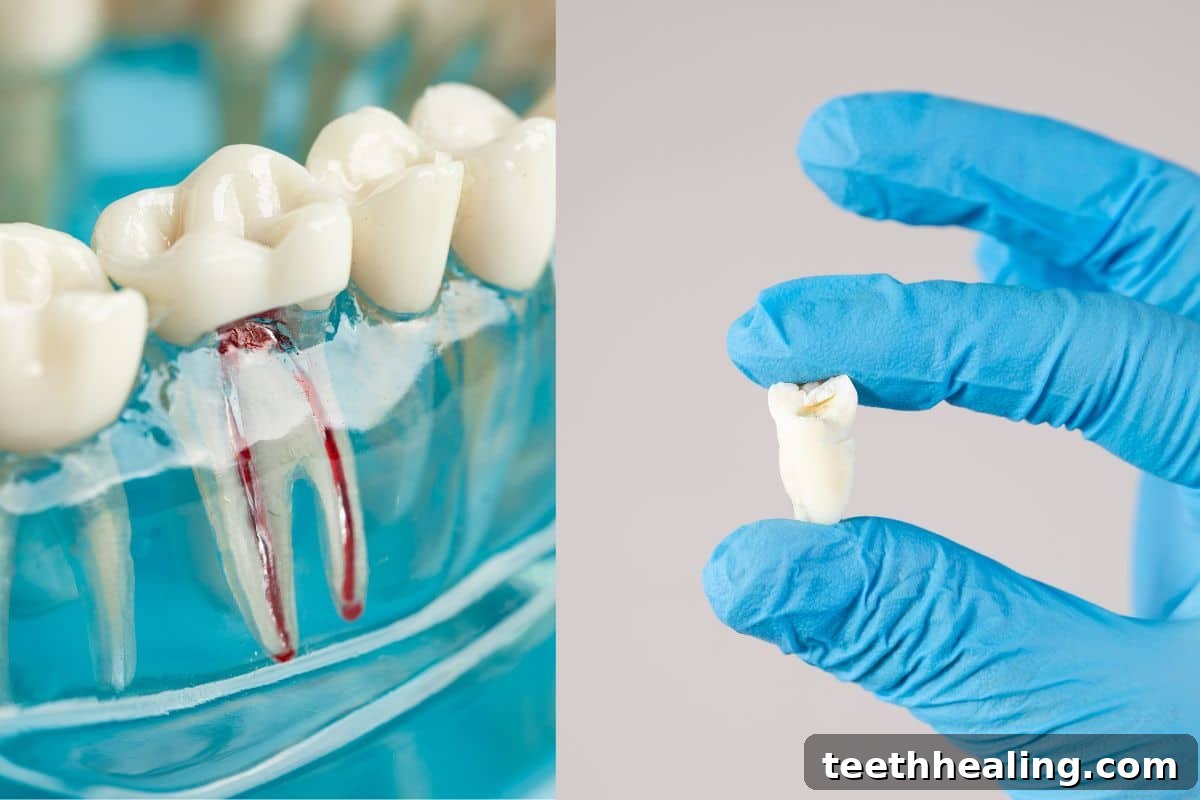
When facing severe dental issues, such as a tooth that is extensively damaged or deeply infected, the decision-making process can be daunting. Two primary treatments often come into consideration: a root canal and a tooth extraction. Both procedures aim to alleviate pain and restore oral health, yet they represent fundamentally different approaches to managing dental problems. Understanding the nuances, benefits, drawbacks, and long-term implications of each option is crucial for making an informed choice that aligns with your overall well-being and dental goals. This comprehensive guide will meticulously break down root canal therapy versus tooth extraction, empowering you with the knowledge needed to collaborate effectively with your dental professional.
Understanding Root Canal Therapy: Saving Your Natural Tooth
A root canal, scientifically known as endodontic therapy, is a sophisticated dental procedure designed to save a natural tooth that has become severely decayed, infected, or damaged. The core objective is to eliminate infection and pain while preserving the tooth’s structure and function in your mouth. This intricate process involves several meticulous steps:
- Diagnosis and Anesthesia: The dentist first uses X-rays and clinical examination to accurately diagnose the extent of the infection or damage. Local anesthesia is then administered to numb the affected area, ensuring a comfortable, pain-free procedure for the patient.
- Pulp Removal: A small access hole is created in the crown of the tooth. Through this opening, the infected or inflamed dental pulp – a soft tissue containing nerves, blood vessels, and connective tissue located in the tooth’s center – is carefully removed from the pulp chamber and root canals.
- Cleaning and Shaping: The empty canals are then thoroughly cleaned, disinfected, and shaped using specialized instruments. This step is critical to remove all bacteria and debris, preparing the canals for filling.
- Filling and Sealing: Once clean and dry, the root canals are filled with a biocompatible, rubber-like material called gutta-percha. A sealer is often used in conjunction with gutta-percha to ensure a complete seal, preventing future bacterial contamination.
- Temporary Filling: A temporary filling is placed in the access hole to protect the tooth until the permanent restoration.
- Permanent Restoration: In most cases, a dental crown is placed over the treated tooth. This final step is vital for restoring the tooth’s strength, protecting it from fracture, and bringing back its natural appearance and full functionality. Without a crown, a root-canal-treated tooth can be more brittle and susceptible to damage.
Root canal therapy is often recommended when the tooth’s outer structure remains viable, making it a strong candidate for preservation. It offers significant pain relief by eradicating the source of the infection and allows you to retain your natural tooth, which is superior to any prosthetic replacement in terms of feel, function, and aesthetics. A successfully treated tooth can last a lifetime with proper oral hygiene and regular dental check-ups.
Understanding Tooth Extraction: When Removal Becomes Necessary
A tooth extraction involves the complete removal of a tooth from its socket in the bone. This procedure is typically considered a last resort when a tooth is deemed irreparable and cannot be saved through other treatments like root canal therapy. Various factors can necessitate an extraction:
- Extensive Decay: If tooth decay has progressed to such an advanced stage that it has destroyed a significant portion of the tooth structure, rendering it impossible to restore with fillings, crowns, or even root canal therapy.
- Severe Gum Disease (Periodontal Disease): Advanced periodontal disease can cause significant bone loss around the tooth, leading to mobility and instability. When the supporting bone structure is compromised beyond repair, extraction becomes inevitable.
- Dental Trauma: A tooth that has suffered severe trauma, such as a fracture extending deep below the gum line or irreparable damage to the root, may require extraction.
- Overcrowding: In some orthodontic cases, teeth may be extracted to create space for proper alignment of the remaining teeth, facilitating a more effective orthodontic treatment.
- Impacted Wisdom Teeth: Wisdom teeth (third molars) often become impacted, meaning they fail to erupt properly and remain trapped within the jawbone. This can lead to pain, infection, damage to adjacent teeth, and other complications, frequently requiring surgical extraction.
Unlike a root canal, which focuses on preserving the tooth, extraction removes it entirely. While it immediately resolves the problem tooth, it creates a gap in your smile. This gap, if left unaddressed, can lead to a cascade of further dental problems. Therefore, after an extraction, your dentist will almost certainly recommend a replacement option to restore functionality, prevent further complications, and maintain aesthetic harmony. Common replacement solutions include:
- Dental Implants: A titanium post surgically placed into the jawbone, acting as an artificial tooth root. It’s then topped with a crown, offering a highly durable and natural-feeling replacement.
- Dental Bridges: A prosthetic device that spans the gap created by the missing tooth, anchored to the adjacent natural teeth or implants.
- Dentures: Removable appliances (partial or full) that replace multiple missing teeth or an entire arch of teeth.
Failing to replace an extracted tooth can have several negative consequences. The adjacent teeth may begin to drift or shift into the empty space, altering your bite alignment. This shifting can create new gaps, making cleaning difficult and increasing the risk of decay and gum disease. Furthermore, the jawbone beneath the missing tooth no longer receives stimulation from chewing, leading to bone resorption (loss of bone density) over time. This bone loss can affect the stability of surrounding teeth and even alter facial structure, contributing to a “sunk-in” appearance.
Comparing Root Canal and Tooth Extraction: Key Considerations
Making the right choice involves weighing several critical factors. Let’s delve deeper into the comparison:
Pain Relief and Discomfort
Both procedures ultimately provide relief from the severe pain caused by a damaged or infected tooth. However, the experience during and immediately after each differs significantly. For a root canal, modern techniques coupled with effective local anesthesia mean the procedure itself is typically no more uncomfortable than getting a filling. The pain relief is often immediate once the infected pulp is removed. Post-procedure discomfort is generally mild and manageable with over-the-counter pain relievers, akin to having a deep filling. The recovery is usually swift, with most patients returning to normal activities within a day or two.
An extraction, while also performed under local anesthesia to prevent pain during the procedure, often involves a more significant recovery period. The removal of a tooth creates a wound in the gum and bone, which can lead to more pronounced post-operative pain, swelling, and bruising. The intensity and duration of discomfort can vary depending on the complexity of the extraction (e.g., simple vs. surgical). Patients typically require stronger pain medication initially and may experience discomfort for several days, requiring careful adherence to aftercare instructions to prevent complications like dry socket.
Tooth Preservation and Long-Term Oral Health
Root canals excel in preserving your natural tooth. This is a monumental benefit because natural teeth offer unparalleled advantages: they maintain your natural bite, support the integrity of your jawbone, prevent adjacent teeth from shifting, and contribute to your facial aesthetics. Retaining your natural tooth also means preserving the intricate proprioceptive feedback mechanisms that allow you to sense the pressure and texture of food, which artificial replacements often lack. Keeping your natural teeth also simplifies oral hygiene routines compared to caring for bridges or dentures, which require specific cleaning techniques.
In contrast, a tooth extraction irrevocably removes the tooth. While it solves the immediate problem, it introduces a new one: the missing tooth gap. As discussed, this gap can lead to long-term issues such as bone loss in the jaw, drifting of adjacent teeth, changes in your bite, and potential difficulties with chewing and speech. These secondary complications often necessitate further, potentially more complex and costly, dental treatments down the line. Therefore, an extraction should ideally be followed by a suitable tooth replacement option to mitigate these adverse effects and maintain overall oral health.
Recovery Time and Aftercare
Recovery from a root canal is generally quicker and less involved. Most individuals can resume their normal daily activities within 24-48 hours. Mild soreness or sensitivity may persist for a few days, but significant swelling is rare. Aftercare typically involves avoiding chewing on the treated tooth until a permanent crown is placed and maintaining good oral hygiene. Patients are advised to contact their dentist if severe pain or swelling develops, though complications are uncommon.
The recovery from a tooth extraction typically takes longer and often requires more intensive aftercare. The initial healing phase, where the blood clot forms and stabilizes in the socket, can take several days to a week. Full soft tissue healing can take weeks, and bone remodeling can take months. Patients are usually advised to avoid strenuous activity, maintain a soft diet, and carefully follow instructions regarding pain management, ice packs for swelling, and gentle rinsing. Complications like dry socket, where the blood clot dislodges, can prolong healing and increase discomfort, requiring additional dental visits.
Cost Implications
When considering upfront costs, a root canal, especially if followed by a dental crown, can initially appear more expensive than a simple tooth extraction. The complexity of the root canal procedure, which involves specialized tools and techniques, contributes to its cost. However, it’s crucial to consider the long-term financial implications. If a tooth is extracted, the cost of replacing it (e.g., with a dental implant, bridge, or even a partial denture) can be significantly higher than the cost of saving the natural tooth with a root canal. Dental implants, while offering an excellent long-term solution, represent a substantial investment. Bridges also involve costs for the prosthetic and potential impact on adjacent teeth. Over a lifetime, saving a tooth often proves to be the more cost-effective solution when factoring in the cost of future replacements and potential complications arising from a missing tooth.
Long-Term Outlook and Success Rates
With proper care and a well-executed procedure, a root canal-treated tooth can last for many years, often a lifetime. The success rate of root canal therapy is very high, upwards of 95%, especially when the tooth is adequately restored with a crown. Factors influencing longevity include the quality of the restoration, the patient’s oral hygiene habits, and regular dental check-ups. The goal is to integrate the saved tooth seamlessly into your overall oral health for decades.
An extracted tooth resolves the immediate problem but, as noted, can lead to a host of long-term dental complications if not replaced. Without proper replacement, bone loss in the jaw can occur, altering facial structure and potentially affecting the stability of adjacent teeth. Neighboring teeth may shift, leading to bite problems, increased risk of decay, and gum disease. The absence of a tooth can also impact chewing efficiency and speech clarity. While replacements like implants offer excellent long-term solutions, they come with their own set of procedures, costs, and maintenance. Therefore, while extraction is sometimes unavoidable, its long-term outlook hinges entirely on subsequent restorative treatment.
Which Option Is Right for You? A Personalized Decision
The choice between a root canal and a tooth extraction is highly personal and depends on a thorough evaluation of several factors: the extent and nature of the damage or infection, the overall health of the tooth and surrounding tissues, your general health status, and your personal preferences and budget. Your dentist will conduct a comprehensive examination, including X-rays, to assess the viability of the tooth. They will consider:
- Tooth Viability: Is there enough healthy tooth structure remaining to support a crown after a root canal? Is the root system intact and free from severe fractures?
- Bone Health: Is there sufficient bone support around the tooth, or has extensive bone loss occurred due to gum disease?
- Overall Health: Are there any systemic health conditions that might impact healing or contraindicate one procedure over the other?
- Cost and Long-Term Plan: What are your financial considerations, and what is your long-term plan for tooth replacement if extraction is chosen?
- Patient Preferences: Do you prioritize preserving natural teeth, or are you looking for the most straightforward solution, even if it means losing a tooth?
A root canal may be the optimal choice if your tooth is structurally sound, the infection is confined to the pulp, and you wish to preserve your natural smile and bite. It’s often the preferred option for maintaining oral integrity and preventing a cascade of future dental problems. However, extraction may be necessary if the tooth is beyond saving due to severe decay, extensive fractures, advanced periodontal disease, or other irreparable damage, especially if it’s causing persistent, unmanageable pain.
Ultimately, the most critical step is to consult your dentist in Palm Desert or your trusted dental professional. They possess the expertise to evaluate your unique situation, discuss all viable treatment options, explain the pros and cons of each in detail, and help you determine the best course of action that aligns with your specific dental health needs and long-term well-being. Your dentist will serve as your guide, ensuring you make an empowered decision for a healthy and pain-free smile.