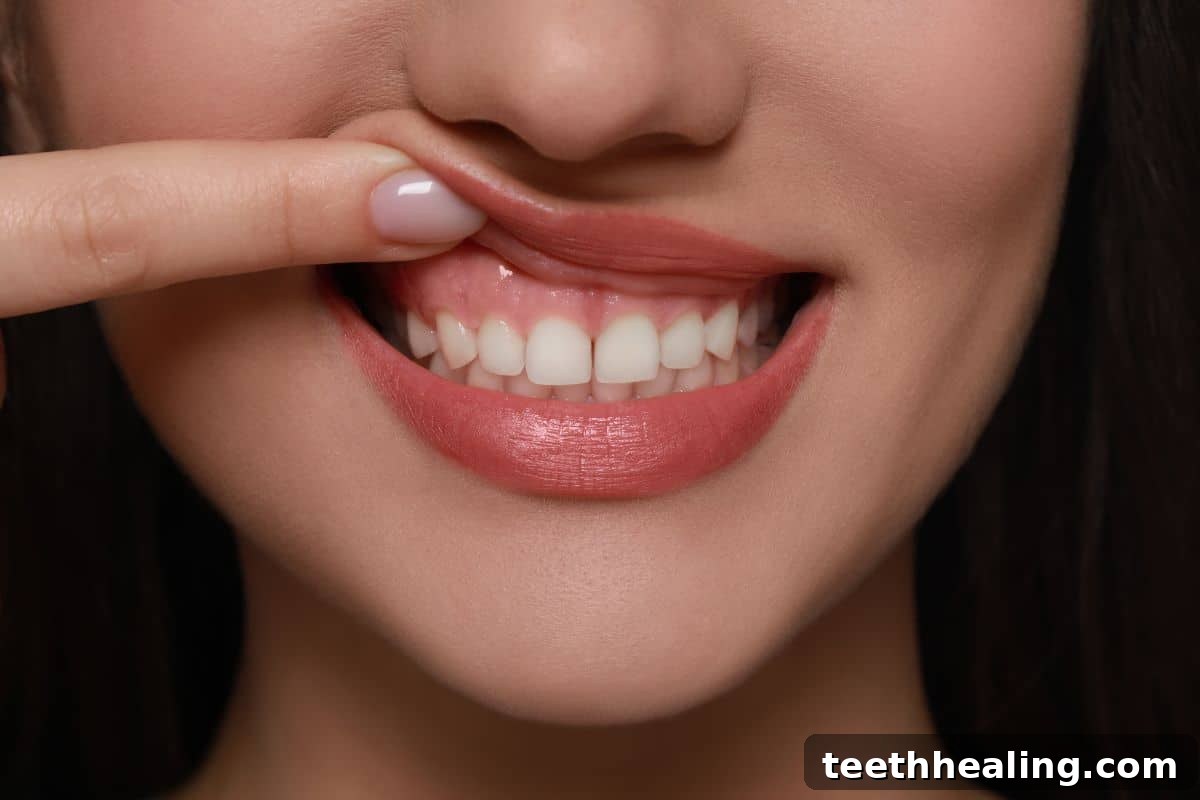
Receding gums, a common dental condition also known as gingival recession, occurs when the margin of the gum tissue surrounding your teeth pulls back or wears away. This process exposes more of the tooth, or the tooth’s root, which was previously protected by gum tissue. The visible outcome can be teeth that appear longer than usual, and critically, this exposure can lead to increased tooth sensitivity to hot and cold temperatures, making everyday activities like eating and drinking uncomfortable. Beyond the physical discomfort, receding gums can significantly impact your oral health, potentially leading to decay, bone loss, and even tooth loss if left unaddressed. Furthermore, the aesthetic implications of an uneven gum line can diminish self-confidence and affect your willingness to smile openly.
While the health implications of gum recession are paramount, its impact on your smile’s appearance and your overall self-esteem is undeniable. Fortunately, modern cosmetic dentistry offers a spectrum of innovative solutions designed not only to restore the aesthetic harmony of your smile but also to protect the exposed tooth roots and contribute to improved gum health. These advanced procedures can effectively address the visual concerns associated with gum recession, helping you achieve a healthier, more confident, and beautifully aligned smile.
Understanding Receding Gums: Causes and Impact on Oral Health
Before exploring the diverse range of treatment options, it’s crucial to understand the various factors that can contribute to gum recession. Recognizing the underlying cause is often the first and most vital step towards effective treatment and long-term prevention. Gum recession is not merely a sign of aging; it can stem from several preventable and treatable issues. Common culprits that lead to this progressive dental condition include:
- Periodontal Disease (Gum Disease): This is overwhelmingly the most common cause. Bacterial infections of the gums, ranging from mild gingivitis to severe periodontitis, can destroy gum tissue and the underlying bone supporting your teeth. As the infection progresses, gums pull away from the teeth.
- Aggressive Tooth Brushing: Brushing too hard, using a hard-bristled toothbrush, or employing improper brushing techniques can physically wear away gum tissue over time, much like erosion.
- Poor Oral Hygiene: Insufficient brushing and flossing allow plaque (a sticky film of bacteria) to accumulate and harden into tartar (calculus). Tartar irritates the gums, leading to inflammation and eventual recession.
- Genetics: Some individuals are simply more predisposed to developing gum disease and recession due regardless of their oral hygiene habits. A family history of gum issues can increase your risk.
- Tobacco Products: Smoking and chewing tobacco are significant risk factors. They compromise the immune system, making it harder for gum tissue to heal and increasing susceptibility to bacterial infections that cause recession.
- Bruxism (Teeth Grinding or Clenching): Chronic grinding or clenching puts excessive, abnormal force on the teeth and supporting gum tissues. This trauma can lead to gum tissue damage and recession.
- Misaligned Teeth or Bite Issues: When teeth do not come together evenly, some teeth may bear excessive force during chewing. This uneven pressure can stress the gum tissue around those teeth, causing it to recede.
- Hormonal Changes: Fluctuations in female hormones during puberty, pregnancy, or menopause can make gums more sensitive and vulnerable to inflammation and recession.
- Orthodontic Treatment: In some instances, rapid or aggressive tooth movement during orthodontic treatment (like braces) can put stress on the gum tissue, potentially leading to localized recession.
- Trauma or Injury: A direct injury to the gums can cause them to recede.
The impact of receding gums extends far beyond aesthetics. Exposed tooth roots lack the protective enamel layer found on the crowns of teeth, making them significantly more vulnerable to decay, sensitivity to temperature changes, and abrasive damage. The loss of gum tissue can also destabilize teeth, increasing the risk of tooth mobility and, in severe cases, eventual tooth loss. Addressing this condition promptly is therefore vital for maintaining long-term oral health, preserving tooth structure, and enhancing your quality of life.
Cosmetic and Restorative Dentistry Options for Treating Receding Gums:
It’s crucial to understand that while cosmetic dentistry can’t stimulate the natural regrowth of gum tissue that has been lost, it plays a pivotal role in addressing the aesthetic concerns associated with gum recession. More importantly, many of these advanced procedures also provide essential protective benefits for exposed tooth roots and contribute significantly to improved gum health by creating a more stable and resilient gum line. The treatment philosophy is often twofold: to restore a harmonious and pleasing smile aesthetic and to safeguard your teeth from further damage and sensitivity. Here are some of the most effective dental procedures commonly utilized to manage receding gums:
1. Gum Grafting (Gingival Grafting)
Often considered the most comprehensive and durable solution for treating moderate to severe gum recession, gum grafting is a surgical procedure specifically designed to restore lost gum tissue and cover exposed tooth roots. This highly effective technique involves meticulously taking healthy gum tissue from one area of your mouth (known as the donor site) and carefully grafting it onto the area where recession has occurred (the recipient site). The newly placed tissue then integrates with your existing gums, covering the exposed root surface, reducing sensitivity, and creating a healthier, more protective, and aesthetically pleasing gum line. There are several principal types of gum grafts:
- Connective Tissue Graft: This is the most common and versatile method. A small flap is created on the roof of your mouth, and tissue from underneath this flap (subepithelial connective tissue) is harvested and then stitched over the exposed root. The flap is then sutured back.
- Free Gingival Graft: Similar to a connective tissue graft, but a small, thin piece of tissue is taken directly from the surface of the roof of the mouth and used to cover the exposed root. This is often recommended for individuals with thin gums or those needing to increase the thickness of gum tissue in a specific area.
- Pedicle Graft: In this method, a flap of gum tissue is partially cut and carefully rotated from an area immediately adjacent to the receding gum. This type of graft is only feasible if there is sufficient healthy gum tissue directly next to the affected tooth. It maintains its own blood supply, which can promote excellent healing.
- Allograft (Donor Tissue): For patients who prefer not to use tissue from their own mouth, processed donor human tissue (allograft) can be used. This eliminates the need for a second surgical site but may have a different healing profile.
Benefits of Gum Grafting: Gum grafting offers profound benefits that extend far beyond aesthetics. It effectively covers exposed tooth roots, thereby significantly reducing tooth sensitivity, preventing further recession, and protecting the roots from decay and erosion. It also contributes to a more even, symmetrical, and natural-looking gum line, dramatically enhancing the overall appearance of your smile. This procedure is highly successful in restoring stability, resilience, and health to the gums, providing long-term protection.
Recovery and Aftercare: Recovery typically involves some soreness, swelling, and potential bruising in both the donor (if applicable) and recipient sites. This discomfort can be effectively managed with prescribed pain medication. Patients are generally advised to adhere to a soft diet for a period and to avoid brushing or disturbing the surgical site. Rigorous oral hygiene instructions and follow-up appointments are crucial for optimal healing. Full healing of the gum tissue can take several weeks, but the long-term functional and aesthetic results are generally excellent and very durable.
2. Gum Veneers (Gingival Veneers or Artificial Gums)
Gum veneers, also known as gingival veneers or artificial gums, present a non-surgical and minimally invasive cosmetic solution primarily for minor to moderate gum recession where surgical options might not be preferred or deemed necessary. These are thin, custom-made prosthetic tissues typically crafted from a flexible acrylic resin or a soft, biocompatible silicone material. They are meticulously designed to closely mimic the natural appearance, color, and texture of healthy gum tissue. Gum veneers are precisely fabricated to fit snugly over the exposed tooth roots and the remaining gum line, effectively masking the recession and creating the visual illusion of a fuller, more youthful, and aesthetically pleasing gum line.
Ideal Candidates and Benefits: Gum veneers are an excellent option for individuals seeking a quick, painless, and reversible solution to aesthetic concerns caused by mild to moderate gum recession. They are particularly suitable for patients who are not ideal candidates for surgery, are hesitant about surgical procedures, or prefer a non-surgical approach with immediate results. The procedure involves taking precise impressions of your mouth, custom-making the veneers in a dental laboratory, and then bonding them directly to your teeth and existing gum tissue. They provide an instant cosmetic improvement, significantly boosting confidence in your smile without the need for a recovery period typically associated with surgery.
Limitations: While highly effective aesthetically, it is crucial to understand that gum veneers do not address the underlying causes of gum recession. They serve as a cosmetic camouflage and do not actively regenerate gum tissue or treat active gum disease. Consequently, they may not be suitable for severe recession, cases of active gum disease, or situations where significant root protection from decay or sensitivity is the primary concern. Regular cleaning, meticulous maintenance, and periodic professional evaluations are essential to ensure their longevity and hygiene. Their durability can vary, potentially requiring periodic adjustment or replacement over time. Patients with poor oral hygiene or severe clenching/grinding habits might not be ideal candidates due to potential damage to the veneers.
3. Gum Contouring (Gingivectomy or Gingivoplasty)
Gum contouring is a precise surgical procedure focused on reshaping existing gum tissue to create a more even, balanced, and aesthetically pleasing gum line. While this procedure is most frequently associated with addressing a “gummy smile” (where an excessive amount of gum tissue covers the teeth, making them appear short), it can also be strategically used in conjunction with gum grafting to prepare the area for new tissue or, in specific cases, to subtly refine and improve the appearance of mild gum recession. During a gum contouring procedure, the dentist utilizes specialized instruments, which may include traditional scalpels or advanced dental lasers, to carefully remove small amounts of excess gum tissue or to gently sculpt the existing gum margins to achieve desired proportions and symmetry.
When employed in the context of gum recession, it’s typically part of a broader, multi-stage treatment plan rather than a standalone solution for significant tissue loss. For instance, after a successful gum graft, contouring might be performed to fine-tune the new gum line’s appearance, ensuring it blends seamlessly and creates a harmonious smile. The procedure is not primarily designed to *add* gum tissue but rather to refine the existing tissue’s shape and proportion. It promotes a more balanced and aesthetically pleasing gum line, improving smile symmetry and overall facial harmony. The procedure is typically performed under local anesthesia, ensuring patient comfort, and recovery is generally swift, with minimal discomfort and a short healing period.
4. Pinhole Gum Rejuvenation (PST – Pinhole Surgical Technique)
Pinhole Gum Rejuvenation, widely known as the Pinhole Surgical Technique (PST), represents a groundbreaking, minimally invasive approach to treating mild to moderate gum recession. This innovative procedure offers a compelling and often preferred alternative to traditional gum grafting for many patients, as it entirely avoids the need for scalpels, sutures, or the harvesting of tissue from a donor site within the patient’s mouth. Instead, the dentist utilizes a specialized instrument to create one or more tiny “pinholes” in the gum tissue located above the affected tooth or teeth.
Through these minute pinholes, the dentist gently manipulates and repositions the existing gum tissue, carefully sliding it down to cover the previously exposed tooth root surfaces. To help stabilize the repositioned tissue in its new, healthier position and promote healing, small collagen strips are often inserted through the pinholes. This ingenious technique effectively rejuvenates the gum line, restoring it to a more aesthetically pleasing and protective position over the tooth roots.
Because there are no incisions or stitches, Pinhole Gum Rejuvenation offers several distinct advantages:
- Minimally Invasive: The procedure is far less traumatic to the gum tissue compared to traditional grafting methods, resulting in less swelling and discomfort.
- Faster Recovery: Patients typically experience significantly reduced post-operative discomfort and a much quicker healing period.
- Immediate Results: The cosmetic improvement and coverage of exposed roots are often visibly apparent immediately after the procedure.
- No Donor Site: Eliminates the need for tissue harvesting from the palate or other areas of the mouth, which is often the most uncomfortable part of traditional grafting procedures.
- Natural Appearance: The technique utilizes your body’s existing gum tissue, creating a very natural-looking and seamless gum line.
While highly effective for many cases, PST requires specialized training and certification to perform. It is not universally suitable for all severe cases of gum recession, especially those involving extensive bone loss or advanced periodontal disease. Post-operative care is relatively straightforward, focusing on gentle oral hygiene, avoiding hard or crunchy foods, and adhering to specific instructions for a short period to ensure proper healing and stabilization of the repositioned tissue.
When to Consider Other Essential Dental Treatments: Addressing the Root Cause:
While the cosmetic dentistry options discussed above offer excellent solutions for improving the appearance and protection of your smile, it is absolutely critical to emphasize that addressing the underlying cause of gum recession is paramount for long-term success and overall oral health. In many instances, gum recession is not merely a cosmetic issue but a visible symptom of a deeper, more serious problem, most commonly active gum disease (periodontitis).
If active gum disease is diagnosed, your dentist or periodontist (a gum specialist) will almost certainly recommend treating the infection and inflammation *before* considering purely cosmetic procedures. Ignoring the root cause means any cosmetic improvements could be short-lived, with recession potentially recurring or worsening. Effective treatment of gum disease stabilizes the oral environment and creates a healthy foundation for any subsequent cosmetic or restorative work. Treatments for gum disease typically fall into two main categories:
- Non-Surgical Periodontal Treatments: These are usually the first line of defense for mild to moderate gum disease.
- Scaling and Root Planing: Often referred to as a “deep cleaning,” this procedure involves meticulously removing plaque, tartar (calculus), and bacterial toxins from above and below the gum line (scaling). Subsequently, the root surfaces are smoothed (root planing) to eliminate rough spots where bacteria can accumulate, helping the gum tissue reattach firmly to the teeth.
- Antibiotics: Oral or topical antibiotics (gels or chips placed into gum pockets) may be prescribed to control active bacterial infection and reduce inflammation.
- Surgical Periodontal Treatments: For more advanced cases of gum disease where non-surgical methods are insufficient to halt disease progression or to repair damage, surgical interventions may be necessary:
- Flap Surgery (Pocket Reduction Surgery): During this procedure, the gums are gently lifted back, and the underlying tartar is thoroughly removed. Irregular surfaces of damaged bone may be smoothed to eliminate areas where disease-causing bacteria can hide, and the gum tissue is then sutured back into place more tightly around the tooth.
- Bone Grafting: If significant bone loss has occurred due to periodontitis, fragments of your own bone, synthetic bone, or donated bone material are used to replace lost bone and encourage the regeneration of new bone tissue.
- Guided Tissue Regeneration: This technique is used to stimulate the growth of bone and gum tissue. A small piece of mesh-like fabric is inserted between the bone and gum tissue. This barrier prevents the gum tissue from growing into the area where bone should be, allowing the slower-growing bone and connective tissue to regenerate and fill the defect.
Once the underlying gum disease is effectively controlled, and the gums are healthy, stable, and free from active infection, your dentist can then accurately evaluate the need for and suitability of cosmetic procedures to restore the aesthetics of your smile and provide additional protection to any remaining exposed root surfaces. This phased approach ensures the longevity and success of both your oral health and cosmetic outcomes.
Preventing Receding Gums: A Proactive Approach to Oral Health
While effective treatments exist for receding gums, the best strategy always involves prevention. Implementing consistent good oral hygiene practices and being mindful of various risk factors can significantly reduce your chances of developing or worsening this common dental condition. A proactive approach is key to maintaining healthy gums and a beautiful smile for life:
- Brush Gently and Effectively: Always use a soft-bristled toothbrush and brush with gentle, circular, or short back-and-forth motions. Avoid scrubbing aggressively back and forth along the gum line, as this can physically damage and wear away gum tissue over time. Consider an electric toothbrush with a pressure sensor.
- Floss Daily: Flossing is crucial for removing plaque and food particles from between teeth and under the gum line, areas your toothbrush cannot effectively reach. Gentle, consistent flossing helps prevent the buildup that leads to gum inflammation and disease.
- Regular Dental Check-ups and Cleanings: Visit your dentist at least twice a year for professional cleanings and comprehensive examinations. Early detection of gum disease or the initial signs of recession can allow for timely intervention and prevent the condition from worsening.
- Use a Therapeutic Mouthwash: An antimicrobial or antiseptic mouthwash can help reduce the amount of bacteria in your mouth that contribute to plaque formation and gum disease. Consult your dentist for a recommendation suitable for your needs.
- Quit Tobacco Products: If you smoke or use other tobacco products, quitting is unequivocally one of the most impactful steps you can take for your gum health. Tobacco use significantly impairs gum healing and increases the risk of severe gum disease and recession.
- Address Bruxism (Teeth Grinding/Clenching): If you habitually grind or clench your teeth, especially at night, your dentist can provide a custom-fitted nightguard (occlusal splint) to protect your teeth and gums from the excessive forces that can contribute to recession.
- Correct Misaligned Bites: If you have misaligned teeth or a bite that puts uneven pressure on certain areas of your gums, orthodontic treatment can correct these issues, creating a more balanced and healthier oral environment.
- Maintain a Balanced Diet: A diet rich in vitamins and minerals, particularly Vitamin C, supports overall oral and systemic health, strengthening gum tissues and improving their ability to resist infection.
- Monitor Medications: Some medications can cause dry mouth, which reduces saliva’s protective effects and can contribute to gum problems. Discuss any concerns with your dentist and physician.
Conclusion: Reclaiming Your Healthy, Confident Smile:
Receding gums can indeed be a source of significant aesthetic concern, leading to a diminished sense of self-confidence, and simultaneously pose serious threats to your long-term dental health through increased sensitivity, decay, and potential tooth loss. While the concept of regrowing lost gum tissue naturally remains a biological challenge, the advancements in modern dentistry, particularly through sophisticated cosmetic and restorative procedures, offer a robust and effective array of solutions.
These specialized treatments are expertly designed to not only dramatically improve the visual appeal of your smile but, more importantly, to protect vulnerable exposed tooth roots, significantly reduce tooth sensitivity, and contribute to the overall stability, resilience, and health of your gum line. Whether it’s through innovative, minimally invasive techniques like Pinhole Gum Rejuvenation, the foundational and highly effective surgical approach of gum grafting, or the aesthetic refinement offered by custom gum veneers and strategic gum contouring, there are tailored options available for nearly every patient’s specific needs and preferences.
The key to successful treatment and lasting results lies in a comprehensive understanding of the individual underlying causes of your gum recession and a personalized treatment plan developed in close consultation with an experienced and qualified dental professional. If you are experiencing concerns about receding gums, increased tooth sensitivity, or are simply unhappy with the aesthetics of your smile, do not hesitate to consult a qualified dentist or periodontist.
They possess the expertise to accurately diagnose the extent of the recession, meticulously identify its contributing factors, and discuss the best possible treatment options for your unique situation. Taking proactive steps ensures you can regain not just a healthy and beautiful smile, but also the invaluable confidence and comfort that comes with optimal oral health.