Can Invisalign Fix Severe Crowding? Unveiling Its Potential for Complex Cases
Severe teeth crowding is far more than just a cosmetic imperfection; it can profoundly impact your oral health, bite function, and overall quality of life. For many years, traditional metal braces were considered the sole viable option for correcting significant alignment issues. However, with remarkable advancements in orthodontic technology, individuals facing complex dental challenges are increasingly asking: “Can Invisalign effectively treat severe teeth crowding?” According to leading dental professionals and clinical evidence, the answer is a resounding yes in a significant and growing number of cases.
What began as a revolutionary, discreet solution primarily for mild to moderate alignment problems has evolved into a sophisticated orthodontic system. Today’s Invisalign technology, powered by advanced digital planning, innovative aligner materials, and specialized attachments, offers a compelling and often preferred alternative to conventional braces, even for challenging cases involving substantial crowding. This comprehensive guide will delve into what precisely constitutes severe crowding, how Invisalign leverages its cutting-edge features to tackle these intricate issues, and what dental experts recommend for achieving optimal, long-lasting results for your smile.
Understanding Severe Teeth Crowding: More Than Just Aesthetics
Teeth crowding occurs when there isn’t sufficient space in the jawbone to accommodate all your teeth properly. This often results in teeth overlapping, twisting, rotating, or being pushed out of alignment. While any degree of crowding can be aesthetically bothersome and functionally problematic, severe crowding presents a distinct set of challenges and health risks:
- Significant Overlap and Rotation: In severe cases, teeth are noticeably out of their ideal positions, often overlapping extensively, appearing significantly crooked, or rotated at unusual angles. This can affect the symmetry of your smile and your facial aesthetics.
- Impacted Teeth: Sometimes, severe lack of space can prevent a permanent tooth from erupting properly, leaving it partially or fully embedded in the jawbone. This can lead to cysts, damage to adjacent teeth, or infection.
- Malocclusion and Bite Irregularities: Severe crowding frequently leads to various forms of malocclusion, where the upper and lower teeth do not meet correctly when the mouth is closed. This can manifest as an overbite, underbite, crossbite, or open bite, potentially causing discomfort, inefficient chewing, excessive wear on specific teeth, and even temporomandibular joint (TMJ) disorders.
The Comprehensive Health Risks of Severely Crowded Teeth
Beyond the visible misalignment and aesthetic concerns, severe crowding poses several serious oral health and general well-being risks:
- Compromised Oral Hygiene: The tight spaces, deep crevices, and overlapping surfaces created by severely crowded teeth are notoriously difficult, if not impossible, to clean effectively with regular brushing and flossing. This leads to increased plaque buildup, food impaction, and a significantly higher risk of developing dental caries (cavities).
- Gum Disease (Periodontal Disease): Persistent plaque accumulation along the gumline, especially in hard-to-reach areas, inflames the gum tissue, leading to gingivitis. If left untreated, this can progress to periodontitis, a more severe form of gum disease that damages the supporting bone and ligaments around the teeth, potentially leading to tooth mobility and eventual tooth loss.
- Abnormal Wear and Tear: Misaligned teeth can cause an uneven distribution of biting forces. This irregular pressure can lead to excessive wear on certain tooth surfaces, chipped enamel, fractures, or even sensitivity. Over time, this can compromise the structural integrity of the teeth.
- Speech Difficulties: The precise positioning of your teeth, tongue, and lips plays a crucial role in articulation. Severe crowding can sometimes contribute to speech impediments such as lisps or other difficulties in forming certain sounds clearly.
- Reduced Self-Confidence and Psychological Impact: Perhaps one of the most immediate and profound consequences is the psychological toll. Many individuals with severely crowded teeth feel self-conscious or embarrassed about their smile, impacting their social interactions, professional opportunities, and overall self-esteem. Correcting severe crowding can have a transformative effect on a person’s confidence.
While traditional metal braces have historically been the primary solution for these complex issues, the continuous evolution of Invisalign technology now offers a modern, often more discreet, and comfortable alternative for a wide range of patients.
Invisalign for Severe Crowding: Harnessing Advanced Technology and Precision
The pivotal question for many patients considering orthodontic treatment is not simply whether Invisalign can move teeth, but whether it possesses the capability to achieve the precise, extensive movements required for significant or severe crowding. Thanks to continuous innovation and clinical research, the answer for a substantial number of patients is a resounding yes. Modern Invisalign treatment leverages a sophisticated suite of advanced features and digital tools to effectively manage even the most challenging and complex cases.
How Invisalign Tackles Severe Crowding with Precision
- Precision Digital Planning (ClinCheck® Software): The treatment journey begins with a highly detailed 3D digital scan of your teeth and jaw, often using an iTero Element scanner. This data is then uploaded into Invisalign’s proprietary ClinCheck software. This advanced software allows your orthodontist to meticulously map out the entire treatment plan virtually, from the initial position of your teeth to their final, ideal alignment. Crucially, you can even see a digital representation of your teeth moving into their corrected positions before treatment commences. This unparalleled level of precision planning is fundamental for complex crowding cases, ensuring predictable and effective tooth movements.
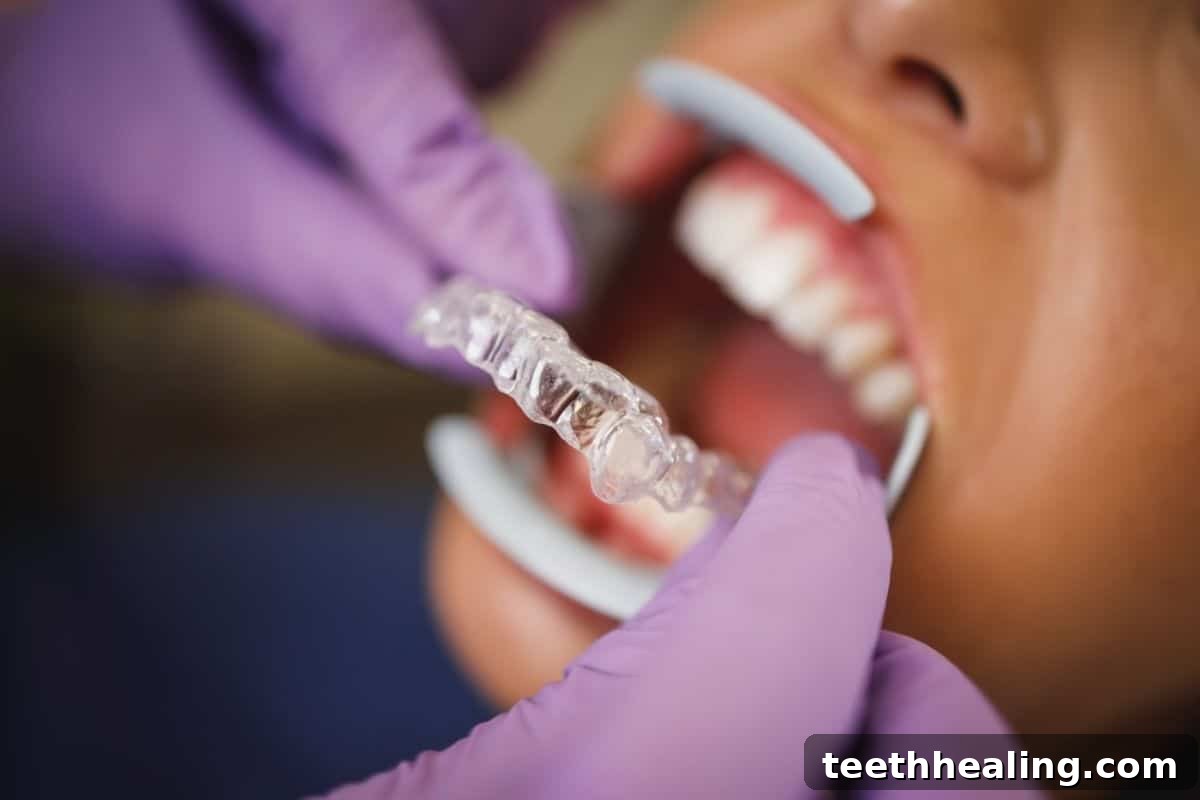
- Customized SmartTrack™ Aligner Material: Invisalign aligners are fabricated from a patented, multi-layer SmartTrack™ material. This innovative material is engineered to provide gentle, continuous, and consistent force throughout the two-week wear period of each aligner. It boasts greater elasticity and adaptability than previous materials, allowing for improved control over tooth movement and enhanced patient comfort. The aligners fit snugly, translating the planned movements into reality.
- SmartForce® Features and Attachments: To achieve complex tooth movements often required in severe crowding, Invisalign utilizes SmartForce® features. These are small, discreet, tooth-colored composite “attachments” that are temporarily bonded to specific teeth. They act like handles or anchors, giving the aligners the extra grip and leverage needed for intricate movements such as:
- Rotations: Correcting severely twisted teeth.
- Extrusions/Intrusions: Gently pulling a tooth down or pushing it up into the arch.
- Torque Control: Precisely controlling the angle and tilt of the tooth root.
- Bite Ramps: Built into the aligners, these can help correct deep bites or open bites, which often accompany crowding.
- Precision Cuts: Small cutouts in the aligners designed to accommodate elastic bands. These bands are used to apply additional forces for jaw alignment (e.g., correcting an overjet) and other complex tooth movements.
- Sequential, Controlled Force Application: Each set of aligners is precisely engineered to make subtle, specific tooth movements. Patients typically wear each aligner set for 1-2 weeks before progressing to the next in the series. This gradual, controlled, and consistent application of force is highly effective for safely and predictably shifting even severely crowded teeth into their correct alignment over the meticulously planned course of treatment.
While the overall Invisalign journey typically lasts between 12 and 24 months for many severe crowding cases, the exact timeline is meticulously planned by your orthodontist based on the unique intricacies of your dental structure, the extent of the crowding, and your individual biological response to treatment.
Expert Recommendations: Keys to Success with Invisalign in Complex Cases
Dental professionals globally acknowledge Invisalign’s significant capacity to treat severe crowding effectively, provided certain critical factors are met. The success of such complex treatment hinges on a collaborative effort between the patient and an experienced, qualified orthodontic provider.
Crucial Factors for Optimal Invisalign Treatment in Severe Crowding Cases:
- Age and Bone Structure:
Younger patients, particularly adolescents whose bone structure is still developing and more pliable, often respond more quickly and sometimes more extensively to orthodontic treatment. However, this does not mean Invisalign is limited to teens. Adults can achieve excellent results too, though their treatment might take slightly longer due to denser, more mature bone. The key is a thorough assessment of bone health, root structure, and overall periodontal (gum) condition by a highly skilled orthodontist to ensure safe and effective tooth movement.
- Patient Compliance: The Non-Negotiable Factor:
This is arguably the single most critical component for successful Invisalign treatment, especially in severe cases. For optimal results, aligners *must* be worn diligently for at least 20–22 hours a day. Failing to adhere to this daily wear time will significantly impede progress, prolong treatment, and may even compromise the final outcome. Unlike fixed braces, aligners are removable, placing a substantial responsibility on the patient for consistent wear. This unwavering commitment is paramount, as precise, continuous force is essential for complex tooth movements.
- Necessity of Space Creation:
In many severe crowding cases, there simply isn’t enough natural space within the dental arch for all teeth to align perfectly. To create the necessary room for proper tooth movement, your orthodontist might recommend one or both of the following procedures:
- Interproximal Reduction (IPR): Also known as “tooth slenderizing” or “enamel stripping,” IPR involves the careful and precise removal of a minuscule amount (typically 0.25 to 0.5 mm) of outer enamel from between specific teeth. This procedure, performed by an experienced professional, creates small amounts of space cumulatively, which can be sufficient to resolve moderate to severe crowding without the need for extractions. It is a safe and effective technique when planned and executed correctly.
- Tooth Extractions: For cases of extremely severe crowding, where there are impacted teeth, or when there’s a significant discrepancy between jaw size and tooth size, the extraction of one or more teeth (often premolars) may be necessary. While this might sound daunting, extractions can create ample space, allowing Invisalign to effectively move the remaining teeth into their proper, healthy positions. Your orthodontist will determine if extractions are the most appropriate and beneficial path during your comprehensive diagnostic evaluation.
- Expert Orthodontic Supervision and Experience:
While Invisalign is an advanced product, the true determinant of successful treatment lies in the expertise and skill of the clinician utilizing it. An experienced orthodontist, especially one with extensive specialized training and a proven track record in managing complex Invisalign cases, is absolutely crucial. They possess the in-depth knowledge to accurately diagnose, meticulously plan, and expertly manage the nuances of severe crowding, making necessary adjustments to the treatment plan as it progresses. Regular check-ups with your provider are indispensable to monitor progress, ensure the treatment stays on track, and address any unforeseen challenges.
When these critical factors align – proactive patient compliance, careful space management, and the skilled guidance of a dedicated orthodontist – dental experts unequivocally agree that Invisalign can be just as effective as traditional braces, even in achieving transformative and stable results for severe crowding cases.
Compelling Advantages: Why Choose Invisalign for Crowded Teeth?
For individuals grappling with the challenges of severe crowding, the decision to undergo orthodontic treatment is significant and often life-changing. Invisalign offers a multitude of compelling benefits that frequently make it the preferred choice over conventional braces, enhancing both the treatment experience and the final outcome:
- Virtually Invisible Appearance: The clear, custom-made aligners are nearly undetectable when worn, offering unparalleled discretion. This aesthetic advantage is a primary draw for adults and image-conscious teenagers who wish to straighten their teeth without the visible impact of metal brackets and wires. You can smile, speak, and interact confidently throughout your entire treatment period, often without others even noticing you’re undergoing orthodontic correction.
- Superior Comfort and Reduced Irritation: Crafted from smooth, BPA-free plastic, Invisalign aligners eliminate the chronic irritation often associated with metal wires and brackets rubbing against the delicate tissues of the cheeks, lips, and gums. While you will experience some temporary pressure and mild discomfort as your teeth begin to shift with each new aligner set, it’s generally a less abrasive and significantly more comfortable experience overall, leading to fewer emergency visits for broken wires or detached brackets.
- Unrestricted Oral Hygiene: One of the most significant long-term health advantages of Invisalign is the ability to easily remove your aligners for thorough brushing and flossing. This allows for meticulous cleaning of your teeth and gums, drastically reducing the risk of plaque buildup, food impaction, cavities, and gum disease that can be challenging to avoid with fixed braces. Maintaining excellent oral hygiene throughout treatment contributes to healthier outcomes and a brighter, cleaner smile post-treatment.
- No Dietary Restrictions: With traditional braces, certain foods like sticky candies, hard nuts, and crunchy snacks are typically off-limits to prevent damage to brackets and wires. Invisalign eliminates this concern entirely, as you simply remove your aligners before eating and drinking anything other than plain water. This means you can continue to enjoy all your favorite foods without worry or compromise.
- Fewer and Shorter Office Visits: Invisalign typically requires fewer and often shorter in-office appointments compared to traditional braces. While regular check-ups (typically every 6-8 weeks) are still necessary to monitor your progress, receive your next sets of aligners, and ensure the treatment is on track, the absence of wire adjustments and emergency repairs means less time spent in the dental chair, making it a more convenient option for busy lifestyles.
- Predictable Results with Visual Planning: The advanced ClinCheck software provides a precise, step-by-step visual representation of your entire treatment journey from start to finish. This allows both you and your orthodontist to visualize the expected outcome and the progression of tooth movement, fostering confidence and ensuring predictable, high-quality results.
With the expert guidance of an experienced provider and consistent adherence to the treatment plan, patients grappling with severe crowding frequently achieve dramatic improvements not only in the aesthetics of their smile but also in the long-term function, health, and stability of their bite.
Is Invisalign Your Solution? The Paramount Importance of a Personalized Consultation
If you have previously been informed that your severe crowding precludes you from Invisalign treatment, it might be an opportune time to seek a second opinion from an experienced orthodontist. The technology, materials, and clinical techniques associated with Invisalign have advanced significantly in recent years, making it a viable and highly effective option for many cases that would have once been considered too complex for clear aligners.
The ultimate determination of whether Invisalign is the right and most effective solution for your specific severe crowding rests entirely on a comprehensive orthodontic evaluation. During your initial consultation, your dentist or orthodontist will perform a thorough and detailed assessment, which typically includes:
- Detailed Oral Examination: A meticulous visual inspection of your teeth, gums, and overall oral health, identifying any existing dental issues that need to be addressed before or during orthodontic treatment.
- Advanced Diagnostic Imaging: State-of-the-art X-rays (panoramic, cephalometric, and sometimes 3D cone-beam CT scans) to evaluate bone structure, root positions, the presence of wisdom teeth, and any impacted or unerupted teeth.
- Digital Impressions: Modern intraoral scanners (such as the iTero Element scanner) create a precise 3D digital model of your teeth and bite. This eliminates the need for traditional, messy physical impressions and provides an incredibly accurate foundation for planning your customized Invisalign treatment using the ClinCheck software.
- Comprehensive Bite Analysis: A detailed assessment of how your upper and lower teeth meet, identifying any discrepancies, malocclusions, or functional issues that contribute to or are caused by your crowding. This analysis is critical for designing a treatment plan that optimizes both aesthetics and bite function.
Based on this detailed diagnostic information, your dental professional will discuss all your viable treatment options, outlining the pros and cons of Invisalign versus other orthodontic solutions, such as traditional braces or combination therapies. They will provide a clear understanding of the expected duration, estimated cost, and the commitment required for your specific case. It is paramount to choose an orthodontist who possesses extensive experience, specialized training, and a strong track record in successfully managing complex Invisalign cases to ensure the best possible aesthetic and functional outcome for your smile.
Ready to Transform Your Smile and Oral Health?
Don’t let severe crowding diminish your confidence, compromise your oral health, or prevent you from achieving the radiant smile you’ve always desired. Invisalign offers a sophisticated, effective, and discreet path to a beautifully aligned and healthy smile, even for challenging and complex cases.
Taking the crucial first step towards a healthier, happier, and more confident smile begins with a simple conversation. Visit our dental office today to schedule a personalized consultation. Our experienced and dedicated team is ready to evaluate your unique needs, answer all your questions comprehensively, and design a tailored treatment plan to help you achieve the confident and stunning smile you truly deserve.