
The Dental Chair: An Unexpected Frontline in the Fight Against Undiagnosed Diabetes
Diabetes is a global health challenge, often silently progressing without immediate symptoms. Millions worldwide live with undiagnosed diabetes or pre-diabetes, unaware of the significant health risks they face. While typically associated with medical doctors, a groundbreaking study published in the July 2011 issue of the Journal of Dental Research titled “Identification of unrecognized diabetes and pre-diabetes in a dental setting” shed light on an unexpected ally in this fight: dentists. Researchers at Columbia University College of Dental Medicine revealed that routine dental visits offer a unique and critical opportunity to identify individuals with diabetes or pre-diabetes who are otherwise unaware of their condition. This revelation prompts a crucial question: Could your dentist soon play a pivotal role in detecting a life-altering systemic disease?
The study sought to develop and rigorously evaluate an identification protocol for elevated blood sugar levels within a typical dental patient population. Its findings have far-reaching implications, suggesting that oral healthcare professionals, through simple, non-invasive procedures, could significantly contribute to public health by flagging early signs of a condition that, if left untreated, can lead to severe complications. This article delves into the intricate connection between oral health and systemic well-being, exploring how dental practitioners are uniquely positioned to become invaluable partners in the early detection and management of diabetes.
The Undeniable Link: Oral Health as a Window to Systemic Diseases
The human body is an interconnected system, and oral health is a critical indicator of overall systemic health. For decades, the medical and dental communities have recognized strong links between conditions like periodontal disease (gum disease) and chronic illnesses such as diabetes. Periodontal disease, characterized by inflammation and infection of the gums and supporting bone structures around the teeth, is not merely a localized oral issue; it is considered an early and significant complication of diabetes. This connection is bidirectional: individuals with diabetes are more susceptible to severe gum disease, and conversely, uncontrolled periodontal disease can make blood sugar management more challenging.
But why are dentists in a unique position to intervene? Approximately 70 percent of adults visit a dentist at least once a year, making dental clinics a high-traffic healthcare setting. Unlike many individuals who might neglect regular medical check-ups, people often prioritize their dental health, providing dentists with consistent opportunities for interaction. Historically, the potential contributions of oral findings to systemic disease screening had not been thoroughly evaluated in a clinical setting until studies like the one from Columbia University emerged. This oversight meant a valuable opportunity for early detection was being missed, despite the clear observable signs present in the oral cavity.
Unveiling the Columbia Study: Methodology and Insights
To explore this potential, the Columbia University researchers embarked on a comprehensive study. They meticulously recruited approximately 600 individuals who were visiting a dental clinic and, critically, had never been told they had diabetes or pre-diabetes. This particular demographic was essential for assessing the efficacy of a screening protocol designed to identify *unrecognized* cases.
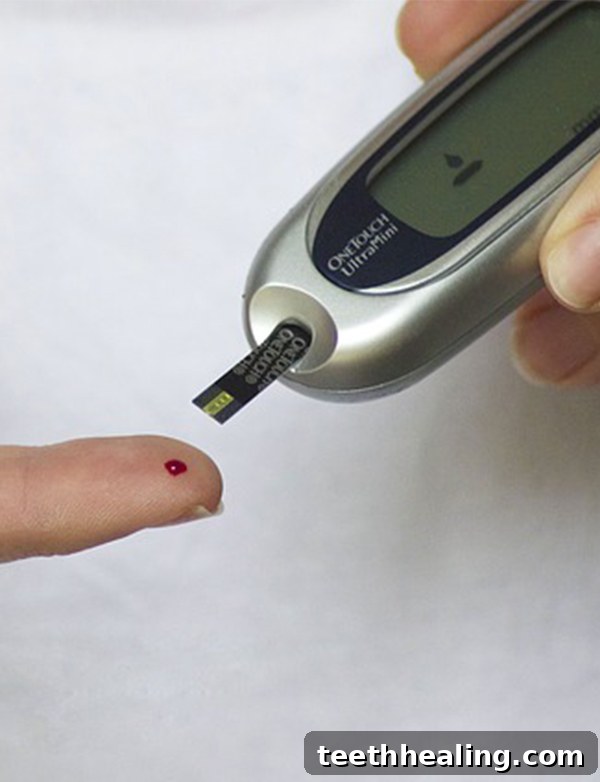
From this initial group, approximately 530 patients were identified who possessed at least one additional self-reported diabetes risk factor. These risk factors included a family history of diabetes, high cholesterol, high blood pressure, or being overweight/obese. These are well-established indicators that significantly increase an individual’s likelihood of developing diabetes. Each of these at-risk patients underwent a thorough periodontal examination, which involves measuring gum pocket depths and assessing overall gum health, as well as a quick, point-of-care fingerstick hemoglobin A1c test. The A1c test provides an average of a person’s blood sugar levels over the past two to three months, making it an excellent screening tool for long-term glucose control.
To validate the performance of various potential identification protocols, participants were asked to return for a fasting plasma glucose (FPG) test. The FPG test is a standard diagnostic tool used to determine whether an individual has diabetes or pre-diabetes, providing a definitive measure against which the dental screening methods could be compared. This multi-faceted approach allowed the investigators to rigorously assess the reliability and accuracy of incorporating diabetes screening into routine dental practice.
The Breakthrough Findings: Dental Parameters as Diabetes Predictors
The results of the Columbia study were highly compelling and profoundly significant. Researchers discovered that, within this specifically targeted at-risk dental population, a remarkably simple yet effective step-by-step procedure could accurately identify patients with previously unrecognized pre-diabetes or diabetes. This protocol relied on just two readily observable dental parameters: the number of missing teeth and the percentage of deep periodontal pockets. These two indicators, often associated with advanced periodontal disease, served as powerful early warning signs for underlying systemic metabolic issues.
The addition of the point-of-care A1c test further enhanced the protocol’s performance, significantly improving its accuracy and predictive power. This combination of clinical observation and immediate diagnostic testing proved to be a highly efficient and accessible method for initial diabetes screening. The implications are clear: routine dental check-ups, already a part of many individuals’ healthcare routines, could be transformed into crucial screening opportunities, leveraging existing patient flow and professional expertise.
The Critical Importance of Early Recognition and Intervention
For years, medical and public health professionals have emphasized the paramount importance of early recognition of diabetes. The reason is straightforward: early diagnosis and prompt treatment can significantly limit the development and progression of many serious and debilitating complications associated with the disease. These complications include heart disease, stroke, kidney failure, nerve damage (neuropathy), blindness, and amputations. By identifying diabetes or pre-diabetes at its earliest stages, healthcare providers can intervene before irreversible damage occurs, dramatically improving patient outcomes and quality of life.
Furthermore, the study underscored the immense value of identifying individuals with pre-diabetes. Pre-diabetes is a condition where blood sugar levels are higher than normal but not yet high enough to be classified as type 2 diabetes. This stage represents a critical window of opportunity for intervention. Relatively simple lifestyle changes—such as adopting a healthier diet, increasing physical activity, and achieving moderate weight loss—can often prevent or delay the progression from pre-diabetes to full-blown type 2 diabetes. Identifying this group is not just important; it is absolutely crucial for preventing a widespread public health crisis and empowering individuals to take control of their health trajectory.
Integrating Diabetes Screening into Dental Care: A Practical Vision
The findings of this pivotal study provide a practical and straightforward approach that can be easily integrated into virtually all dental-care settings. Imagine a future where a routine visit to the dentist could detect more than just cavities or gum inflammation; it could also serve as the first step toward diagnosing diabetes or pre-diabetes. This integration would require minimal changes to existing dental workflows and would significantly enhance the value of dental appointments, elevating dentists to a more prominent role in preventive healthcare.
Implementing such a protocol would involve training dental staff to recognize key oral indicators and administer simple point-of-care tests like the A1c. Dentists would then be equipped to identify individuals at high risk and, importantly, refer them to their primary care physician for further diagnostic testing and management. This collaborative approach between dental and medical professionals is essential for holistic patient care, ensuring that individuals receive comprehensive support for their overall health.
Beyond the logistical aspects, this approach also fosters greater patient awareness. Many individuals who might not regularly visit a medical doctor still maintain their dental check-ups. By introducing diabetes screening in this familiar environment, it helps destigmatize the process and makes it more accessible. Patients can become more informed about their systemic health risks and be empowered to make proactive decisions about their well-being, potentially preventing the onset of chronic diseases or managing them more effectively from an earlier stage.
The Expanding Role of Dentists: More Than Just Oral Health Specialists
The Columbia University study, along with subsequent research in this field, powerfully reinforces the evolving role of the dental professional. Dentists are no longer solely focused on treating teeth and gums; they are increasingly recognized as vital members of the broader healthcare team, capable of identifying early signs of systemic diseases. The oral cavity is a highly vascular and neurologically rich area, making it an excellent diagnostic gateway to the rest of the body. Oral manifestations can often be the first visible signs of underlying health issues, including heart disease, autoimmune disorders, and various forms of cancer, in addition to diabetes.
This paradigm shift underscores the importance of interdisciplinary collaboration between dentistry and medicine. By working hand-in-hand, these professions can create a more integrated and preventative healthcare system that benefits patients immensely. The future of dental care is expanding beyond restorative treatments and cosmetic enhancements to encompass a more holistic approach, recognizing the profound connections between oral health and overall systemic wellness.
Conclusion: A Brighter Future for Public Health Through Dental Care
The pioneering research from Columbia University College of Dental Medicine has undeniably opened new avenues for public health intervention. By demonstrating that dentists can effectively identify individuals with undiagnosed diabetes and pre-diabetes using simple clinical parameters and point-of-care testing, the study offers a powerful tool in the global fight against this chronic disease. The dental chair, once primarily a place for oral examinations, is now recognized as a potential frontline for early detection, offering hope for millions who might otherwise remain unaware of their condition.
The integration of diabetes screening into routine dental care holds immense promise for improving public health outcomes. It enables timely interventions, empowers individuals to make crucial lifestyle changes, and ultimately helps prevent the devastating complications associated with late-stage diabetes. As healthcare continues to evolve towards more preventative and integrated models, the role of dentists will undoubtedly expand, solidifying their position not just as guardians of oral health, but as critical sentinels in safeguarding overall systemic well-being. A visit to your dentist in the future may well be more comprehensive than ever before, offering insights into your general health that extend far beyond your teeth and gums, truly making them proactive partners in your journey towards a healthier life.