Unlocking Restful Nights: A Comprehensive Guide to Sleep Dentistry
Have you ever considered that your dentist might hold the key to a better night’s sleep? While it might sound surprising, “sleep dentistry” is a rapidly evolving branch of dental medicine dedicated to diagnosing and managing sleep-related breathing disorders and other conditions that profoundly impact your sleep quality and overall health. Far from simply tending to your teeth, sleep dentistry focuses on the intricate connection between oral and craniofacial structures and your ability to breathe freely and sleep soundly. This specialized field brings together dentists, medical doctors, and sleep specialists to offer comprehensive solutions for chronic issues like snoring, obstructive sleep apnea (OSA), temporomandibular joint (TMJ) dysfunction, and the often-unconscious habits of teeth clenching and grinding (bruxism).
In today’s fast-paced world, quality sleep is often overlooked, yet its impact on our physical and mental well-being is undeniable. Millions of people suffer from undiagnosed or untreated sleep disorders, unknowingly sacrificing their health, productivity, and quality of life. Sleep dentistry offers a crucial pathway to identifying the root causes of these disruptions, often stemming from issues within the mouth and jaw, and providing effective, non-invasive treatments. By focusing on airway management and oral appliance therapy, sleep dentists play a vital role in restoring not just oral health, but truly restorative sleep.
The Silent Epidemic: Understanding Sleep Apnea
Sleep apnea stands as one of the most prevalent and concerning sleep disorders addressed by sleep dentistry. This condition, characterized by repeated interruptions in breathing during sleep, affects a staggering number of individuals worldwide. In the United States alone, estimates suggest that between 50 to 70 million Americans contend with ongoing sleep disorders, with approximately 18 million specifically diagnosed with sleep apnea. However, these figures likely represent only the tip of the iceberg, as a significant proportion of cases remain undiagnosed, leaving countless individuals vulnerable to its serious health consequences.
Across the globe, the picture is similar. In Australia, for instance, it’s believed that around 9% of women and a striking 25% of men experience clinically significant episodes of suffocation or cessations of breathing during their sleep – the hallmark of an apneic event. Despite this widespread prevalence, a large percentage of Australians suffering from sleep apnea are unaware of their condition and therefore remain untreated. This diagnostic gap highlights a critical need for increased public awareness and accessible screening methods, areas where sleep dentists are uniquely positioned to contribute.
Sleep apnea disproportionately affects certain demographics, being more common in males than females, and its prevalence tends to increase with age. The ramifications of untreated sleep apnea extend far beyond simple fatigue. Extensive research consistently links sleep apnea to a heightened risk of severe health complications and even increased mortality. These include, but are not limited to, cardiovascular diseases such as hypertension (high blood pressure), heart attacks, and strokes, as well as metabolic disorders like type 2 diabetes. Furthermore, the constant strain on the body’s systems can lead to poor concentration, memory impairment, mood disturbances, and a general decline in overall well-being. Effectively treating sleep apnea and other sleep-disordered breathing conditions can dramatically mitigate these risks, leading to significant improvements in health and longevity.
Beyond individual health, the societal and economic burden of sleep apnea is substantial. In Australia, the financial cost, encompassing healthcare expenditures, lost productivity, and the staggering number of road and work-related accidents attributed to sleep deprivation, is estimated to be in the range of $2 to $8 billion annually. Alarmingly, individuals with undiagnosed or untreated sleep apnea are 4 to 9 times more likely to be involved in motor vehicle accidents, underscoring the critical public safety aspect of this silent health crisis. Addressing sleep apnea is not just about individual health; it’s about public safety and economic prosperity.
Understanding Obstructive Sleep Apnea: Causes and Modern Treatments
The most common form of the condition, Obstructive Sleep Apnea (OSA), occurs when the muscles in the back of your throat relax excessively during sleep. This relaxation allows the soft tissues – including the soft palate, tongue, and uvula – to collapse, effectively blocking your airway. When the airway is obstructed, the flow of oxygen into your lungs is significantly reduced or completely cut off, leading to a temporary drop in blood-oxygen levels throughout the body. While the term “suffocating” might sound extreme, it accurately describes the physiological experience as your body struggles for breath.
In response to these drops in oxygen and the body’s desperate attempt to resume breathing, the brain triggers a brief “arousal.” These micro-awakenings, often lasting only a few seconds, are usually so fleeting that you don’t even remember them in the morning. However, it is precisely these repeated disturbances to the sleep cycle, known as arousals, rather than solely the lack of oxygen, that pose the most significant long-term health risks. Each arousal jolts your body out of the crucial deep, restorative stages of sleep, preventing it from undergoing essential recovery and repair processes. This chronic sleep fragmentation leads to profound daytime fatigue and systemic stress, contributing to the array of health problems associated with OSA.
While snoring is often perceived as a mere nuisance, it’s a primary indicator of potential airway obstruction. Snorers may also experience fragmented sleep, sometimes waking themselves with their own loud noises, but more commonly due to the consistent struggle for adequate airflow. Common risk factors for OSA include obesity, a large neck circumference, anatomical features like a recessed jaw or enlarged tonsils, nasal congestion, and the consumption of alcohol or sedatives, which further relax throat muscles. Recognizing these factors and understanding the mechanics of OSA are crucial steps toward effective diagnosis and management.
The Dentist’s Crucial Role: How a Trained Sleep Dentist Can Help
Given that many sleep-related breathing disorders stem from anatomical issues within the mouth and jaw, a dentist trained in sleep medicine is uniquely positioned to identify potential problems and offer effective solutions. A holistic sleep dentist, such as Dr. Rachel Hall, plays a pivotal role in the diagnostic pathway and subsequent treatment of sleep apnea and snoring. Their assessment often begins with a thorough examination of your oral and maxillofacial structures, looking for common indicators such as an enlarged tongue, narrow dental arches, a high-arched palate, enlarged tonsils, or a recessed lower jaw. These visual cues can provide valuable insights into potential airway restrictions.
Beyond visual inspection, a sleep dentist will often utilize advanced diagnostic tools. This includes obtaining detailed diagnostic scans, such as Cone Beam Computed Tomography (CBCT), to generate 3D images of your jaws, nasal passages, and critical airway spaces. These scans allow for precise measurement and analysis of airway volume and potential collapse points. Concurrently, a comprehensive screening questionnaire will be administered, delving into your medical history, lifestyle habits, and detailed sleep patterns. This holistic approach helps to gather a complete picture of your health and pinpoint the likelihood of a sleep breathing disorder. If the initial assessment indicates signs of a sleep-disordered breathing condition, the dentist will collaborate with you and other medical professionals, typically recommending a formal sleep study (polysomnography) and a consultation with a sleep physician to obtain a definitive diagnosis and ascertain the severity of the condition.
Once a diagnosis is confirmed by a sleep physician, the sleep dentist can then work in tandem with the medical team to provide tailored treatment. One of the most effective and increasingly popular dental interventions is the provision of a custom-made oral appliance, worn comfortably at night. These devices, often referred to as Mandibular Advancement Devices (MADs), are meticulously fabricated to gently hold the lower jaw slightly forward and down. This subtle repositioning has a profound effect: it advances the tongue and soft palate, effectively increasing the volume of the posterior airway space. By keeping the airway open and preventing the collapse of soft tissues, these appliances significantly reduce or eliminate snoring and the apneic episodes that characterize sleep apnea. In cases where nasal breathing limitations are identified, the dentist may also suggest a referral to an Ear, Nose, and Throat (ENT) specialist for further evaluation and potential treatment to optimize the entire respiratory pathway.
While Continuous Positive Airway Pressure (CPAP) machines have long been considered the traditional “gold standard” for treating sleep apnea, particularly moderate to severe cases, their effectiveness is often hampered by patient compliance. CPAP machines work by delivering a continuous stream of air through a mask, maintaining an open airway throughout the night. However, many individuals find the masks bulky, uncomfortable, noisy, or struggle with the sensation of pressurized air. As a result, a significant number of patients abandon CPAP therapy, leaving their sleep apnea untreated and their health at considerable risk. Unfortunately, a lack of awareness regarding alternative treatment options means many do not seek further help, unaware of the life-changing services a well-trained sleep dentist, like Dr. Rachel Hall, can offer.
It is critical to understand that oral appliances are not merely a secondary or alternative treatment; they are, in fact, an excellent and often preferred stand-alone treatment for many forms of sleep-disordered breathing. A landmark study published in 2013, among others, confirmed the efficacy of oral appliances, demonstrating their ability to successfully treat apnea cases across various levels of severity. Crucially, studies consistently show that patients are significantly more likely to adhere to treatment with oral appliances due to their comfort, portability, and ease of use, making them a highly practical and effective long-term solution for improving sleep quality and overall health. For patients who struggle with CPAP, or those with mild to moderate OSA, oral appliance therapy represents a proven, patient-friendly path to restful sleep.
Your Wake-up Call: Recognizing the Signs of Sleep Apnea
Sleep apnea is an insidious condition, often progressing unnoticed until its effects become severe. Being aware of the warning signs is the first crucial step toward diagnosis and treatment. If you or a loved one exhibit several of these symptoms, it’s vital to seek professional evaluation.
Could you have sleep apnea? Look out for these common warning signs:
- Persistent and loud snoring, often described as disruptive to others.
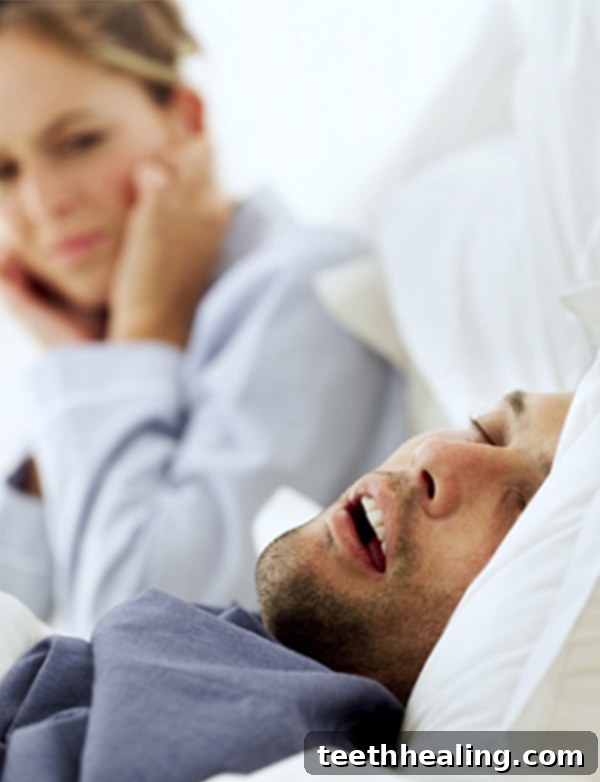
- Observed episodes of gasping, snorting, or choking sounds during sleep, indicating a struggle for breath.
- Excessive daytime sleepiness, fatigue, or profound lethargy, regardless of hours slept.
- A noticeable lack of energy and endurance throughout the day.
- Frequently falling asleep unintentionally or feeling an overwhelming need to nap during the day.
- Disturbed, restless, or fragmented sleep (OSA can sometimes manifest as insomnia).
- Poor memory, difficulty concentrating, or reduced cognitive function.
- Chronic morning headaches, often due to fluctuating oxygen and carbon dioxide levels during sleep.
- Waking up with a dry mouth or a sore throat, frequently a sign of mouth breathing due to nasal obstruction.
- Increased irritability, depression, anxiety, and other mood or behavioral changes (including symptoms resembling ADHD in children).
- An increased frequency of urination during the night (nocturia).
- Rapid or unexplained weight gain, or significant difficulty in losing weight despite efforts.
- Facial pain, chronic teeth clenching and grinding (bruxism), and other temporomandibular joint (TMJ) issues.
These symptoms are your body’s way of signaling a problem that needs attention. If you suspect you or your loved ones could be suffering from sleep apnea or any form of sleep-disordered breathing, don’t delay. Reach out to us today to discover how a specialized sleep dentist can help you reclaim restful nights and a healthier, more vibrant life. Call us at 07 3720 1811 for a consultation.