Understanding and Correcting an Uneven Bite: A Comprehensive Guide to Malocclusion
Have you ever wondered if your teeth are perfectly aligned or if your bite is off-kilter? While many people focus on the aesthetic appeal of a straight smile, the reality is that an uneven bite, medically known as malocclusion, extends far beyond cosmetic concerns. It can profoundly impact your oral health, overall well-being, and quality of life.
Dr. Rachel Hall, a renowned Holistic Dentist at Evolve Dental Kenmore in Brisbane, specializes in diagnosing and treating malocclusion. She emphasizes that understanding what an uneven bite means for your teeth, gums, and jaws is the first step toward achieving a healthier, more comfortable future. This comprehensive guide will explore the common signs of an uneven or misaligned bite, its potential complications, and the effective treatment options available to correct it.
What Exactly is an Uneven Bite (Malocclusion)?
In a perfectly aligned bite, your upper teeth should slightly overlap your lower teeth, and the points of your molars should fit precisely into the grooves of the opposing molars. This allows for efficient chewing, clear speech, and balanced pressure across your dental arches. When this natural alignment is disrupted, it’s classified as an uneven bite or malocclusion.
Malocclusions can manifest in various forms:
- Overbite: When the upper front teeth significantly overlap the lower front teeth.
- Underbite: When the lower front teeth extend beyond the upper front teeth.
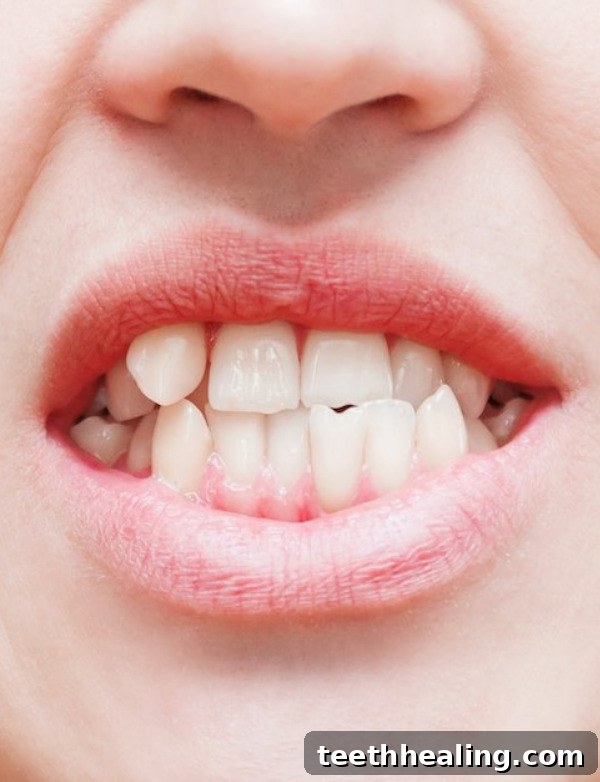
- Crossbite: When some upper teeth bite inside the lower teeth, rather than outside. This can affect front or back teeth.
- Open Bite: When the front upper and lower teeth do not meet when the mouth is closed.
- Crowding: Insufficient space in the jaw for all teeth to erupt properly, leading to overlapping or twisted teeth.
- Spacing: Gaps between teeth, often caused by missing teeth or a jaw that is too large for the size of the teeth.
While some forms of malocclusion are visually obvious, others can be subtle, only detectable through a professional dental examination. Regardless of its severity, an untreated uneven bite can lead to a cascade of oral and systemic health issues.
Recognizing the Signs of an Uneven Bite
Many individuals live with an uneven bite without fully realizing the extent of its impact. If you suspect your bite might be misaligned, pay close attention to the following common indicators:
1. Visual Cues and Appearance
The most straightforward sign of malocclusion often involves your smile and overall facial symmetry. Crooked, twisted, or overcrowded teeth are clear indicators. Beyond these obvious issues, a trained eye can spot other subtle signs. For instance, how your upper and lower teeth meet at the midline of your face, or if there’s an apparent protrusion of the upper or lower jaw, can signal a bite problem. An uneven bite can also contribute to an abnormal facial appearance, impacting self-confidence when smiling or speaking. Even minor discrepancies, if left unaddressed, can evolve into more significant concerns over time.
2. Persistent Headaches and Migraines
Frequent headaches, especially tension headaches or migraines, can often be traced back to an uneven bite. When your teeth and jaw are not in proper alignment, the muscles responsible for chewing and jaw movement are forced to work harder and in an unnatural manner. This constant strain on the temporomandibular joints (TMJs) and the surrounding muscles can lead to chronic tension that radiates into the head, neck, and shoulders, resulting in debilitating headaches. The body attempts to compensate for the misalignment, placing undue stress on the entire stomatognathic system.
3. Teeth Grinding and Clenching (Bruxism)
Do you often find yourself clenching your jaw during the day, or has your sleeping partner mentioned you grind your teeth at night? Bruxism, the medical term for teeth grinding and clenching, is a very common symptom of an uneven bite. Your jaw muscles, in an unconscious attempt to find a comfortable and stable resting position, will often clench or grind. This destructive habit not only puts excessive pressure on your teeth and jaw joints but also contributes to the headaches and TMJ pain mentioned earlier. Over time, bruxism can lead to severe tooth wear, fractures, and even tooth loss.
4. Chronic Jaw Pain and TMJ Disorders
Pain or discomfort when biting down hard, during repeated chewing, or even when speaking, can be a definitive sign of an uneven bite. A clicking, popping, or grating sound in your ear when you open or close your mouth, along with limited jaw movement or difficulty opening your mouth wide, points to a temporomandibular joint disorder (TMJ disorder). The TMJs are the hinge joints connecting your jaw to your skull, crucial for eating, speaking, and yawning. When an uneven bite forces these joints to function out of their natural alignment, the cartilage disc within the joint can become displaced or damaged, leading to chronic pain, inflammation, and functional limitations.
5. Loose or Failing Dental Work
If you’ve noticed that your dental fillings, crowns, or bridges seem to loosen or fracture prematurely, an uneven bite could be the culprit. Misaligned teeth create uneven distribution of biting forces. Instead of the pressure being absorbed uniformly across all teeth, certain teeth or dental restorations bear the brunt of the impact. This excessive and uneven stress can compromise the integrity of existing dental work, causing it to crack, become loose, or fail entirely. When restorations are compromised, it creates opportunities for tooth decay to develop underneath, potentially leading to further damage and costly retreatment.
6. Uneven Tooth Wear and Sensitivity
Just as uneven forces can damage dental restorations, they can also cause accelerated and uneven wear on your natural tooth enamel. Specific teeth or areas of teeth that experience excessive contact or grinding due to malocclusion will show signs of enamel erosion much faster than others. As the protective enamel wears away, it exposes the underlying dentin, leading to increased tooth sensitivity to hot, cold, sweet, or acidic foods and beverages. This erosion not only causes discomfort but also leaves the tooth more vulnerable to decay and structural damage.
7. Speech Difficulties and Chewing Problems
An uneven bite can directly impact your ability to form certain sounds, leading to speech impediments such as a lisp. The tongue’s interaction with the teeth and palate is vital for clear articulation, and misalignment can disrupt this delicate balance. Similarly, the primary function of your teeth – chewing – becomes inefficient and uncomfortable with a misaligned bite. You might experience difficulty in properly breaking down food, leading to digestive issues, or find certain foods challenging to eat, potentially limiting your dietary choices.
Why a Normal, Aligned Bite is Crucial for Your Health
The importance of a properly aligned bite extends far beyond aesthetics. It’s fundamental to your oral health, overall physical comfort, and even your digestive system. Neglecting an uneven bite can lead to a range of severe consequences:
- Increased Risk of Tooth Decay and Gum Disease: Crooked or crowded teeth are notoriously difficult to clean effectively. Food particles and plaque can accumulate in hard-to-reach areas, significantly increasing your risk of cavities and gingivitis, which can progress to more severe periodontal disease.
- Enhanced Jaw and Muscle Strain: A normal bite ensures that the forces of chewing are evenly distributed, minimizing strain on your jaw joints and facial muscles. With a misaligned bite, these structures are constantly under undue stress, leading to the TMJ disorders, facial pain, and headaches discussed earlier.
- Reduced Risk of Tooth Fracture and Loss: Evenly distributed biting forces protect your teeth from excessive wear and potential fractures. An uneven bite can cause certain teeth to experience extreme pressure, making them more prone to chipping, cracking, or even premature loss.
- Improved Digestion and Nutrition: The ability to chew food thoroughly is the first step in healthy digestion. A properly aligned bite ensures efficient mastication, allowing your body to extract maximum nutrients from your food.
- Better Speech and Self-Confidence: Correct alignment can resolve speech difficulties and improve your facial appearance, contributing to greater self-esteem and social confidence.
- Enhanced Breathing: In some cases, severe malocclusions, particularly those involving the jaw’s position, can contribute to breathing problems, including snoring and sleep apnea.
Effective Treatments for Correcting an Uneven Bite
The good news is that an uneven bite is a treatable condition. Thanks to advancements in modern dentistry, there are numerous options available to restore proper alignment and function. Dr. Rachel Hall and the team at Evolve Dental Kenmore offer personalized treatment plans tailored to each patient’s unique needs.
Common approaches to address bite alignment problems include:
- Orthodontic Treatments (Braces and Clear Aligners): This is often the primary method for correcting misaligned teeth and improving your bite. Traditional braces use brackets and wires to gently guide teeth into their correct positions. For a more discreet option, clear aligner systems offer a removable and virtually invisible way to straighten teeth over time.
- Tooth Removal (Extraction): In cases of severe overcrowding, extracting one or more teeth may be necessary to create adequate space for the remaining teeth to align properly. This is typically done to facilitate orthodontic treatment.
- Tooth Repair and Reshaping: Minor bite discrepancies can sometimes be corrected with restorative procedures. This might include cosmetic dentistry techniques such as enamel reshaping (removing small amounts of enamel to improve tooth shape), dental bonding (applying tooth-colored resin to alter tooth contours), or dental crowns (caps that cover the entire tooth to restore its shape and size).
- Surgical Interventions (Orthognathic Surgery): For severe skeletal discrepancies where the jaw itself is misaligned, surgical correction may be required. Orthognathic surgery reshapes or repositions the jawbones to achieve proper alignment between the upper and lower jaws, often performed in conjunction with orthodontics.
Determining the most suitable treatment depends on the type and severity of your malocclusion, your age, and your overall oral health. A thorough consultation with an experienced dentist is essential to explore your options and develop an effective plan.
Fix Your Uneven Bite with Evolve Dental Kenmore Dentist
Don’t let an uneven bite compromise your health and confidence any longer. If you’re experiencing any of the signs or symptoms discussed – be it headaches, jaw pain, difficulty chewing, or dissatisfaction with your smile – it’s time to seek professional help.
Dr. Rachel Hall and the dedicated team at Evolve Dental Kenmore are experts in comprehensive dental care, focusing on holistic approaches to improve your oral and overall health. With advanced diagnostic tools and a wide range of treatment options, including orthodontic solutions, restorative procedures, and cosmetic enhancements, they can help you achieve a properly aligned, healthy, and beautiful smile.
Your journey to a comfortable and functional bite begins with a conversation. Make an appointment with Evolve Dental Healing Kenmore Dentist today to discuss your concerns and explore the best path forward. Protect your teeth, relieve your discomfort, and invest in your long-term well-being.
Call us today to schedule your consultation: 07 3720 1811