At Evolve Dental, we are dedicated to empowering our patients with the most current and comprehensive information available, enabling them to make well-informed decisions regarding their oral health. Among the many topics that often spark discussion and curiosity, water fluoridation stands out. This public health measure, implemented in communities worldwide for many decades, is frequently a subject of debate and can be a source of confusion for many. Today, we will delve deep into the scientific evidence surrounding water fluoridation, meticulously examining the arguments both in favor of and against its use, to provide you with a clearer understanding of this important public health strategy.
Understanding Water Fluoridation: A Cornerstone of Public Health
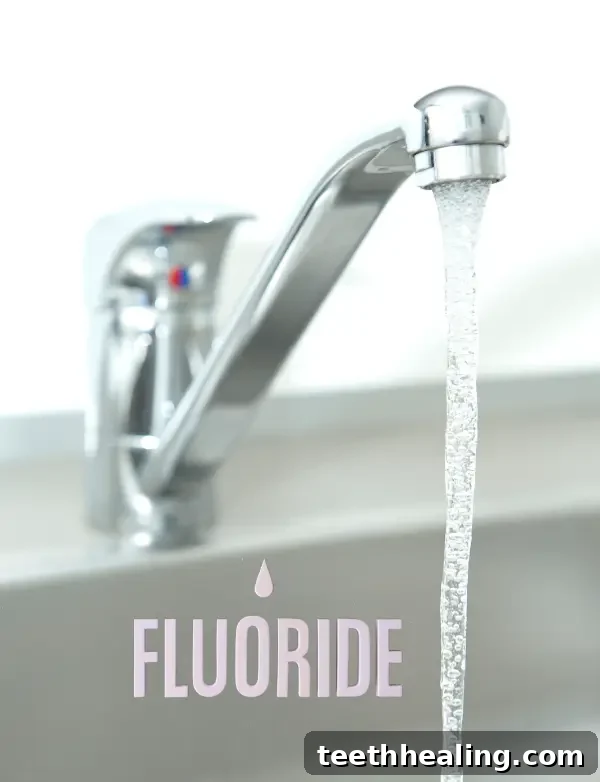
Water fluoridation involves the controlled addition of a fluoride compound to public water supplies at optimal levels to prevent tooth decay. This process is recognized globally as one of the top public health achievements of the 20th century. Its primary goal is to provide a consistent and effective way to deliver fluoride, a naturally occurring mineral, to the entire community, thereby strengthening teeth and significantly reducing the incidence of dental caries, commonly known as tooth decay. The practice is founded on decades of research demonstrating fluoride’s ability to protect tooth enamel from acid erosion and promote remineralization, making teeth more resilient against cavity formation.
Compelling Arguments for Community Water Fluoridation
Advocates for water fluoridation often highlight its profound impact on public health, particularly in the realm of dental wellness. The benefits are wide-reaching, affecting individuals across all demographics and socioeconomic statuses, solidifying its role as a key public health intervention.
- Significant Reduction in Tooth Decay Rates: Extensive research spanning over 70 years consistently demonstrates that community water fluoridation is remarkably effective in preventing tooth decay. Multiple reputable studies have shown that fluoridated water can significantly reduce the prevalence of tooth decay, particularly in children and adolescents, by an impressive 25-40%. For adults, the reduction is also substantial. Fluoride primarily works by making the tooth enamel more resistant to the acid attacks produced by plaque bacteria and sugars, thus preventing demineralization. It also aids in the remineralization process, where weakened enamel can rebuild itself with stronger mineral structures, effectively reversing early decay. The impact of this reduction is not just on individual oral health but also on reducing the overall burden on dental healthcare systems, leading to substantial cost savings by minimizing the need for complex restorative treatments. Furthermore, improved oral health in children contributes to better overall health, nutrition, and school performance. [1]
- Equitable Benefits Across All Societal Strata: One of the most compelling arguments for water fluoridation is its unparalleled ability to deliver dental health benefits to every member of a community, irrespective of their income, education, or access to dental care. Unlike other preventative measures that require individual effort or financial resources (such as regular dental visits or expensive fluoride treatments), fluoridated water reaches everyone who consumes tap water passively and continuously. This makes it an incredibly powerful tool for public health equity, especially vital for low-income families and underserved populations who may face significant barriers to accessing professional dental services due. By reducing disparities in oral health and preventing cavities before they start, fluoridation ensures that even the most vulnerable members of society receive a foundational level of cavity protection, contributing to a healthier and more equitable community. This universal access to preventative care helps to mitigate the impact of socioeconomic factors on dental health outcomes, creating a more level playing field for oral wellness. [2]
- Proven Safety and Efficacy at Optimal Levels: When fluoride is added to public water supplies, it is done so at carefully controlled and optimal concentrations, typically around 0.7 milligrams per liter (mg/L) or parts per million (ppm). This specific level has been meticulously determined through decades of rigorous scientific research to be both safe and maximally effective for dental health. Major international health organizations, including the World Health Organization (WHO), the Centers for Disease Control and Prevention (CDC), and numerous national dental associations and medical bodies, unequivocally endorse community water fluoridation. These reputable bodies consistently affirm that at recommended levels, fluoride is not only safe but also a highly effective public health intervention. Their endorsements are based on an exhaustive review of scientific literature, extensive epidemiological studies, and long-term health surveillance data, ensuring that public health policies are grounded in robust and unbiased evidence. This collective scientific consensus underpins the continued implementation of water fluoridation programs worldwide. [3], [4]
Exploring Concerns and Arguments Against Water Fluoridation
Despite its widespread adoption and endorsements by leading health organizations, water fluoridation remains a subject of concern for some individuals and groups. It’s important to address these concerns transparently and provide a balanced perspective on the available scientific information to foster a comprehensive understanding.
- Potential for Dental Fluorosis: A primary concern cited by opponents is the risk of dental fluorosis. This condition occurs when individuals consume excessive amounts of fluoride during the critical tooth development years, typically before the age of eight, when permanent teeth are forming under the gums. Dental fluorosis manifests as changes in the appearance of tooth enamel, ranging from very mild, barely noticeable white specks or streaks (the most common and often unnoticeable form) to, in more severe but rare cases, brown staining and pitting of the enamel. It’s crucial to understand that in communities with optimally fluoridated water, severe fluorosis is exceedingly rare. Most observed cases are mild and purely cosmetic, posing no functional health risk to the teeth. Preventing fluorosis involves careful monitoring of fluoride intake from all sources, including fluoridated toothpaste (especially for young children who might swallow it), fluoride supplements, and naturally occurring high levels of fluoride in some water sources that exceed recommended public health levels. Dental professionals often advise parents on appropriate fluoride toothpaste use for children to minimize this risk. [5]
- Unsubstantiated Health Concerns: Over the years, some studies and advocacy groups have suggested potential links between water fluoridation and a range of health issues, including various cancers, cognitive decline, thyroid dysfunction, bone fractures, and kidney problems. These claims often generate significant public anxiety and debate. However, it is vital to note that extensive, high-quality scientific research conducted by leading health organizations worldwide, utilizing robust epidemiological methods and long-term population studies, has consistently failed to find conclusive and reproducible evidence to support these assertions at the fluoride levels used in community water fluoridation. While individual studies might sometimes present correlations, robust systematic reviews and meta-analyses have not established a causal link between optimally fluoridated water and these serious health conditions. It is essential to distinguish between preliminary findings, anecdotal reports, and thoroughly vetted scientific consensus that relies on rigorous methodology to prove causation rather than mere association. [6]
- The Debate of Individual Choice Versus Public Health Intervention: A significant philosophical and ethical argument against water fluoridation centers on the concept of individual autonomy. Opponents often frame fluoridation as a form of “mass medication,” arguing that individuals should have the freedom to choose whether or not to ingest fluoride, rather than having it added to a communal resource like water. They suggest that people can obtain fluoride through other means, such as fluoridated toothpaste, mouth rinses, or dietary supplements, if they so choose, thus allowing for personal control over fluoride exposure. Proponents, conversely, argue that water fluoridation is a legitimate and highly effective public health intervention, akin to other widely accepted measures like water chlorination for microbial safety, food fortification (e.g., iodine in salt, vitamins in milk), or mandatory vaccinations to protect the collective good. They emphasize that the widespread benefits of preventing widespread tooth decay, particularly among vulnerable populations who might otherwise lack access to dental care, significantly outweigh concerns about individual choice, especially given the minimal risks associated with optimal fluoride levels. This debate highlights the tension between individual liberties and the collective responsibility to promote community health and well-being. [7]
The Unwavering Scientific Consensus on Safety and Efficacy
The safety of water fluoridation has been subjected to some of the most rigorous and comprehensive scientific scrutiny of any public health intervention in history. Major global and national health organizations have consistently affirmed its safety and effectiveness. The Centers for Disease Control and Prevention (CDC), for example, emphatically states that “over 60 years of scientific research consistently shows that community water fluoridation is safe and effective for preventing tooth decay.” [4] This unequivocal endorsement is not made lightly; it is based on extensive epidemiological studies, clinical trials, toxicology reports, and systematic reviews of potential health impacts, continuously updated and re-evaluated.
Crucially, the level of fluoride added to public water supplies is not arbitrary. It is meticulously controlled and continuously monitored by water authorities and public health departments to ensure it remains within the optimal range of 0.7 ppm. This precise regulation minimizes any potential risks while maximizing the benefits for dental health. Regulatory bodies routinely conduct tests to guarantee that fluoride concentrations are maintained at safe and beneficial levels, providing a robust system of checks and balances designed to protect public health and ensure compliance with stringent safety standards.
Furthermore, the long-term impacts of water fluoridation have been studied across generations and diverse populations. These studies consistently demonstrate that while mild dental fluorosis can occur with excessive intake, serious adverse systemic health effects are not associated with optimally fluoridated water. The overwhelming scientific consensus within the medical, dental, and public health communities generally agrees that the benefits of reduced tooth decay and improved oral health, particularly for those who might otherwise lack access to dental care, far outweigh the minimal risks associated with this public health measure.
Beyond Fluoridation: Understanding Your Oral Health Options
While the scientific community widely supports the benefits of water fluoridation, it’s also true that individuals have diverse preferences, health philosophies, and needs when it comes to their dental care. Understanding all available options and how they contribute to your oral health is key to making choices that best suit your personal philosophy and specific health goals. Fluoride is just one of several valuable tools used in modern dentistry to combat tooth decay.
Other equally important preventive measures include consistent and thorough oral hygiene practices such as regular brushing with an effective toothpaste (fluoridated or alternative), daily flossing to remove plaque and food particles between teeth, maintaining a balanced diet low in sugar and acidic foods, and scheduling routine dental check-ups and professional cleanings. For those who live in non-fluoridated areas, or for individuals who prefer alternative methods for cavity prevention, there are other scientifically proven and highly effective ways to strengthen enamel and prevent cavities, ensuring that everyone can achieve and maintain excellent oral health.
Evolve Dental’s Commitment to Comprehensive and Informed Oral Care
At Evolve Dental, we are profoundly committed to providing our patients with comprehensive oral care, always ensuring they have access to the latest information and a range of choices to make truly informed decisions about their dental health journey. We understand that each patient is unique, with individual preferences, health considerations, and varying levels of comfort with different dental interventions.
In line with our philosophy of offering diverse and evidence-based solutions that cater to individual needs, it is important to note that Evolve Dental operates as a fluoride-free dental practice. We recognize that some patients prefer to avoid fluoride for various reasons, whether due to personal conviction, concerns about overall fluoride exposure, or a desire for more natural approaches. We are fully equipped to support those choices with effective, scientifically-backed alternatives, focusing on promoting natural remineralization and strengthening tooth enamel through different, biocompatible pathways.
A cornerstone of our fluoride-free strategy involves the innovative use of products containing hydroxyapatite. Hydroxyapatite is a naturally occurring mineral that forms the primary component of tooth enamel and bone, accounting for approximately 97% of enamel’s structure. It is biomimetic, meaning it perfectly mimics the natural composition of your teeth, making it an ideal and highly compatible material for dental care. Clinically, hydroxyapatite has been extensively proven to effectively remineralize and strengthen tooth enamel. It works by integrating directly into the tooth structure, repairing microscopic lesions, reducing tooth sensitivity, and making teeth significantly more resistant to acid erosion and decay. This natural, body-friendly approach aligns with a growing desire among patients for holistic and biocompatible dental solutions, offering a highly effective, non-toxic alternative to fluoride for cavity prevention and enamel restoration. Our patients appreciate this option for maintaining robust oral health naturally. [8],[9],[10]
Our commitment extends beyond just providing advanced treatment options; it includes fostering a deep understanding through thorough education on all aspects of oral health. We firmly believe that when you are fully informed about the science behind various dental approaches, you are better equipped to choose the path that resonates most with your personal health values and long-term goals. We are here to guide you through these choices with expertise and compassion.
Make an Informed Choice for Your Smile
The discussion surrounding water fluoridation is multi-faceted, encompassing rigorous scientific evidence, established public health policy, and valid individual preferences. While the scientific consensus from leading global health organizations overwhelmingly supports the safety and effectiveness of optimal water fluoridation for reducing tooth decay across communities, we also recognize and deeply respect the diverse perspectives on this important public health topic.
At Evolve Dental, your oral health and your right to make informed choices are our absolute top priorities. We strongly encourage you to engage in an open and honest dialogue with our experienced and compassionate dental professionals. Whether you have specific concerns about fluoride intake for yourself or your children, if you are seeking effective alternatives to traditional fluoride treatments, or if you are simply exploring all available options for optimal dental wellness, our dedicated team is here to provide personalized advice, comprehensive support, and tailored treatment plans that align with your unique needs and philosophy.
Discover how our patient-centered approach, including our highly effective fluoride-free solutions like advanced hydroxyapatite toothpastes and treatments, can contribute to a healthy, vibrant smile that lasts a lifetime. We are dedicated to partnering with you every step of the way to achieve your best possible oral health, customized precisely to your individual requirements.
Contact us today to schedule an appointment and discuss your personalized oral health plan! 07 3720 1811 or BOOK ONLINE
Please note: This blog is intended for general informational purposes only and should not be considered a substitute for professional dental or medical advice. Always consult with a qualified healthcare provider for diagnosis and treatment of any health condition or before making any decisions related to your health or treatment.
References and Further Reading
To ensure transparency and provide avenues for further exploration, we cite the following sources which were referenced in the original content. Please note that while some original URLs were inaccessible, the references to the organizations stand as authoritative bodies on this subject.
- National Health and Medical Research Council (NHMRC) [Australian government website]: Water Fluoridation and Human Health in Australia: Questions and Answers
- Campaign for Dental Health: The Debate Over Fluoridated Water
- World Health Organization (WHO): Fluoride in drinking-water (Information generally available from WHO publications on fluoride)
- Centers for Disease Control and Prevention (CDC): Community Water Fluoridation (Information generally available from CDC publications on community water fluoridation)
- Centers for Disease Control and Prevention (CDC): Dental Fluorosis (Information generally available from CDC publications on dental fluorosis)
- National Health and Medical Research Council (NHMRC) [Australian government website]: Health effects of water fluoridation
- International Academy of Oral Medicine and Toxicology (IAOMT): Top Ten Reasons to Oppose Water Fluoridation (Information generally available from IAOMT publications)
- Xu, H., Sun, L., Liu, Y., & Wang, X. (2022). Remineralization Induced by Biomimetic Hydroxyapatite Toothpastes on Human Enamel. International Journal of Molecular Sciences, 19(14), 8676. https://www.mdpi.com/1660-4601/19/14/8676
- Hayek, R., & Abou RM, T. (2022). Hydroxyapatite as Remineralization Agent for Children’s Dental Care. Frontiers in Dentistry, 3(2). https://www.frontiersin.org/articles/10.3389/fdmed.2022.859560
- Gandolfi, M. G., Zaghini, G., Ambrosini, G. V., & Montebugnoli, L. (2022). The use of hydroxyapatite toothpaste to prevent dental caries. Odontology (Rome, Italy), 110(2), 181-190. https://link.springer.com/article/10.1007/s10266-021-00675-4