The Pervasive Impact of Sugar on Oral Health and Systemic Well-being
Once considered a treat, sugar has become a silent adversary, deeply intertwined with the decline of our dental health and the escalating crisis of chronic diseases. This article delves into the profound ways excessive sugar consumption impacts our bodies, from the intricate ecosystems of our mouths to the fundamental processes that govern our overall health.
When I first graduated from dental school, the future of dentistry seemed bright with promises of advanced preventive care. We were taught that modern techniques would dramatically reduce the incidence of dental decay, root canal treatments, and extractions. My career, it was predicted, would largely involve replacing old fillings, performing routine maintenance, and focusing on cosmetic enhancements. Yet, two decades later, the reality is starkly different. I find myself performing more extractions and root canal procedures than ever before, routinely confronting widespread and aggressive dental decay, and managing severe gum disease across all age groups.
The Alarming Rise of Dental and Systemic Illness: A Sugar-Driven Epidemic
My anecdotal observations are echoed by concerning trends in public health. Dental disease appears to be on a relentless rise, becoming more prevalent, severe, and aggressive with each passing year. For instance, studies by the Australian Institute of Health and Welfare reveal a progressive increase in dental decay rates among Australian children since the 1990s. While it’s well-documented that poor socio-economic status can exacerbate oral health issues, the current crisis transcends financial barriers, affecting individuals from diverse income levels and backgrounds. This widespread deterioration prompts a crucial question: Why is this happening?
The link between sugar consumption and dental decay is irrefutable and extensively documented in scientific literature. Sugars provide fuel for harmful bacteria in the mouth, which produce acids that erode tooth enamel, leading to cavities. But the problem extends far beyond the direct damage to teeth.
Beyond the Sweet Taste: Understanding the Hidden Sugar Crisis
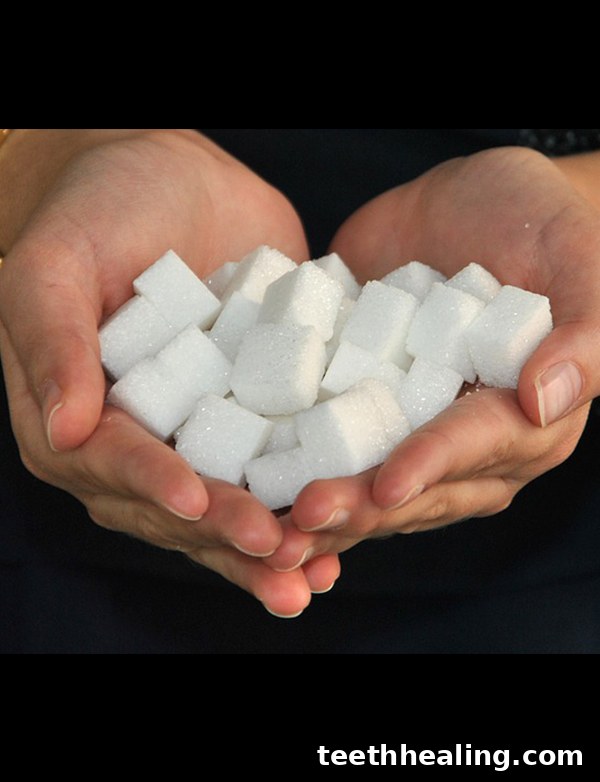
What often goes unnoticed is the staggering increase in our collective sugar consumption over the past half-century. Global sugar intake has tripled, predominantly due to its ubiquitous presence in soft drinks and inexpensive processed foods. However, the challenge isn’t solely about “hidden” sugars in unexpected places. It’s about a lifestyle that has normalized carbohydrate-rich meals, constant sugar-laden snacks, an abundance of biscuits, sweets, and chocolates, and the frequent consumption of sugary beverages. Even seemingly healthy choices like excessive fruit, fruit juices, and smoothies often mask concentrated doses of sugar, leading to detrimental health effects.
As our sugar intake escalates, so do our waistlines, coinciding with an alarming rise in the incidence of serious metabolic conditions such as heart disease, diabetes, and, of course, dental decay. While excess sugar is a primary driver of the global obesity epidemic, obesity itself is often a marker of underlying metabolic damage and systemic changes that pave the way for heart disease and type 2 diabetes. This metabolic disruption, coupled with oxidative stress and chronic systemic inflammation, profoundly impacts oral health, creating a vicious cycle of disease.
The health consequences of excessive sugar are so severe that there are increasing calls for its regulation and taxation, akin to tobacco and alcohol. Research suggests that sugar indirectly contributes to approximately 35 million deaths annually worldwide, linked to the dramatic surge in diseases like heart disease, cancer, and diabetes since our dietary patterns shifted towards higher sugar consumption. In fact, many of the health effects associated with excessive sugar intake strikingly resemble those of alcohol.
For the first time in human history, non-communicable diseases (NCDs) such as heart disease, cancer, and diabetes now constitute a greater global health burden than infectious diseases. While policymakers often target alcohol, tobacco, and general diet as key risk factors for these NCDs, a growing consensus among medical professionals points to the urgent need to address the pervasive dangers of excessive sugar consumption.
Sugar provides what are often termed “empty calories”—energy devoid of essential nutrients. A substantial body of evidence indicates that fructose, a primary component of table sugar, can trigger processes that lead to liver toxicity and contribute to a myriad of other chronic diseases, including non-alcoholic fatty liver disease.
Historically, sugar was a seasonal commodity, primarily available through fruits and honey to our ancestors. Today, it has infiltrated nearly all processed foods, making it exceptionally difficult to avoid. In some regions of the world, individuals are consuming more than 500 calories of sugar per day, far exceeding recommended limits and leading to profound health consequences.
There is growing scientific consensus that the impact of excess sugar on human health extends far beyond mere calorie contribution. It can instigate many of the same problems as excessive alcohol intake, including elevated blood pressure, unhealthy lipid profiles, insulin resistance, and eventually, type 2 diabetes. The economic and human costs of these escalating diseases underscore the gravity of sugar consumption, placing it in the same category of public health concern as smoking and heavy drinking. Moreover, like tobacco and alcohol, sugar demonstrably acts on the brain to foster dependence and addictive behaviors. It specifically interferes with the function of ghrelin, the hormone responsible for signaling hunger to the brain, and disrupts the delicate balance of other vital neurochemical compounds, further entrenching cravings and overconsumption.
Oral Health: A Mirror to Our Lifestyle Choices
Our oral health is a profound indicator of our overall well-being, influenced by a complex interplay of factors including our diet, stress levels, and the use of alcohol or tobacco. The World Oral Health Report, published by the World Health Organization (WHO), explicitly states: “The rapidly changing (oral) disease patterns throughout the world are closely linked to changing lifestyles which include diets rich in sugars, widespread use of tobacco and increased consumption of alcohol.” This statement highlights the indivisible connection between our daily habits and our physical health, particularly in the oral cavity.
If we are to effectively combat not only the decline in oral health but also the escalating health challenges faced by the global population, it is imperative that we critically re-evaluate our sugar consumption. Simultaneously, we must pause and honestly observe the broader patterns of our modern lifestyles. Something has gone drastically awry when, despite remarkable medical advancements, profound scientific understanding of the human body, and vast nutritional knowledge, health statistics reveal a losing battle against the rising prevalence of heart disease, diabetes, and cancer. Our progress in medical treatment seems to be outpaced by the proliferation of lifestyle-related illnesses.
Perhaps it is time to ask ourselves deeper questions: Why do we consume such prodigious amounts of sugar? What intrinsic need is it fulfilling? What ‘kick’ or ‘boost’ does it provide that we feel we cannot live without? How have our daily lives become so depleting that we constantly seek the quick, superficial energy or comfort that sugar offers?
Confronting these questions and taking genuine responsibility for our daily choices can be challenging. We might discover that we consume sugar because we are perpetually exhausted, deeply stressed, or desperately seeking comfort. We might be chasing a fleeting moment of pleasure, a quick buzz, or a sugar rush that momentarily revs up our nervous system, albeit at the cost of long-term balance. Sometimes, we might be using sugar to numb uncomfortable feelings or to avoid grappling with the complexities of life. Or perhaps, in our modern existence, we simply don’t feel “alive enough” without constantly altering our brain and body chemistry through stimulating foods. These are just some of the profound, often ignored, explanations for our escalating sugar consumption, which we mistakenly attribute to a mere preference for sweetness.
Transforming Our Lives: A Path to Better Health and Reduced Sugar Dependency
What if there was a different way to live—a way that allowed us to draw strength and vitality from our natural, inherent inner being, simply by connecting to our “real self”? This authentic self, once truly experienced, would be something we would never wish to dull, compromise, or alter with external stimulants. The workshops, talks, and books of Serge Benhayon, and the esoteric wisdom they present, propose that we are all inherently love and that by consciously connecting to and living from this profound inner love, the natural balance and harmony of our bodies and our true selves can be restored. Is it conceivable, then, that by embracing such a way of living, our cravings and need to consume vast quantities of sugar would naturally diminish, leading to a profound improvement in both our overall health and our oral health?
To this question, I would unequivocally answer yes. I have witnessed this transformation firsthand, not only in my own life and the lifestyle choices I have implemented but also among those associated with Universal Medicine, practitioners of esoteric modalities, and many of my dental patients. These individuals, upon adopting more self-caring lifestyle choices and practices into their daily routines, have experienced tangible improvements in their health and a natural reduction in their desire for sugar. This suggests that addressing the root causes of our sugar dependency—often emotional or energetic imbalances—can pave the way for a healthier, more balanced existence, both orally and systemically.
Resources
1. http://www.abc.net.au/news/2011-08-03/dental-reform-urgently-needed2c-say-experts/2823150 – Rise of dental decay in children
2. http://www.hica.com.au/health-insurance-news/tooth-decay-on-the-rise-among-australian-children
3. https://www.adelaide.edu.au/arcpoh/downloads/publications/reports/research/2001-2008/report-09.pdf – Dental health and wealth
4. http://onlinelibrary.wiley.com/doi/10.1046/j..2003.com122.x/abstract – WHO lifestyle and oral health
5. http://www.thelancet.com/journals/lancet/article/PIIS0140-6736(83)91696-3/abstract – Sugar dental decay
6. http://www.ajcn.org/content/78/4/881S.full – Dental caries and sugar
7. http://jdr.sagepub.com/content/67/11/1422.short – Dental decay and sugar intake
8. http://www.jdentaled.org/content/65/10/1017.short – Sugar consumption
9. http://www.guardian.co.uk/business/2012/jun/11/why-our-food-is-making-us-fat
10. http://www.medicalnewstoday.com/releases/240115.php – Sugar tax 2012
11. https://www.medicalnewstoday.com/releases/145549.php
12. http://www.smh.com.au/opinion/chew-the-fat-on-a-sugar-tax-to-trim-waistlines-20120719-22cxw.html
13. http://www.nature.com/nature/journal/v482/n7383/full/482027a.html – Nature toxic truth about sugar
14. http://www.medicalnewstoday.com/articles/241052.php – Sugar global health
15. http://www.sciencedaily.com/releases/2012/02/120201135312.htm – Sugar global health
16. http://www.bbc.co.uk/news/health-14970547 – WHO non-communicable disease
17. http://www.time.com/time/health/article/0,8599,1983542,00.html – Sugar and cardiovascular disease
18. http://circ.ahajournals.org/content/106/4/523.full – Sugar health and cardiovascular disease
19. http://www.medicalnewstoday.com/articles/242328.php – Too much sugar
20. http://www.medicalnewstoday.com/articles/244264.php – Hidden sugar
21. http://www.guardian.co.uk/commentisfree/2012/mar/02/sugar-addiction-children-big-food-fat?INTCMP=SRCH
22. https://www.nhs.uk/news/food-and-diet/call-to-tax-sugar-like-alcohol/
23. http://www.medicalnewstoday.com/releases/246841.php – Oral health and economy
24. http://www.medicalnewstoday.com/releases/200916.php – Oral health and systemic disease
25. http://www.ncbi.nlm.nih.gov/pmc/articles/PMC2235907/ – Sugar addiction
26. http://www.medicalnewstoday.com/articles/241133.php – Sugar regulation
27. http://ajcn.nutrition.org/content/78/4/834S.full – Sugar neurological effects
28. http://www.who.int/oral_health/media/en/orh_report03_en.pdf – Oral health WHO