
The prospect of your first tooth extraction, or any subsequent one, can naturally evoke feelings of apprehension. However, being well-informed about each stage of the process can significantly alleviate anxiety and pave the way for a more comfortable and predictable experience. This comprehensive guide is designed to walk you through everything you need to know: from the common reasons why an extraction might be recommended, through detailed preparation steps, what to anticipate during the procedure itself, and crucial tips for a successful and swift recovery. Our aim is to demystify the process, empowering you with knowledge for optimal oral health outcomes.
Why Tooth Extraction May Be Necessary for Your Oral Health
While dentists always strive to preserve natural teeth, there are specific circumstances where a tooth extraction becomes the most prudent course of action for maintaining overall oral health and preventing further complications. Understanding these common reasons can help you comprehend your dentist’s recommendation.
Addressing Severe Tooth Decay and Damage
One of the most frequent reasons for extraction is when a tooth has suffered such extensive decay or physical damage that it’s beyond repair. Despite advancements in restorative dentistry, including fillings, crowns, and root canals, there are limits to what can be saved. If decay has consumed too much of the tooth structure, or if the tooth is severely fractured below the gum line, an extraction may be necessary to prevent persistent pain, infection spread, and damage to adjacent teeth. In such cases, attempting to save the tooth might be less effective and more costly than extraction followed by a suitable replacement option.
Managing Overcrowding for Orthodontic Health
In the context of orthodontics, extractions are sometimes recommended to create sufficient space within the dental arch. This is particularly common before initiating treatments like braces or clear aligners. When teeth are too crowded, they can overlap, rotate, and become difficult to clean, leading to an increased risk of decay and gum disease. By strategically removing one or more teeth, an orthodontist can create the necessary room for the remaining teeth to be properly aligned, resulting in a healthier, more functional, and aesthetically pleasing smile. This preventive measure can significantly improve the success rate and longevity of orthodontic treatment.
Combating Persistent Dental Infections
If a dental infection originating from severe decay or trauma penetrates deep into the tooth’s pulp (the innermost part containing nerves and blood vessels), it can lead to an abscess. While root canal therapy is often successful in treating such infections, there are instances where the infection is too severe, widespread, or unresponsive to treatment. In these situations, removing the infected tooth is critical to prevent the infection from spreading to other parts of the mouth, jawbone, or even into the bloodstream, posing a risk to overall systemic health. Antibiotics may be used to control the infection before extraction, but removal ultimately eliminates the source.
Understanding Impacted Wisdom Teeth
Wisdom teeth, or third molars, are notorious for causing problems. They are the last teeth to erupt, typically between the ages of 17 and 25, and often find insufficient space in the jaw. When a wisdom tooth cannot fully erupt through the gum line, it’s considered “impacted.” Impacted wisdom teeth can emerge at awkward angles, pushing against adjacent teeth, or remain fully submerged under the gums and bone. This can lead to a host of issues, including chronic pain, infection (pericoronitis), cysts, damage to neighboring teeth, and orthodontic misalignment. For these reasons, impacted or problematic wisdom teeth are frequently recommended for removal, often as a preventative measure even before symptoms arise.
Essential Preparation for a Smooth Tooth Extraction
Thorough preparation is paramount for ensuring your tooth extraction procedure is as smooth and comfortable as possible, leading to a quicker and more uneventful recovery. Following your dental professional’s guidance meticulously is key.
Consulting Your Dentist and Sharing Medical History
Your dentist or oral surgeon needs a complete and accurate picture of your health to plan a safe and effective extraction. Be sure to openly share your full medical history, including any pre-existing medical conditions (such as diabetes, heart conditions, or autoimmune disorders), all allergies (especially to medications or latex), and a comprehensive list of all medications you are currently taking. This includes prescription drugs, over-the-counter medications, herbal supplements, and vitamins. It is particularly crucial to inform them if you are taking blood thinners (anticoagulants), as these can significantly increase the risk of bleeding during and after the procedure, potentially requiring adjustments to your medication regimen prior to extraction.
Following Pre-Operative Instructions Carefully
Your dental team will provide you with specific pre-operative instructions tailored to your individual needs and the type of anesthesia planned. If you are scheduled to receive sedation or general anesthesia, for example, you will likely be instructed to fast for several hours before your appointment, meaning no food or drink. Failing to adhere to these instructions can lead to serious complications and may even cause your procedure to be postponed. Ask questions if anything is unclear, and make sure you understand every directive.
Arranging Post-Procedure Transportation
If your extraction involves any form of sedation or general anesthesia, it is absolutely essential to arrange for someone to drive you home after the procedure. The lingering effects of sedatives can impair your judgment, coordination, and reaction time, making it unsafe to operate a vehicle. Having a trusted friend or family member accompany you will not only ensure your safety but also allow you to fully relax and focus on beginning your recovery immediately upon leaving the dental office.
What to Wear on the Day of Your Extraction
On the day of your appointment, opt for loose-fitting, comfortable clothing. This will help you feel more relaxed during the procedure, which can sometimes take a little time. Avoid tight collars or restrictive garments. It’s also advisable to remove any jewelry, especially necklaces or earrings, that could interfere with the procedure or become entangled. If you have long hair, tying it back securely will keep it out of the way and ensure maximum comfort for both you and your dental team.
Mental and Physical Preparation
Beyond the practical steps, preparing yourself mentally can also make a significant difference. If you experience dental anxiety, discuss this with your dentist beforehand. They may offer options like nitrous oxide (laughing gas) or oral sedatives to help you relax. Ensure you get a good night’s sleep before your appointment and avoid consuming alcohol or excessive caffeine. A calm and rested state can contribute positively to both the procedure and your subsequent recovery.
Navigating the Tooth Extraction Procedure: What to Expect
Understanding the sequence of events during a tooth extraction can significantly reduce apprehension and help you feel more in control. While specific details may vary, the general steps remain consistent.
Anesthesia and Numbing the Extraction Site
The first and most crucial step is ensuring you are comfortable and feel no pain. Your dentist will administer a local anesthetic, typically through an injection, to completely numb the area surrounding the tooth designated for extraction. This will block nerve sensations, so you should only feel pressure, not sharp pain. For patients who experience dental anxiety, or for more complex extractions, your dentist may offer additional sedation options such as nitrous oxide, oral sedatives, or even intravenous (IV) sedation, which can induce a state of deep relaxation or semi-consciousness, helping you remain calm throughout the procedure.
The Process of Loosening the Tooth
Once the area is thoroughly numb, your dentist will begin the process of loosening the tooth from its socket. They will use a specialized dental instrument called an elevator. This tool is gently wiggled around the tooth, applying controlled pressure to widen the socket and detach the tooth’s periodontal ligament, which holds it in place. You will likely feel a strong pushing sensation and some movement, but due to the anesthetic, there should be no pain. This step is crucial as it makes the actual removal of the tooth much easier and less traumatic.
Careful Removal of the Tooth
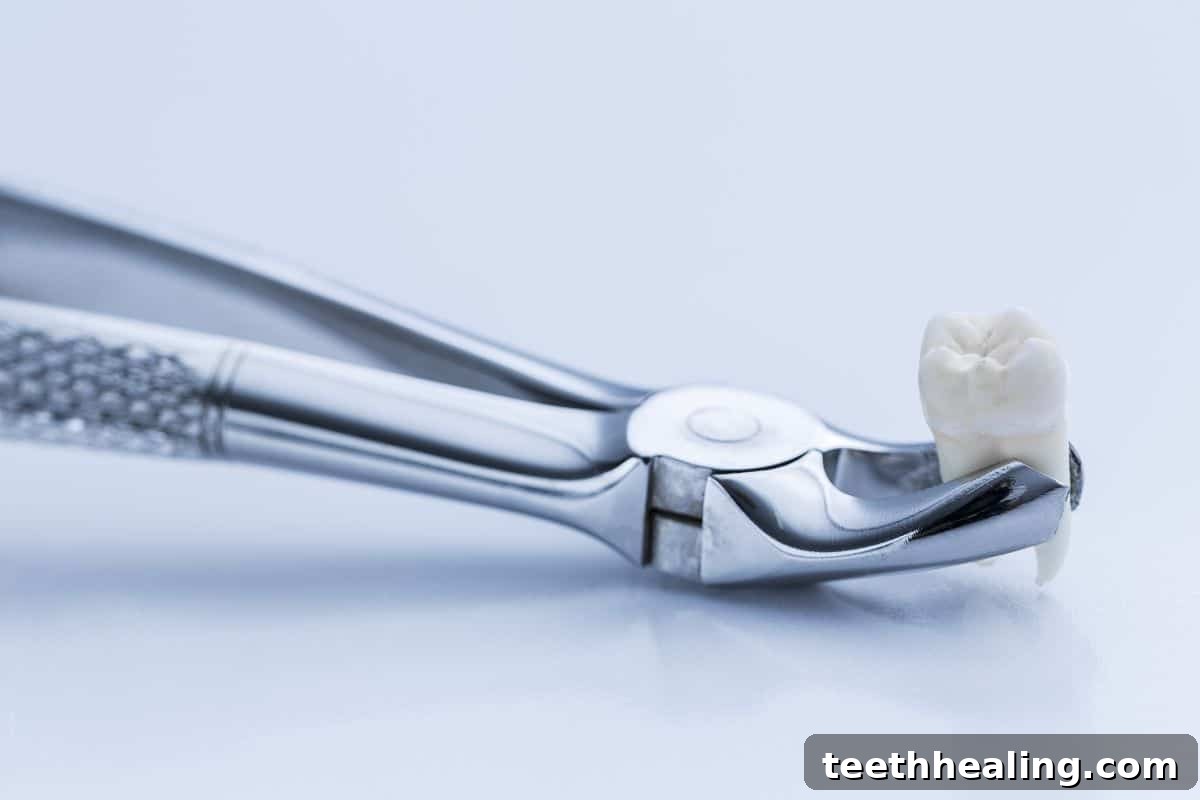
After the tooth has been sufficiently loosened, the dentist will use dental forceps – instruments specifically designed to grip the tooth – to gently but firmly extract it from the socket. The technique involves a controlled rocking motion to fully separate the tooth from its attachments. In cases of a simple extraction, the tooth will come out relatively easily. However, if the tooth is impacted (like many wisdom teeth), has curved roots, or is fractured, a surgical extraction may be necessary. This might involve making a small incision in the gum tissue to access the tooth, and sometimes, the tooth may need to be sectioned into smaller pieces before removal to minimize trauma to the surrounding bone and tissue.
Ensuring Proper Clot Formation
Once the tooth is successfully removed, the immediate priority is to control bleeding and initiate the healing process. Your dentist will clean the extraction site and then place a sterile gauze pad directly over the empty socket. You will be instructed to bite down gently but firmly on this gauze. The pressure helps to compress the blood vessels and encourages the formation of a blood clot within the socket. This blood clot is absolutely vital; it acts as a natural bandage, protecting the exposed bone and nerves and serving as the foundation for new tissue growth. Without a stable blood clot, a painful condition known as “dry socket” can occur, delaying healing significantly.
Optimizing Your Recovery After Tooth Extraction
Proper aftercare following a tooth extraction is just as important as the procedure itself. Adhering to your dentist’s post-operative instructions will significantly promote faster healing, minimize discomfort, and help prevent potential complications. Your commitment to these tips will ensure a smooth and effective recovery.
Prioritizing Rest and Limiting Activity
For the first 24 to 48 hours after your extraction, rest is paramount. Avoid any strenuous physical activities, heavy lifting, or bending over, as these actions can increase blood pressure in your head and dislodge the crucial blood clot forming in the socket. This clot is the foundation of your healing. Engage in quiet activities, keep your head elevated when resting or sleeping (using extra pillows), and allow your body to dedicate its energy to healing. Returning to normal activities too soon can lead to increased bleeding, swelling, and a higher risk of dry socket.
Effective Pain and Swelling Management
It’s entirely normal to experience some degree of pain and swelling after an extraction. Your dentist will likely recommend over-the-counter pain relievers such as ibuprofen or acetaminophen, or they may prescribe stronger medication for more severe discomfort. Take these as directed. To manage swelling, apply an ice pack or a cold compress to the outside of your cheek, near the extraction site, for 15-20 minutes at a time, with 20-minute breaks. This is most effective during the first 24 hours post-procedure, as it helps to constrict blood vessels and reduce inflammation. After 24-48 hours, switch to moist heat if swelling persists, as this can improve circulation.
Dietary Adjustments for Healing
Your diet will play a significant role in your recovery. For the first few days, stick to soft, non-irritating foods that require minimal chewing. Excellent choices include yogurt, applesauce, mashed potatoes, well-cooked pasta, scrambled eggs, smoothies (without a straw!), and pureed soups (lukewarm, not hot). It is crucial to avoid hot, spicy, crunchy, or chewy foods that could irritate the extraction site, dislodge the blood clot, or get trapped in the socket. Gradually reintroduce more solid foods as your comfort level allows and as directed by your dentist.
Avoiding Habits That Hinder Recovery
Certain habits can severely impede the healing process and should be strictly avoided. Smoking is highly detrimental, as the nicotine and chemicals can restrict blood flow and delay healing, significantly increasing the risk of infection and dry socket. Similarly, using a straw creates a suction force in your mouth that can easily dislodge the protective blood clot, leading to a painful dry socket. Refrain from both smoking and using straws until your dentist confirms that the extraction site has healed adequately, which typically takes at least 5-7 days, or longer for more complex extractions. Alcohol consumption should also be avoided as it can interact with pain medications and thin the blood, increasing bleeding risk.
Gentle Oral Hygiene Practices
Maintaining oral hygiene is important, but it needs to be done gently to protect the healing site. Avoid brushing directly over the extraction site for the first 24 hours. After this initial period, you can gently brush your other teeth, taking care to steer clear of the surgical area. Your dentist will likely recommend rinsing your mouth gently with a warm saltwater solution (half a teaspoon of salt mixed into a cup of warm water) 2-3 times a day, starting 24 hours after the extraction. This helps to keep the area clean and reduces bacteria. Crucially, do NOT rinse vigorously or spit forcefully, as this can dislodge the blood clot. Just let the solution gently pool in your mouth and then carefully lean your head over the sink to let it flow out.
Recognizing Complications: When to Contact Your Dentist
While some discomfort, mild swelling, and slight bleeding are normal after a tooth extraction, it’s essential to be vigilant for signs that might indicate a complication. Early detection and intervention can prevent minor issues from becoming more serious. Do not hesitate to contact your family dentist in Palm Desert if you experience any of the following symptoms:
- Severe Pain Not Relieved by Medication: If your pain worsens significantly after a few days, or if prescribed pain medication provides no relief, it could indicate an infection, dry socket, or other complications.
- Excessive or Prolonged Bleeding: Some oozing is normal, but if bleeding is heavy, continuous, or bright red after the first 24 hours, or if you need to change your gauze pad every hour, contact your dentist immediately.
- Fever or Chills: The presence of fever (temperature above 100°F or 38°C) or chills often signals an infection that requires prompt medical attention.
- Swelling That Worsens After the First Few Days: Swelling is common initially, but if it increases after 48 hours, or if you develop significant bruising or difficulty opening your mouth, it could be a sign of infection or inflammation.
- Foul Taste or Discharge from the Extraction Site: A persistent bad taste, foul odor, or visible pus-like discharge from the socket are strong indicators of an infection.
- Numbness or Tingling That Persists: While temporary numbness from anesthetic is expected, if it extends beyond a few hours or persists for days, especially in the lip, tongue, or chin, it should be reported.
These symptoms could indicate an infection, dry socket, nerve damage, or other issues requiring professional assessment. Your dentist is the best resource to diagnose the problem and recommend the appropriate course of action, ensuring your continued recovery and oral health.
Although the prospect of a tooth extraction may initially feel overwhelming, approaching the procedure with the right information and a proactive mindset can profoundly impact your experience. By diligently following your dentist’s pre-operative guidance, understanding the procedural steps, and committing to meticulous aftercare, you set the stage for a straightforward and comfortable recovery. Remember, your dental care team is dedicated to ensuring your comfort, addressing any concerns, and facilitating your healing journey. Incorporating these tooth extraction recovery tips into your post-procedure routine is crucial for managing the healing process effectively. Don’t hesitate to reach out to them with any questions or if you experience unexpected symptoms. With proper preparation and attentive aftercare, your tooth extraction and subsequent recovery can be a smooth and manageable process, contributing positively to your long-term oral health.