
Invisalign clear aligners represent a revolutionary approach to straightening teeth, offering a discreet, comfortable, and highly effective alternative to traditional braces. However, to truly harness their full potential and achieve the radiant, perfectly aligned smile you envision, proper care and maintenance are absolutely non-negotiable. Your aligners are a significant investment in your oral health and aesthetics, and diligent attention to their upkeep ensures they function optimally, remain transparent, and do not compromise your oral hygiene. Neglecting aligner care can lead to issues ranging from discoloration and bacterial buildup to ineffective treatment and costly replacements. This comprehensive guide outlines essential Invisalign care tips designed to keep your aligners in pristine condition, safeguard your oral health, and pave the way for a successful treatment journey.
1. Clean Your Aligners Regularly and Thoroughly
One of the most critical aspects of Invisalign care is consistent and thorough cleaning of your aligners. Every time you remove your aligners, whether for eating, drinking, or oral hygiene, they accumulate plaque, food particles, and bacteria from your mouth. Failure to clean them regularly can lead to unsightly discoloration, unpleasant odors, and, more importantly, the proliferation of harmful bacteria that can negatively impact your oral health, potentially leading to cavities or gum disease. To clean them effectively, use a soft-bristled toothbrush and lukewarm water. Gently brush all surfaces of the aligners, both inside and out, to dislodge any debris and disrupt bacterial film. It is crucial to avoid using regular toothpaste, as its abrasive particles can scratch the aligner material, creating microscopic grooves where bacteria and stains can accumulate, compromising their clarity. Instead, opt for a mild, non-abrasive cleanser specifically formulated for clear aligners, or a gentle antibacterial soap. After cleaning, rinse your aligners thoroughly under lukewarm water to remove all traces of the cleanser before reinserting them. This routine should be performed multiple times a day, ideally every time you take them out and before putting them back in, to maintain optimal hygiene and transparency.
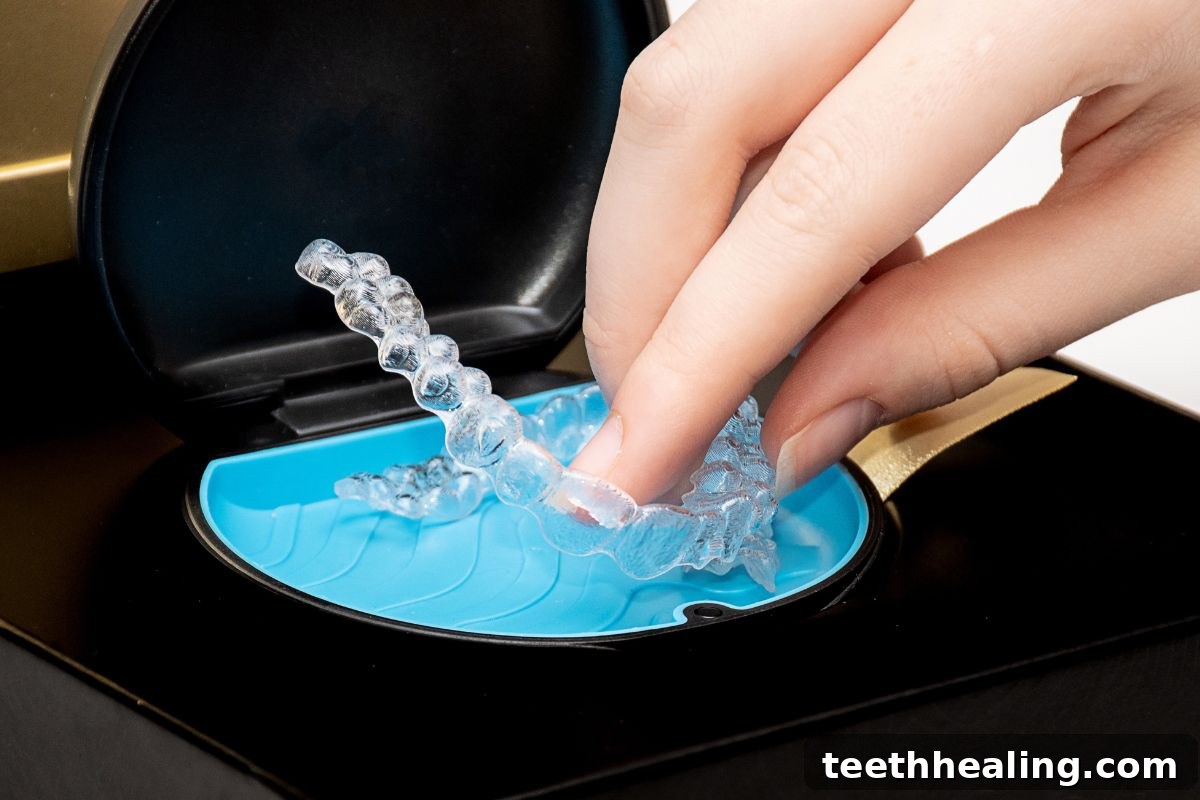
2. Store Aligners Properly in Their Protective Case
When your aligners are not in your mouth, proper storage is paramount. The designated Invisalign case is not just a fancy accessory; it’s a vital component of your treatment success. It serves as a protective barrier, shielding your aligners from physical damage, such as being accidentally stepped on or crushed, and from unsanitary environments. A common mistake many patients make is wrapping their aligners in a napkin or tissue. This seemingly convenient solution often leads to aligners being accidentally thrown away, misplaced, or lost, resulting in significant treatment delays and the additional expense of ordering replacement trays. To avoid such costly mishaps, always keep your aligner case with you, especially when eating out or traveling. Make it a habit to immediately place your aligners in their case the moment you remove them from your mouth. This simple discipline ensures they remain clean, safe, and ready for reinsertion. Remember, consistent wear time is critical for your treatment to progress as planned, and lost aligners can set you back significantly. While you enjoy the freedom to eat normally with Invisalign by removing your aligners for meals, ensuring their safe storage during this time is just as important as the meal itself.
3. Avoid Staining Foods and Drinks to Maintain Clarity
One of the primary appeals of Invisalign is its virtually invisible appearance. To maintain this crucial aesthetic, it’s essential to be mindful of what you consume while your aligners are in. The thermoplastic material of Invisalign aligners, while durable, is susceptible to absorbing pigments from certain foods and beverages, leading to unsightly staining and discoloration. Highly pigmented drinks like coffee, tea, red wine, and dark sodas are common culprits. Similarly, intensely colored foods such as berries (blueberries, blackberries), curry, tomato-based sauces, and turmeric can also impart stains. The general rule of thumb is simple: remove your aligners before consuming anything other than plain water. If you must have a staining beverage, always take your aligners out first. After consuming these items, it’s not enough to simply rinse your mouth; ideally, you should brush your teeth thoroughly to remove any residual pigments before reinserting your aligners. If brushing isn’t immediately possible, vigorously rinse your mouth with water for at least 30 seconds to minimize contact between staining agents and your teeth/aligners. Adhering to this practice will help preserve the clarity and discreet nature of your aligners throughout your treatment.
4. Rinse Your Aligners Frequently for Immediate Freshness
Beyond thorough daily cleaning, frequent rinsing of your aligners throughout the day is a simple yet effective practice for maintaining hygiene. Every time you remove your aligners, whether for a quick snack or a full meal, food particles, saliva, and bacteria can cling to their surfaces. A quick rinse with cool or lukewarm water before placing them back in your mouth helps to wash away these immediate contaminants. This step is particularly important when you’re unable to perform a full brush-and-clean routine, such as when you’re out and about. Rinsing helps prevent the buildup of plaque and food debris, which can otherwise become trapped between your aligners and teeth, creating an ideal environment for bacterial growth and potential enamel erosion. It also contributes significantly to preventing unpleasant odors and keeping your aligners feeling fresh in your mouth. While rinsing is not a substitute for proper brushing and cleaning, it serves as an excellent interim measure to uphold hygiene and ensure your aligners remain as clean as possible between comprehensive cleaning sessions.
5. Utilize Invisalign Cleaning Crystals for a Deeper Clean
For an enhanced level of cleanliness and to tackle stubborn plaque and bacteria that regular brushing might miss, Invisalign offers specialized cleaning crystals. These crystals are formulated to provide a deeper, more comprehensive clean, helping to remove persistent buildup and refresh your aligners, ensuring they remain transparent and hygienic. The process is straightforward: dissolve one packet of cleaning crystals in a specified amount of lukewarm water, as per the instructions provided with the product. Once dissolved, immerse your aligners fully in the solution for approximately 15 to 30 minutes. During this soaking period, the specialized formula works to gently yet effectively break down plaque, kill bacteria, and neutralize odors. After soaking, remove your aligners and rinse them thoroughly under lukewarm water to wash away any residual solution. Incorporating this deep cleaning routine a few times a week can significantly contribute to the longevity, clarity, and overall hygiene of your aligners, ensuring they continue to look and feel their best throughout your treatment journey.
6. Avoid Hot Water to Prevent Aligner Warping
Understanding the material properties of your Invisalign aligners is crucial for their care. Invisalign aligners are made from a thermoplastic material designed to be precisely molded to your teeth’s contours. This material is sensitive to extreme temperatures, particularly hot water. Exposing your aligners to hot water – whether for cleaning, rinsing, or even accidentally leaving them in a hot car – can cause the plastic to warp or distort. Even a slight change in the aligner’s shape can compromise its fit and effectiveness. A warped aligner will not apply the correct pressure to your teeth, rendering it ineffective in moving them according to your treatment plan. This can lead to delays in your treatment, discomfort, and the need for costly replacement aligners. Therefore, it is imperative to always use lukewarm or cool water when cleaning, rinsing, or soaking your aligners. Never attempt to sterilize them in boiling water or a dishwasher, as these methods will undoubtedly damage them beyond repair. Consistent adherence to this rule safeguards the integrity of your aligners and ensures your treatment progresses without unnecessary setbacks.
7. Strictly Follow Your Dentist’s Instructions
Your dentist or orthodontist is your primary guide throughout your Invisalign journey. They craft a personalized treatment plan tailored to your unique dental needs and will provide specific, detailed instructions for wearing and caring for your aligners. Adhering to these guidelines is not merely a recommendation; it is absolutely essential for the success of your treatment. Key instructions typically include the recommended daily wear time (usually 20-22 hours), the schedule for switching to the next set of aligners (e.g., every one or two weeks), and specific cleaning protocols. Deviating from these instructions, such as not wearing your aligners for the prescribed number of hours or prematurely advancing to the next tray, can significantly impede your progress, cause discomfort, and ultimately prolong your treatment duration. Regular check-ups with your dental professional are vital. These appointments allow your dentist to monitor your progress, ensure your teeth are moving as planned, address any concerns you may have, and make any necessary adjustments to your treatment plan. Open communication and strict compliance with professional guidance are cornerstones of a successful and efficient Invisalign experience.
8. Prioritize Oral Health: Avoid Smoking
For individuals undergoing Invisalign treatment, avoiding smoking and other tobacco products is not just a general health recommendation; it’s a specific directive for preserving both the integrity of your aligners and your overall oral health. The nicotine and tar present in cigarettes and other tobacco products are notorious for causing significant discoloration. These substances can quickly stain your clear aligners, turning them yellow or brown and negating their discreet appearance. Beyond the aesthetic compromise, smoking introduces a myriad of oral health risks, including increased susceptibility to gum disease, tooth decay, and persistent bad breath. These issues can complicate your orthodontic treatment and undermine its effectiveness. Maintaining clear, unstained aligners and a healthy oral environment are both crucial for achieving a beautiful smile with Invisalign. By abstaining from smoking, you not only protect the transparency of your aligners but also foster a healthier foundation for your new smile, contributing to better long-term outcomes for both your teeth and gums.
9. Maintain Excellent Oral Hygiene Before Reinserting Aligners
The success of your Invisalign treatment is inextricably linked to the quality of your daily oral hygiene. It’s not enough to simply clean your aligners; you must also ensure your teeth and mouth are scrupulously clean before reinserting them. This means brushing and flossing your teeth thoroughly after every meal and snack, and certainly before putting your aligners back in. When food particles and plaque are trapped between your teeth and aligners, they create an enclosed, warm, and moist environment – an ideal breeding ground for bacteria. This can significantly increase your risk of developing cavities, gum inflammation (gingivitis), and persistent bad breath. Plaque buildup can also etch into your tooth enamel, causing white spots. Therefore, dedicate sufficient time to brushing all tooth surfaces, including the gumline, and flossing meticulously to remove all interdental debris. Investing in a travel toothbrush and floss is an excellent idea for maintaining this high standard of oral hygiene when you’re away from home. This diligent practice ensures that your teeth remain healthy throughout your treatment and that your aligners work on clean surfaces, maximizing their effectiveness.
10. Be Especially Mindful of Attachments (Buttons)
Many Invisalign treatments involve the use of small, tooth-colored bumps called “attachments” or “buttons,” which are bonded to specific teeth. These attachments are not merely aesthetic; they serve a crucial functional purpose, acting as anchors or handles that help the aligners grip the teeth more effectively, allowing for more complex and precise tooth movements. Because these attachments protrude slightly from the tooth surface, they can sometimes trap food particles and plaque more readily than smooth tooth surfaces. Therefore, when cleaning your teeth and aligners, it’s essential to pay extra attention to the areas around these attachments. Use a soft-bristled toothbrush and brush gently but thoroughly around each attachment to ensure all debris and plaque are removed. Flossing around them may require a little more care to avoid snagging the floss. While they are securely bonded, excessive force could potentially dislodge them. If an attachment does come off, contact your dentist or orthodontist immediately, as its absence can hinder your treatment progress and require a new appointment to re-bond it. Being mindful of these vital components ensures they remain in place and continue to contribute effectively to your journey toward a perfectly aligned smile.
By consistently integrating these comprehensive Invisalign care tips into your daily routine, you can ensure that your aligners remain in optimal condition, your oral health is protected, and your treatment progresses smoothly and efficiently. Proper maintenance is the bedrock of a successful Invisalign experience, ultimately leading to the stunning, healthy, and beautifully aligned smile you’ve been working towards. Should you have any specific concerns or questions regarding your Invisalign aligners or their care, never hesitate to consult with your trusted dental professional for personalized guidance and support.