
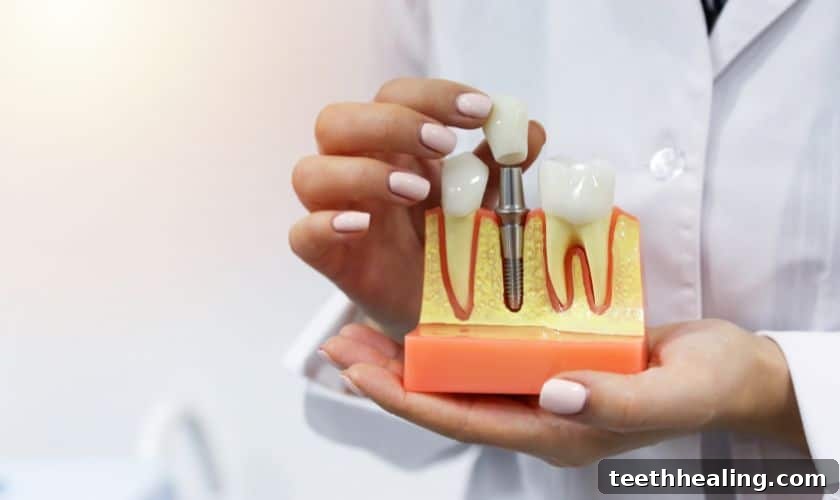
Embarking on a journey to restore your smile and oral function with dental implants is a significant decision. For residents of Palm Desert and surrounding areas, understanding each stage of this transformative process is key to a successful outcome and peace of mind. This comprehensive guide delves into the intricate steps of implant dentistry, offering clear insights from your initial consultation to the final restoration, ensuring you are well-informed and prepared for every phase of your treatment.
1. Initial Consultation And Assessment: Your First Step Towards a Restored Smile
The foundation of a successful dental implant procedure in Palm Desert begins with a thorough initial consultation. During this crucial appointment, your experienced implant dentist will meticulously evaluate your overall oral health. This isn’t just about examining your teeth; it involves a detailed review of your medical history, as certain health conditions or medications can influence treatment suitability and healing. The primary goal is to assess the viability of dental implants as the ideal solution for your specific needs.
To gain a comprehensive understanding of your unique dental anatomy, advanced diagnostic tools are indispensable. X-rays provide a two-dimensional view of your teeth and jawbone, while state-of-the-art 3D scans, often utilizing Cone Beam Computed Tomography (CBCT), offer a detailed, three-dimensional perspective. These scans allow your Palm Desert implant specialist to precisely visualize bone density, identify nerve pathways, locate sinus cavities, and accurately determine the optimal placement sites for implants. This meticulous assessment ensures a treatment plan that is both safe and highly effective, tailored to your individual oral structure and aesthetic goals.
2. Personalized Treatment Planning And Customization: Crafting Your Unique Solution
Following the comprehensive assessment, the implant team collaborates to develop a personalized treatment plan specifically for you. This bespoke plan is more than just a list of procedures; it’s a roadmap detailing every aspect of your implant journey. It outlines the precise number of implants required to support your new teeth, whether it’s a single implant for a missing tooth, multiple implants for a bridge, or an entire arch of teeth using solutions like “All-on-4.” The plan also specifies the type of final restoration—a custom crown, a multi-tooth bridge, or a full implant-supported denture—each designed to blend seamlessly with your natural smile.
Beyond the implants and restorations, your treatment plan will address any necessary preparatory procedures. For instance, if the diagnostic scans reveal insufficient bone volume or density, procedures such as bone grafting or a sinus lift will be incorporated. Implant dentistry in Palm Desert prides itself on its commitment to customization, ensuring that every patient receives a treatment approach that perfectly aligns with their clinical needs, aesthetic desires, and long-term oral health objectives. Digital planning tools are often employed to visualize the outcome and ensure precision, offering you a clear understanding of your journey ahead.
3. Preparatory Procedures: Building a Strong Foundation with Bone Grafting and Sinus Lifts
In certain instances, for dental implants to achieve their full potential and longevity, a robust foundation is critical. If your jawbone lacks sufficient density or volume—often due to prolonged tooth loss, gum disease, trauma, or natural atrophy—preparatory procedures such as bone grafting or sinus lifts may be recommended. These vital interventions are designed to enhance the implant site’s structural integrity, creating the stable, healthy bone necessary for successful implant placement and optimal osseointegration.
Bone Grafting: This procedure involves adding bone material to areas where the jawbone is deficient. Grafting materials can be sourced from your own body (autogenous), from a donor (allograft), an animal (xenograft), or synthetic materials (alloplast). The purpose is to stimulate new bone growth, effectively increasing the width and/or height of your jawbone to securely anchor the dental implant. Depending on the extent of the graft, a healing period of several months is typically required before implant placement can proceed.
Sinus Lifts (Sinus Augmentation): If implants are needed in the upper jaw, particularly in the molar and premolar regions, the maxillary sinuses can sometimes be too close to the jawbone to allow for proper implant length. A sinus lift gently elevates the sinus membrane, creating space for bone graft material to be placed between the jaw and the sinus. This procedure effectively increases the bone height in the upper jaw, providing the necessary support for successful implant integration. Similar to bone grafting, a healing period is essential for the new bone to mature before implant surgery. These preparatory steps, while adding to the overall treatment timeline, are fundamental to ensuring the long-term success and stability of your dental implants.
4. Implant Placement Surgery: The Core of Your New Smile
The implant placement surgery is a pivotal step in your dental implant journey. Performed by your skilled Palm Desert implant dentist, this procedure involves the precise surgical insertion of the titanium implant post into the jawbone. The surgery is typically conducted in a sterile environment and under local anesthesia, ensuring that you experience minimal to no discomfort during the process. For patients who may feel anxious, additional sedation options such as nitrous oxide (laughing gas), oral sedatives, or even intravenous (IV) sedation can be discussed to enhance comfort and relaxation.
During the procedure, a small incision is made in the gum tissue to expose the underlying bone. A specialized drill then creates a precisely measured space in the jawbone, into which the titanium implant is carefully threaded. The implant is designed to mimic the root of a natural tooth, providing an incredibly strong and stable foundation. After placement, the gum tissue is typically closed over the implant. This crucial surgical phase initiates the biological process known as osseointegration – the remarkable fusion of the implant with the surrounding jawbone. This biological bond is what makes dental implants so incredibly durable and successful, establishing a natural connection that supports your future restoration.
5. Osseointegration: The Vital Healing and Integration Period
Following implant placement surgery, a critical healing period begins, dedicated to the process of osseointegration. This biological marvel is where the titanium implant post gradually fuses directly with your jawbone. It’s a natural phenomenon where bone cells grow onto and around the implant surface, creating an incredibly strong and stable anchor, much like the root of a natural tooth. This fusion is fundamental to the long-term success and stability of your dental implants.
The duration of osseointegration typically ranges from several weeks to a few months, usually between 3 to 6 months, though it can vary based on individual healing capabilities, the quality of your bone, and whether preparatory procedures like bone grafting were performed. During this period, the implant remains undisturbed beneath the gum line, allowing the bone to fully integrate without any external pressure. Patients in Palm Desert are provided with detailed post-operative care instructions, which are vital for promoting a smooth and successful healing process. This includes advice on diet, oral hygiene, managing any discomfort, and refraining from activities that could disturb the implant site. While waiting for osseointegration, temporary restorations can often be provided to ensure you maintain aesthetics and function.
6. Abutment Placement: Connecting Implant to Restoration
Once the osseointegration process is successfully completed and your implant has fully integrated with the jawbone, the next step involves placing the abutment. The abutment serves as a critical connector, acting as the intermediary post that links your newly integrated dental implant to the final visible restoration—be it a crown, bridge, or denture. This minor surgical procedure typically involves making a small incision in the gum tissue to gently expose the top of the integrated implant.
Once exposed, the abutment is securely attached to the implant. Your Palm Desert implant dentist will carefully select the appropriate abutment type (e.g., stock, custom, angulated) based on the implant’s position, the surrounding gum tissue, and the specific needs of your final restoration to ensure optimal aesthetics and function. The abutment not only provides a stable base for your new tooth but also plays a crucial role in shaping the gum tissue around it, creating a natural emergence profile for your future crown or bridge. After abutment placement, the gum tissue is allowed a short period to heal around the abutment, preparing the site for the next step: taking impressions for your custom restoration.
7. Impressions For Restoration: Capturing the Blueprint of Your New Smile
With the abutment securely in place and the surrounding gum tissue healed, the next critical phase involves taking highly accurate impressions of your teeth and the newly placed abutments. These impressions serve as the precise blueprint that guides the fabrication of your final restoration. In modern implant dentistry in Palm Desert, both traditional and advanced digital impression techniques are utilized.
Traditional impressions involve using a soft, pliable material that accurately captures the intricate details of your oral structures. However, many practices now utilize state-of-the-art digital intraoral scanners. These scanners create highly detailed 3D models of your mouth, offering superior accuracy, enhanced patient comfort (no messy impression material), and quicker turnaround times. These impressions capture the exact position and angle of the implant and abutment, the contours of your gum line, the relationship with adjacent natural teeth, and your opposing bite. This meticulous data collection is paramount for ensuring that your final crown, bridge, or denture is custom-designed to seamlessly blend with your natural dentition, achieving a harmonious, functional, and aesthetically pleasing result that feels and looks incredibly natural.
8. Custom Restoration Design And Fabrication: Artisanship Meets Technology
The design and fabrication of your custom restoration represent a meticulous fusion of dental artistry and advanced technology. The highly accurate impressions or digital scans taken in the previous step are sent to a specialized dental laboratory. Here, skilled dental technicians, often utilizing CAD/CAM (Computer-Aided Design/Computer-Aided Manufacturing) technology, meticulously craft your final crown, bridge, or denture.
The selection of materials is crucial for both aesthetics and durability. Common choices include high-quality porcelain, incredibly strong zirconia, or E-max, all renowned for their lifelike appearance and biocompatibility. During this phase, great attention is paid to matching the color, shape, and size of your natural teeth. The technicians carefully layer and shade the restorative material to mimic the translucency and subtle variations found in natural tooth enamel. The goal is to achieve a result that is virtually indistinguishable from your surrounding natural teeth, providing not only a natural-looking but also a highly functional replacement that restores your chewing ability and enhances your smile. This custom-tailored approach ensures that your new teeth are not just replacements, but a true enhancement to your overall oral health and appearance.
9. Final Restoration Placement: Unveiling Your Complete Smile
Once your custom restoration—be it a single crown, a multi-unit bridge, or an implant-supported denture—has been meticulously fabricated and perfected by the dental laboratory, it’s time for the exciting final restoration placement. During this appointment at your Palm Desert dental office, your dentist will carefully position the custom-made prosthetic onto the abutment, ensuring a precise and secure fit. The restoration can be either cemented permanently or, in some cases, screwed into place, allowing for retrievability if needed in the future.
A critical part of this stage involves careful assessment of your bite alignment, also known as occlusion. Your dentist will ensure that your new tooth or teeth integrate perfectly with your existing bite, preventing any discomfort or undue stress on the implant or surrounding teeth. Aesthetic harmony is also paramount; the dentist will confirm that the color, shape, and contour of the restoration seamlessly blend with your natural smile. Patients are actively encouraged to communicate any concerns, preferences, or adjustments needed during this phase to ensure the desired functional and aesthetic outcome is achieved. This is the moment your complete, confident smile is unveiled, reflecting the culmination of your dental implant journey.
10. Post-Treatment Care And Maintenance: Ensuring Lifelong Success
The journey with dental implants doesn’t end with the final restoration placement; in fact, this marks the beginning of a lifetime of confident smiles, provided proper care is maintained. Patients receiving dental implants in Palm Desert are thoroughly educated on essential post-treatment care and maintenance practices. Unlike natural teeth, implants are not susceptible to cavities, but they are vulnerable to peri-implantitis, a condition similar to gum disease, if neglected.
Excellent oral hygiene practices are paramount. This includes brushing at least twice daily with a soft-bristled toothbrush and non-abrasive toothpaste, flossing daily (special interdental brushes or water flossers can be particularly effective for cleaning around implants), and using an antimicrobial mouthwash if recommended. Beyond daily home care, regular dental check-ups and professional cleanings are absolutely essential. Your dental team will monitor the health of your implants, assess your gum tissue, and perform thorough cleanings to remove plaque and tartar buildup that could lead to complications. These routine visits allow for early detection and intervention should any issues arise.
Furthermore, avoiding habits like chewing on ice or hard candies, and addressing conditions such as bruxism (teeth grinding) with a nightguard, will protect your implants and extend their longevity. With diligent care and consistent professional oversight, dental implants boast an exceptionally high success rate, offering a durable, functional, and aesthetically pleasing solution for many years to come.
Understanding what to expect during each stage of a dental implant procedure is crucial for individuals considering this transformative treatment. Implant dentistry in Palm Desert prioritizes patient education, personalized care, and an unwavering commitment to delivering natural-looking, highly functional, and long-lasting results. From the initial precise diagnostics to the meticulous fabrication of your custom restoration and comprehensive post-treatment guidance, every step is designed for your success and comfort. With proper preparation, precise execution by experienced professionals, and dedicated post-treatment care, dental implant procedures can truly provide individuals with a renewed sense of confidence, a beautiful smile, and fully restored oral function, significantly enhancing their quality of life.