Achieving a dazzling, confident smile is a goal for many, and modern cosmetic dentistry offers incredible solutions to transform dental aesthetics. When it comes to perfecting the appearance of your teeth, two of the most popular and effective treatments are porcelain veneers and dental crowns. While both can dramatically improve your smile, they serve different primary purposes and involve distinct procedures. Understanding the unique benefits, applications, and considerations for each can help you make an informed decision. This comprehensive guide will explore the world of porcelain veneers and dental crowns, delving into their features, advantages, and ideal uses, so you can collaborate with your dentist to choose the optimal path for your smile makeover journey.
Porcelain Veneers: Your Path to an Instant Smile Transformation
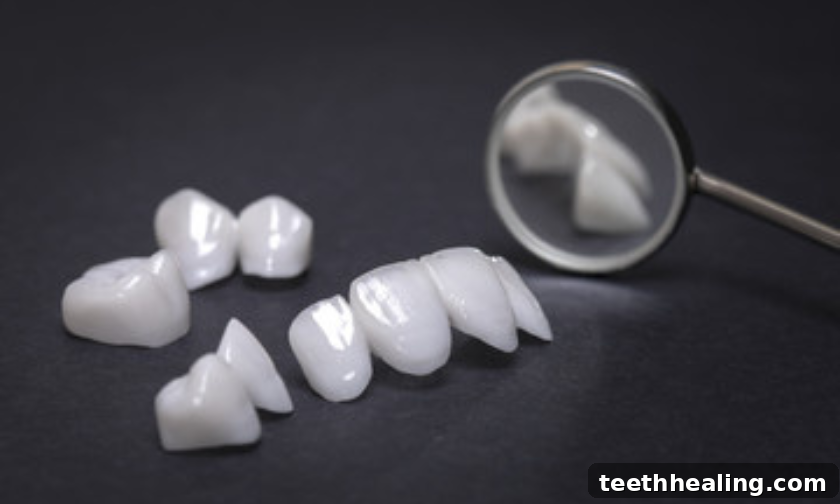
Porcelain veneers are a highly sought-after cosmetic dentistry procedure designed to create the appearance of straighter, whiter, and perfectly shaped teeth. These ultra-thin, custom-made shells of medical-grade porcelain are meticulously crafted to bond to the front surface of your existing teeth. Think of them as a custom-designed facade that instantly enhances your smile’s aesthetics, correcting a myriad of cosmetic imperfections.
What Makes Porcelain Veneers So Effective?
The beauty of porcelain veneers lies in their versatility and their ability to mimic the natural translucency and luster of real tooth enamel. Unlike composite bonding, porcelain is highly durable, stain-resistant, and provides a remarkably natural appearance, making it virtually indistinguishable from your natural teeth. This means you can achieve a stunning smile transformation discreetly, without anyone needing to know you’ve had cosmetic work done unless you choose to share your secret.
Veneers are primarily used to address a range of cosmetic concerns, including:
- Discoloration: Permanently stained or severely discolored teeth that do not respond to professional whitening treatments.
- Minor Misalignment: Slightly crooked or uneven teeth where orthodontic treatment might not be necessary or desired.
- Gaps and Spaces: Closing small gaps between teeth for a more uniform appearance.
- Chips and Cracks: Repairing minor chips or cracks on the tooth surface.
- Irregular Shape or Size: Reshaping teeth that are too short, too long, or irregularly shaped.
- Worn Enamel: Restoring the appearance of teeth with worn-down enamel.
The Porcelain Veneer Procedure: A Detailed Overview
The process of getting porcelain veneers typically involves a few appointments, making it a relatively efficient option for smile enhancement. It begins with a thorough consultation where your dentist will discuss your aesthetic goals, examine your oral health, and determine if veneers are the right solution for you. Digital imaging or wax-up models may be used to preview your potential new smile.
Once a treatment plan is established, the next step involves preparing the teeth. A minimal amount of enamel (less than a millimeter) is gently removed from the front surface of the teeth to create space for the veneers and ensure a natural, seamless fit. This step is crucial for preventing your new smile from looking bulky. After preparation, precise impressions of your teeth are taken and sent to a specialized dental laboratory, where your custom veneers are handcrafted by skilled technicians. Temporary veneers may be placed to protect your teeth while your permanent ones are being fabricated.
In the final appointment, your dentist will carefully bond the custom-made porcelain veneers to the front of your teeth using a strong dental adhesive. Before bonding, the dentist will check the fit and shade to ensure they perfectly match your desired aesthetic. Once bonded, the veneers are light-cured, creating an incredibly strong and durable bond. The result is an immediate, dramatic improvement in the appearance of your smile.
Benefits of Choosing Porcelain Veneers
Patients opt for porcelain veneers for numerous compelling reasons:
- Unmatched Aesthetics: They offer a natural, luminous, and symmetrical smile that significantly boosts self-confidence.
- Exceptional Stain Resistance: Porcelain is highly resistant to stains from coffee, tea, red wine, and tobacco, helping you maintain a bright smile for years without constant whitening treatments.
- Durability and Longevity: With proper care and good oral hygiene, porcelain veneers can last for 10 to 15 years, or even longer, making them a long-term investment in your smile.
- Minimally Invasive: The preparation process involves removing only a very small amount of enamel, preserving most of your natural tooth structure compared to other restorative options.
- Biocompatible Material: Porcelain is well-tolerated by the gums and oral tissues, reducing the risk of allergic reactions.
- Quick Transformation: The entire process can often be completed in just two or three appointments, offering a fast track to your dream smile.
Dental Crowns: Strengthening and Beautifying Damaged Teeth
While porcelain veneers focus primarily on cosmetic enhancement, dental crowns serve a dual purpose: to restore the strength and function of a compromised tooth while simultaneously improving its aesthetic appeal. Often referred to as “caps,” dental crowns are custom-fabricated covers that fit entirely over the existing tooth, encasing it down to the gum line. They act as a protective barrier, reinforcing weakened tooth structure and shielding it from further damage.
When Are Dental Crowns Recommended?
Dental crowns are a versatile restorative solution used in a variety of situations where a tooth is severely damaged, decayed, or requires significant structural support:
- To Restore Severely Damaged or Decayed Teeth: When a tooth has extensive decay that a large filling cannot adequately repair, a crown provides the necessary strength and coverage.
- After Root Canal Treatment: Teeth that have undergone root canal therapy often become brittle and weak. A crown is essential to protect the treated tooth from fracture and restore its functionality.
- To Protect a Weak Tooth from Breaking: If a tooth has large cracks or is severely worn down, a crown can prevent it from fracturing.
- To Hold a Dental Bridge in Place: Crowns serve as anchors for dental bridges, supporting the artificial tooth or teeth that replace missing ones.
- To Cover and Support a Tooth with a Large Filling: When a significant portion of the tooth is comprised of a filling, a crown can provide stability.
- For Cosmetic Enhancement: Crowns can dramatically improve the appearance of severely discolored, misshapen, or poorly aligned teeth, especially when veneers are not sufficient due to underlying structural issues.
- To Cover a Dental Implant: A crown is the final restoration placed on top of a dental implant to replace a missing tooth.
Types of Dental Crown Materials
Dental crowns can be made from various materials, each offering different advantages in terms of aesthetics, strength, and cost. Your dentist will help you choose the best material based on the tooth’s location, your biting forces, and your cosmetic preferences:
- All-Porcelain or All-Ceramic Crowns: These offer the most natural appearance, closely matching the color and translucency of natural teeth. They are an excellent choice for front teeth where aesthetics are paramount. They are also ideal for patients with metal allergies.
- Zirconia Crowns: A relatively new material, zirconia is an incredibly strong type of ceramic that offers excellent durability and aesthetic appeal. It’s a popular choice for both front and back teeth.
- Porcelain Fused to Metal (PFM) Crowns: These crowns have a metal substructure for strength, with a porcelain layer fused over it for a tooth-colored appearance. While strong, the metal can sometimes show through as a dark line at the gum line, and the porcelain layer can chip.
- Metal Crowns (Gold Alloys, Base-Metal Alloys): Highly durable and resistant to fracture, metal crowns are typically used for molars where biting forces are strongest and aesthetic visibility is less of a concern. They are known for their longevity and require minimal tooth reduction.
The Dental Crown Procedure: What to Expect
The process for receiving a dental crown generally mirrors that of veneers, typically spanning two to three appointments. The initial visit involves preparing the tooth by removing any decay and shaping the tooth structure to allow the crown to fit snugly and naturally. For a crown, more tooth structure is usually removed compared to veneers, as the crown covers the entire tooth. Impressions are then taken and sent to a dental lab for custom fabrication. A temporary crown is placed to protect the prepared tooth and maintain your smile while the permanent crown is being made.
During your final visit, the temporary crown is removed, and the permanent crown is meticulously fitted, ensuring proper bite alignment and comfort. Once both you and your dentist are satisfied with the fit, color, and appearance, the crown is permanently cemented onto your tooth. With proper care, a dental crown can provide lasting restoration and aesthetic improvement for many years.
Advantages of Opting for Dental Crowns
Crowns offer significant benefits for both oral health and smile aesthetics:
- Restoration of Strength and Function: Crowns effectively restore the structural integrity of weakened, fractured, or heavily decayed teeth, allowing for normal chewing and speaking.
- Comprehensive Protection: By fully encasing the tooth, crowns provide complete protection against further damage, decay, and fracture.
- Enhanced Aesthetics: Modern ceramic and porcelain crowns can be customized to match your surrounding teeth perfectly, providing a beautiful, natural-looking restoration.
- Long-Term Solution: With good oral hygiene and regular dental check-ups, dental crowns can last for 10 to 15 years, and often much longer, making them a durable investment.
- Versatility: They can address a wide range of dental issues, from structural damage to significant cosmetic imperfections.
Porcelain Veneers vs. Dental Crowns: A Detailed Comparison
While both porcelain veneers and dental crowns are excellent ways to achieve a beautiful, natural-looking smile, they are designed for different clinical situations. Understanding their key differences is crucial in determining which treatment is most appropriate for your specific needs.
- Primary Purpose: Veneers are predominantly cosmetic, addressing surface-level aesthetic concerns like discoloration, minor chips, and gaps. Crowns are primarily restorative, designed to strengthen and protect severely damaged or weakened teeth, though they also offer significant cosmetic benefits.
- Tooth Coverage: Veneers are thin shells bonded to the front surface of the tooth. Crowns, on the other hand, are “caps” that encase the entire visible portion of the tooth, covering all its surfaces.
- Tooth Preparation: The preparation for veneers is minimally invasive, involving the removal of only a small amount of enamel from the front surface. Crown preparation requires more significant removal of tooth structure to ensure the crown fits securely over the entire tooth.
- Ideal Candidacy: Veneers are best for generally healthy teeth with cosmetic flaws. Crowns are necessary for teeth with extensive decay, large fractures, after root canal treatment, or when a tooth requires substantial structural support.
- Strength vs. Aesthetics Emphasis: While veneers offer impressive aesthetics, their primary role isn’t to add strength to a structurally compromised tooth. Crowns excel in both strengthening and protecting the tooth while also providing excellent aesthetic improvement, especially with all-ceramic options.
- Cost: The cost for both treatments can vary widely based on material, location, and the dentist’s fees. Generally, a single crown might be more expensive due to the complexity of the procedure and material volume, but this can vary.
- Longevity: Both treatments offer impressive longevity with proper care, typically lasting 10-15 years or more.
Making the Right Choice for Your Smile
Ultimately, the decision between porcelain veneers and dental crowns is a personalized one that should always be made in close consultation with an experienced and trusted dental professional. Your dentist will conduct a thorough examination of your oral health, discuss your aesthetic goals, and consider factors such as your budget, the condition of your teeth, and the desired outcome. They will help you understand the pros and cons of each option specifically for your situation, ensuring you choose the most effective and appropriate treatment to achieve the vibrant, healthy smile you’ve always dreamed of.
Whether you’re looking to simply enhance the appearance of your teeth with veneers or restore the strength and beauty of a damaged tooth with a crown, modern dentistry offers incredible opportunities for a smile transformation. Invest in your smile, and you invest in your confidence and overall well-being.