In the universal quest for a confident, radiant smile, many individuals eventually face a significant decision: whether to embark on their orthodontic journey with traditional braces or embrace the modern innovation of Invisalign clear aligners. Both represent highly effective pathways to correcting dental misalignments, enhancing oral health, and transforming smiles, yet each system offers a distinct approach with unique advantages and considerations. This comprehensive guide aims to thoroughly explore the nuances, benefits, and drawbacks of both options, helping you make an informed decision tailored to your specific needs and lifestyle. Are Invisalign truly better than braces, or does the answer lie in a more personalized evaluation?
Understanding the Foundational Principles of Orthodontic Correction
Before diving into a detailed comparison, it’s essential to grasp the fundamental mechanics and design of each orthodontic appliance.
Traditional Braces: The Tried-and-True Solution
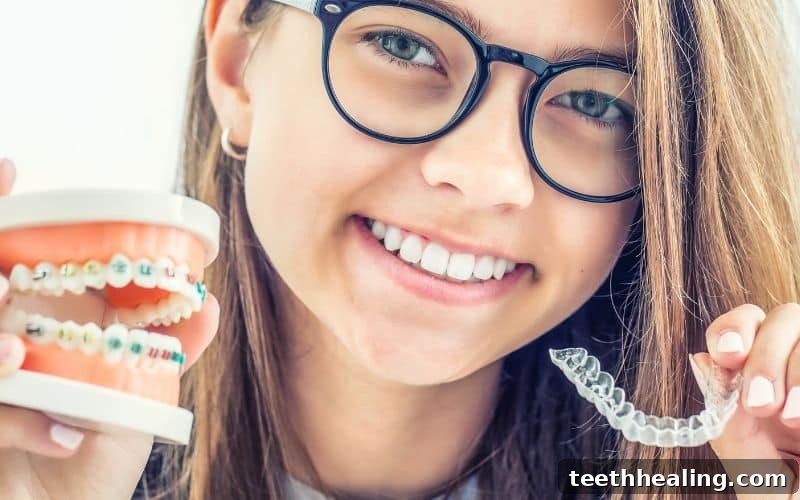
Traditional braces have been the cornerstone of orthodontics for decades, consistently delivering remarkable results for a wide spectrum of dental irregularities. They consist of small, precisely engineered brackets—typically made from high-grade stainless steel or ceramic—that are meticulously bonded to the front surface of each tooth. A thin, arch-shaped wire, usually made of nickel-titanium alloy, threads through these brackets. This wire is held in place by tiny elastic bands, known as ligatures, or by a self-ligating mechanism built into the bracket itself. The orthodontist periodically adjusts the tension of this wire, applying constant, gentle pressure that gradually coaxes the teeth into their desired, aligned positions within the jawbone. Traditional braces are renowned for their robust capability to correct even the most complex dental issues, including severe crowding, significant spacing problems, intricate bite discrepancies (such as overbites, underbites, and crossbites), and challenging rotational movements. Their fixed nature ensures continuous treatment, making them a reliable choice for cases requiring precise and powerful tooth movement. Beyond the common metal braces, ceramic braces offer a less visible alternative with tooth-colored brackets, while lingual braces are placed on the inside of the teeth for ultimate discretion, though these variations may come with different cost and comfort profiles.
Invisalign Clear Aligners: The Modern, Discreet Alternative
Invisalign represents a revolutionary leap in orthodontic technology, offering a virtually invisible solution for teeth straightening. Instead of fixed brackets and wires, Invisalign utilizes a series of custom-made, clear plastic aligners. These aligners are fabricated from a patented thermoplastic material, meticulously designed using advanced 3D computer imaging technology (often referred to as ClinCheck software). Each aligner in the series is slightly different from the last, engineered to incrementally move your teeth into their correct alignment. Patients wear each set of aligners for approximately one to two weeks, for 20 to 22 hours per day, before progressing to the next set in the sequence. The primary appeal of Invisalign lies in its remarkable discretion and convenience. The aligners are nearly invisible when worn, making them a popular choice for adults and teenagers who prefer to undergo orthodontic treatment without the noticeable appearance of traditional braces. Furthermore, their removability simplifies eating, drinking, and maintaining rigorous oral hygiene routines, offering a flexible and integrated approach to achieving a straighter smile.
In-Depth Comparison: Navigating Your Orthodontic Choices
Let’s explore the critical factors that often influence the decision between Invisalign and traditional braces, providing a detailed breakdown for each aspect.
1. Aesthetics and Social Impact
For many patients, the visual impact of orthodontic treatment is a paramount concern, directly affecting their self-confidence and social interactions. This is where Invisalign truly shines. Its clear aligners are designed to be virtually imperceptible, allowing individuals to straighten their teeth with confidence, often without anyone else noticing their treatment. This discretion is particularly appealing for professionals, public speakers, students, or anyone self-conscious about their appearance during treatment. Imagine attending important meetings, social events, professional photo shoots, or simply smiling for photos without the visual distraction of metal in your mouth. If you’re considering Invisalign in Palm Desert, you’ll appreciate how seamlessly this treatment integrates into your daily life. While traditional metal braces are undeniably visible, advancements have introduced less conspicuous options like ceramic braces, which use tooth-colored or clear brackets. However, even ceramic braces, while less noticeable than metal, are still fixed to the teeth and more visible than the transparent Invisalign aligners.
2. Comfort and Oral Sensations
The experience of comfort during orthodontic treatment can significantly vary between the two options. Traditional braces, with their fixed brackets and wires, can sometimes lead to initial discomfort, including soreness of the teeth and irritation to the soft tissues of the mouth, such as the cheeks, lips, and gums. Wires can occasionally poke, bend, or even break, requiring unscheduled emergency appointments for relief and adjustments. Regular adjustments at the orthodontist’s office, typically every 4-6 weeks, can also cause temporary tenderness and sensitivity as the teeth begin to shift. In contrast, Invisalign aligners are crafted from smooth, custom-fit plastic, designed to minimize friction and irritation. While patients will experience a feeling of pressure or tightness when switching to a new set of aligners (a sign that the teeth are moving), this sensation typically subsides within a day or two. There are no sharp edges or protruding wires to cause mouth sores, generally leading to a more comfortable overall treatment experience with fewer potential emergencies.
3. Oral Hygiene and Dental Health Maintenance
Maintaining impeccable oral hygiene is crucial during orthodontic treatment to prevent plaque buildup, cavities, decalcification, and gum disease. This aspect is significantly easier with Invisalign due to its removable nature. Wearers can simply take out their aligners for brushing and flossing, allowing for a completely normal and effective oral hygiene routine. This reduces the risk of food particles getting trapped and the subsequent accumulation of bacteria, which are common issues with fixed appliances. With traditional braces, the presence of brackets and wires creates numerous nooks and crannies where food debris can easily become lodged. This necessitates extra effort and specialized tools—such as interdental brushes, floss threaders, or water flossers—to thoroughly clean around and between the appliances. Neglecting thorough cleaning with braces can lead to decalcification (permanent white spots on teeth), cavities, or gingivitis, potentially impacting the aesthetic and health outcomes post-treatment. The ease of cleaning with Invisalign significantly contributes to better long-term oral health.
4. Dietary Freedom and Lifestyle Adaptability
Traditional braces impose a notable list of dietary restrictions designed to protect the integrity of the brackets and wires. Patients are strongly advised to avoid sticky foods (like caramel, taffy, chewing gum), hard foods (nuts, popcorn, hard candies, ice), and crunchy items (chips, apples that aren’t cut into pieces). These foods can easily dislodge brackets, bend wires, or cause other damage, leading to unscheduled emergency visits for repairs and potential delays in treatment. For Invisalign wearers, the story is entirely different. Since the aligners are removed before eating or drinking (anything other than plain water), there are virtually no dietary restrictions. Whether you’re enjoying a gourmet meal at a restaurant in Palm Desert, snacking at home, or celebrating a special occasion, you can continue to savor all your favorite foods without any concern for your orthodontic appliances. This unparalleled dietary freedom significantly enhances the overall convenience and adaptability of the Invisalign system to various lifestyles, making it a less restrictive choice for food lovers.
5. Treatment Duration and Predictability of Results
The length of orthodontic treatment is highly individual and depends on the complexity of the case, patient compliance, and the chosen method. Historically, traditional braces were often perceived as having shorter treatment times for very severe cases due to their fixed, continuous force. However, significant advancements in Invisalign technology, coupled with sophisticated digital planning tools like ClinCheck, have made treatment durations increasingly comparable, and sometimes even shorter for certain cases. For many mild to moderate cases, Invisalign treatment can be completed in 12 to 18 months, sometimes even less. The digital planning aspect allows both the orthodontist and the patient to visualize the entire treatment process, from the initial state to the final desired outcome, before even starting. This provides a high degree of predictability and allows for adjustments during the planning phase. While braces may still be the preferred option for extremely complex jaw alignments or extensive tooth rotations due to their strong mechanical leverage, Invisalign’s capabilities continue to expand, making it a viable and often faster option for a wider range of cases when patient compliance (wearing aligners for the prescribed 20-22 hours daily) is consistent and unwavering.
6. Cost Considerations and Investment in Your Smile
When evaluating orthodontic options, cost is naturally a significant factor for many families and individuals. Generally, the cost of Invisalign treatment is often comparable to that of traditional braces, particularly when considering ceramic or lingual braces. The exact price can vary widely based on several factors: the complexity and duration of your specific case, the number of aligners required, the geographical location of the orthodontic practice (e.g., an orthodontist in Palm Desert), and the experience of the treating orthodontist. More complex cases requiring longer treatment periods or more aligners will typically incur higher costs. Many dental insurance plans offer coverage for orthodontic treatment, regardless of whether you choose braces or Invisalign, so it’s essential to check your policy details. Furthermore, most orthodontic offices offer flexible payment plans or financing options to make treatment more accessible. It’s crucial to view orthodontic treatment not just as an expense, but as a long-term investment in your oral health, confidence, and overall well-being, providing benefits that extend far beyond the treatment period.
7. Lifestyle Integration and Convenience
The way each treatment integrates into your daily life is another key differentiator. Traditional braces, being fixed, require no daily decision-making regarding wear time, but they do demand careful eating habits and meticulous cleaning. They also necessitate more frequent adjustments at the orthodontist’s office, typically every 4-6 weeks, which can sometimes be challenging to schedule. Invisalign, on the other hand, offers unparalleled flexibility. The ability to remove aligners for eating, drinking, brushing, flossing, and even special occasions (though brief removal is recommended) is a major convenience. However, this flexibility comes with the significant responsibility of consistent wear for 20-22 hours per day. Forgetting to wear aligners, frequently removing them, or losing them can significantly prolong treatment duration and compromise results. Patients must be disciplined and committed to their treatment plan. While appointments for Invisalign check-ups are generally less frequent than for braces adjustments, usually every 6-8 weeks, proper adherence to the treatment plan is critical for timely and effective results. This makes Invisalign particularly appealing for individuals with busy lifestyles who value adaptability.
8. Suitability for Different Orthodontic Cases
Historically, traditional braces were considered the only option for severely complex orthodontic issues, such as extreme crowding, significant bite discrepancies, or cases requiring extensive jaw repositioning. Their fixed nature allows orthodontists to exert precise, powerful forces over time that may be difficult to achieve with removable aligners. While braces remain highly effective for these challenging scenarios, Invisalign’s capabilities have rapidly advanced. Today, Invisalign can effectively treat a much broader range of cases, including mild to moderate crowding, spacing issues, certain overbites, underbites, and crossbites. Advanced features like “attachments” (small, tooth-colored dots bonded to teeth to help aligners grip and move teeth more effectively) and “precision wings” (for advanced bite correction in certain scenarios) have significantly expanded its scope. For very complex cases, some orthodontists might recommend a hybrid approach, starting with braces for initial major movements and then transitioning to Invisalign, or vice-versa, to combine the strengths of both systems. Ultimately, a thorough diagnostic evaluation by an experienced orthodontist is essential to determine which treatment modality is best suited for your unique anatomical and corrective needs, ensuring the most effective and efficient path to your desired smile.
Making the Informed Choice: Your Path to a Straighter Smile
The debate between Invisalign and traditional braces doesn’t culminate in a single, definitive winner. Instead, the optimal choice hinges entirely on an individual’s specific dental needs, lifestyle, aesthetic preferences, commitment to the treatment process, and budget. For those who prioritize discretion, comfort, and dietary freedom, and who possess the discipline for consistent aligner wear, Invisalign often emerges as a highly compelling and attractive option. Its modern approach to orthodontic care seamlessly blends into various lifestyles, offering exceptional results without the visual impact of traditional metalwork.
Conversely, for individuals with very complex dental misalignments, severe bite issues, or those who prefer a fixed appliance that doesn’t require daily compliance, traditional braces may still offer the most efficient and robust solution. The enduring effectiveness of braces for challenging cases is undeniable, and modern ceramic options provide a less conspicuous alternative to metal. The decision truly becomes a collaborative one between you and your orthodontic specialist.
Beyond Treatment: The Crucial Role of Retention
Regardless of whether you choose Invisalign or traditional braces, the journey to a perfect smile doesn’t end when the active treatment phase concludes. Retention is a critical, lifelong component of orthodontic care, often underestimated by patients. After your teeth have been moved into their ideal positions, retainers—either removable (like Vivera retainers, often offered by Invisalign) or fixed (a thin wire bonded to the back of your front teeth)—are essential to prevent your teeth from gradually shifting back to their original positions, a phenomenon known as relapse. Your orthodontist will provide detailed instructions on how to properly wear and care for your retainers to ensure your beautifully straightened smile lasts a lifetime. This final phase is crucial for preserving the investment you’ve made in your smile and maintaining optimal oral health.
Conclusion: Partnering with an Expert Orthodontist
Ultimately, the decision of whether to choose Invisalign or braces is a highly personal one, best made in close consultation with a qualified and experienced orthodontist. They possess the expertise to thoroughly assess your oral health, diagnose any underlying issues, and recommend the most effective and appropriate course of action for achieving your desired smile goals. An initial consultation will typically involve a comprehensive examination, X-rays, and possibly 3D scans of your teeth, allowing the orthodontist to create a personalized treatment plan. If you’re residing in or near Palm Desert and are considering orthodontic treatment, particularly exploring the advanced options like Invisalign in Palm Desert, we strongly encourage you to schedule a comprehensive consultation. An expert evaluation will help illuminate your unique smile journey, weigh the pros and cons specific to your situation, and empower you to make an informed decision that perfectly aligns with your dental aspirations, lifestyle, and long-term oral health objectives. Invest in your smile today – the confidence and health benefits will last a lifetime.